If you are asking how is aluminum anodized, the shortest useful answer is this: aluminum is placed in an acid electrolyte bath and exposed to electric current so its surface grows a controlled oxide layer. That basic idea explains both what is anodizing and why anodized parts behave differently from raw aluminum.
Anodizing is an electrochemical conversion process that turns the outer surface of aluminum into a built-in aluminum oxide layer.
Guidance from Valence Surface Technologies and its anodizing vs. plating overview makes one point especially clear: the finish is formed from the aluminum itself, not laid on top like paint or plating. That distinction sits at the heart of what is anodized aluminum.
So, what does anodized aluminum mean in plain language? It means the metal has been intentionally oxidized in a controlled way to create a tougher, more corrosion-resistant surface. The resulting layer can also support decorative color and improve wear performance. In some applications, it also changes surface electrical behavior because aluminum oxide is much less conductive than bare metal.
People often ask what is anodized and assume it is just coated aluminum. It is not. Paint, powder coating, and plating add a separate material onto the surface. Anodizing converts the surface into an anodic oxide structure that is integrated with the base metal, which helps explain its strong adhesion and resistance to chipping or peeling.
That is the meaning. The real quality difference shows up in the line itself, where cleaning, pretreatment, oxide growth, coloring, and sealing each shape the final result.
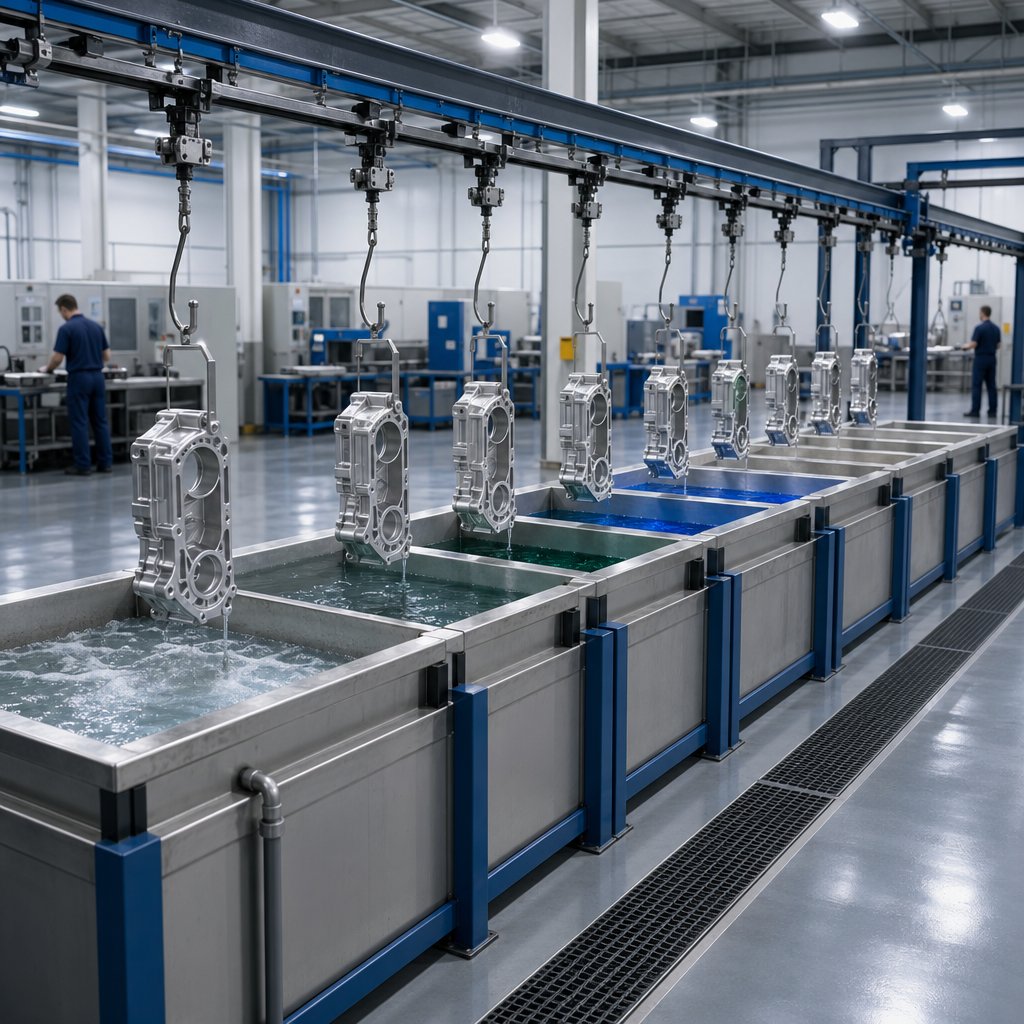
Meaning matters, but the finish is shaped on the line. If someone asks how do you anodize aluminum in real production, the answer is not simply put it in one tank. The anodizing process is a controlled sequence of baths, rinses, and checks that takes a part from raw aluminum to a sealed surface. Guidance from AluConsult and Bonnell Aluminum points to the same lesson: each stage prepares the metal for the next, and poor rinsing discipline can carry contamination forward.
For readers searching how to anodize aluminum, the practical route usually looks like this:
If you have ever wondered how do i anodize aluminum successfully, this is the big idea: you do not anodize aluminum well by focusing on the electricity alone. Surface preparation and rinse quality are part of the finish, not side tasks.
| Step | Purpose | Resulting surface condition |
|---|---|---|
| Cleaning and degreasing | Remove oils, fingerprints, machining residue, and light contamination | Chemically cleaner aluminum surface, but still in its natural state |
| Rinsing | Prevent chemical carryover into the next tank | Surface is cleared for controlled pretreatment |
| Etching or brightening | Improve uniformity, reduce visible lines, and shape the base look | More even matte or brighter appearance, depending on the route used |
| Desmutting | Remove insoluble alloy particles and dark residue left after etching | Cleaner metallic surface that can anodize more evenly |
| Anodizing | Use current in an acid bath to grow the oxide film | Porous aluminum oxide layer forms as part of the metal surface |
| Coloring, optional | Introduce dye or other color into the open pores | Colored anodic layer that still needs sealing |
| Sealing | Close the pores to improve stain resistance, corrosion resistance, and color stability | Less absorbent, more durable finished surface |
| Final rinse, drying, and inspection | Remove residues and confirm finish quality | Production-ready anodized part |
That step-by-step view explains why patchy color, weak corrosion performance, or sealing problems often start earlier than they look. A rushed pretreatment bath can show up as a defect much later. Inside the anodizing tank, the reason is electrochemical: the aluminum is not just sitting in acid, it is taking on the role that makes oxide growth possible.
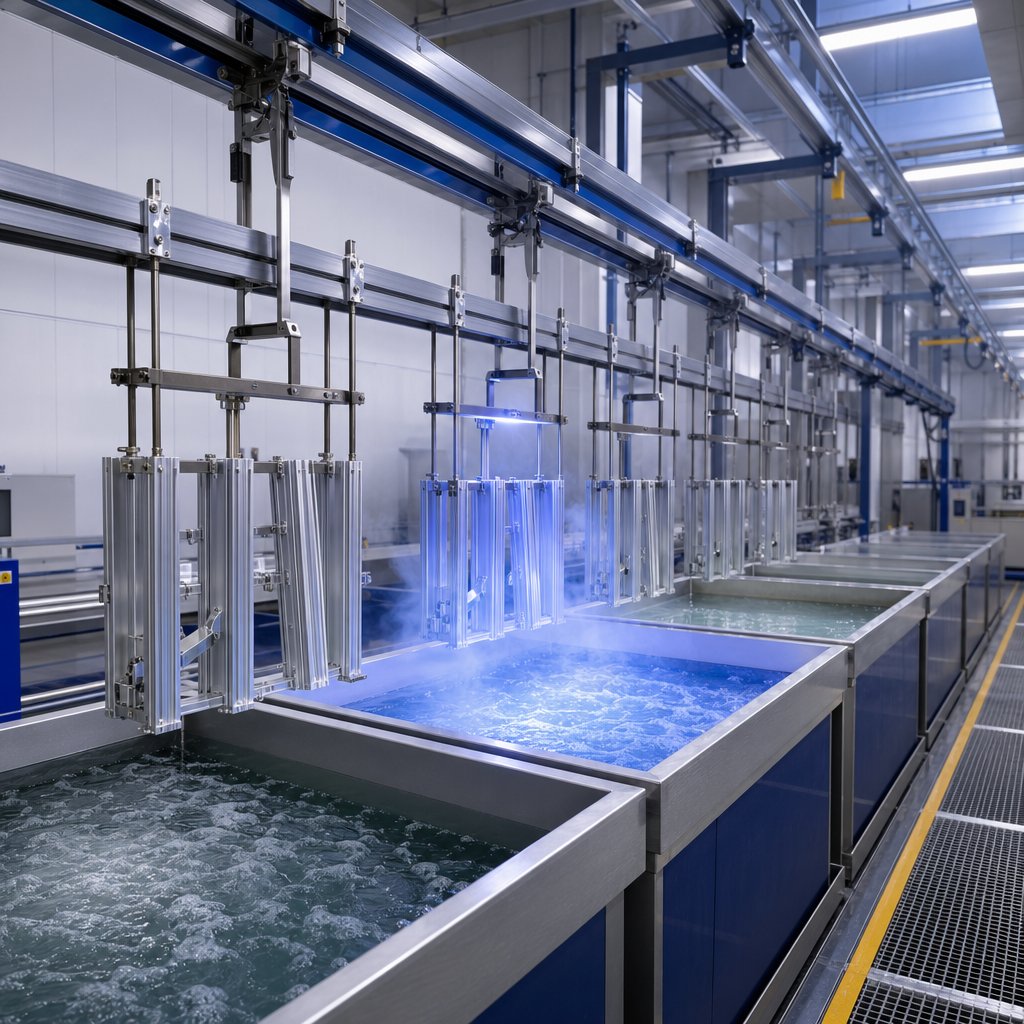
Inside the anodizing tank, the aluminum part stops being a passive object and becomes one side of an electrical circuit. That is the clearest way to answer how does anodizing work. In aluminum anodization, the workpiece is connected to the positive terminal of a DC power supply, so it becomes the anode. A separate, unreactive cathode is connected to the negative side and sits in the same electrolyte bath. Chemistry details summarized by the Electrochemistry Encyclopedia show that the bath is not just a container for acid. It is the medium that carries current and supports the reactions that grow oxide from the aluminum itself.
At a practical level, what does anodizing do? It uses electric current to drive oxide-forming reactions at the surface. Electrons are withdrawn from the aluminum, and oxygen-related species from water take part in building aluminum oxide. At the same time, reactions at the cathode produce hydrogen gas. The finish that results is an anodic coating, but not in the paint-like sense of a layer being laid on top. It is a controlled oxide structure grown out of the base metal.
Electric current turns the aluminum surface into a controlled oxide factory, growing protection from the metal instead of covering it with a separate film.
Porous anodizing happens because the acidic electrolyte does two jobs at once. It allows oxide to form, but it also dissolves some oxide as the film develops. That balance creates a thin barrier zone at the base and a porous outer structure above it. The barrier region is where the electric field stays concentrated, while the pores create the open pathways that later let dyes enter the surface.
That is why a fresh anodic layer can be colored so effectively, and why sealing matters afterward. Sealing changes the oxide so the pores become far less open and the finish becomes more stable in service. The chemistry is elegant, but the result is sensitive to control. Bath composition, voltage, temperature, and current density all influence how this structure forms, which is exactly where finish quality starts to rise or fall.
This is where aluminum anodization stops looking simple. The oxide does not grow well because one dial is set correctly. It grows well when chemistry, electrical input, temperature, time, surface condition, and rinsing all stay in balance. Guidance from Products Finishing emphasizes that bath temperature, current density, and voltage are critical, while regular titrations help maintain coating thickness, color consistency, and surface finish. That is easy to miss in broad discussions of anodizing metal, but it is central to aluminum.
Each variable changes how the film forms and how it behaves later in coloring and sealing. Some settings influence oxide growth speed. Others affect uniformity, pore structure, color uptake, or the risk of visible defects. Many anodising defects, using the alternate spelling often seen in search, are really signs that the system drifted out of control upstream.
| Variable | What it influences | Common quality implications |
|---|---|---|
| Electrolyte choice and bath chemistry | Oxide growth balance, dissolution, and defect tendency | Drifting chemistry can contribute to black spots, roughness, powdering, or unstable film formation |
| Current density | Growth rate, thickness buildup, and local heating | Too much or uneven current can cause electrical burning, breakdown, or nonuniform coating |
| Voltage and current ramp | How evenly the film starts and develops across the load | Rapid rise or unstable contact can create burn-like areas and inconsistent finish response |
| Bath temperature | Oxide formation versus oxide dissolution | High temperature can push rougher results or powdering, while drift hurts consistency |
| Processing time | Film build and likelihood of meeting thickness goals | Too short can miss thickness targets, while excessive time can worsen some defect risks |
| Alloy and surface condition | Appearance, gloss, color uniformity, and film behavior | Different alloys and contaminated surfaces can produce uneven gloss, patchy color, or variable performance |
| Rinsing discipline | Carryover control and downstream bath cleanliness | Poor rinsing can upset later stages and reduce sealing consistency |
| Part spacing and electrical contact | Current distribution, drainage, and gas release | Dense spacing or loose clamping can cause overlap marks, uneven thickness, or local film-free areas |
Line quality usually fails as a chain, not as a single mistake. A crowded rack, dirty rinse, loose contact point, and drifting bath can combine into uneven appearance even when the nominal voltage looks right. Defect guidance from Worthwill ties electrical burning to excessive local current density or poor contact, black spots to excessive chloride in the electrolyte, and rough or insufficient etching to out-of-balance pretreatment baths. The same source also notes that uncontrolled temperature, aluminum ion buildup, and dense racking can contribute to powdering.
Push those variables in different directions and the finish does not just look a little different. It can become a different class of anodized layer altogether, with its own chemistry, appearance, and performance priorities.
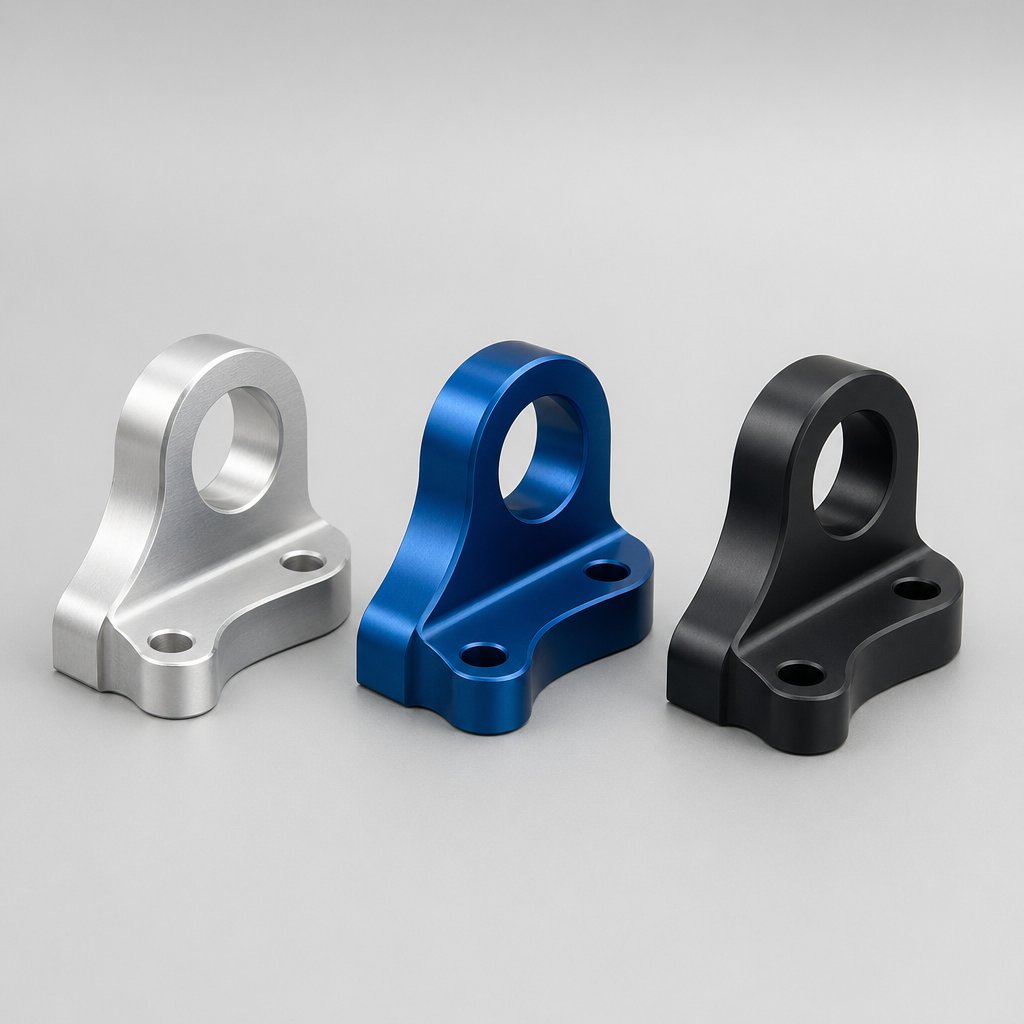
When anodizing conditions are tuned for different performance goals, the result usually falls into three familiar categories: Type I, Type II, and Type III. Those labels are common shorthand for chromic acid anodize, sulfuric acid anodize, and hardcoat anodize. They are not interchangeable. A decorative anodized finish, a corrosion-focused aerospace part, and a wear-heavy machine component often call for different process families.
A practical comparison from Armes Precision shows why. Type I uses chromic acid and is valued for good corrosion resistance, dielectric properties, and relatively small dimensional change. Type II uses sulfuric acid and is the most common route for an anodized aluminum finish that balances protection, appearance, and dye uptake. This is the category most people picture when they think of clear anodized aluminum or broad anodized aluminum colors. Type III, often called hard anodizing or hardcoat anodize, also uses sulfuric acid, but under more demanding conditions to create a tougher, darker, more wear-oriented layer.
The same source lists typical layer ranges of about 20 to 100 microinches for Type I, 100 to 1000 microinches for Type II, and more than 1000 microinches for Type III. Those ranges help explain why the three types behave differently in service.
| Anodizing type | Common use cases | Finish characteristics | Relative hardness | Corrosion resistance | Colorability | Tradeoffs |
|---|---|---|---|---|---|---|
| Type I, chromic acid | Aerospace parts, close-tolerance components, applications needing limited dimensional change | Thin, usually grayish film | Lower wear focus than Type III | Good | Limited, even black tends to remain muted | Less decorative flexibility and not the usual first choice for bold color |
| Type II, sulfuric acid | Decorative, architectural, and consumer applications | Clear or dyed anodized aluminum finish with a wide appearance range | Moderate | Good general-purpose protection | Excellent, this is the main route for dyed finishes | Not the top choice when maximum wear resistance is the main goal |
| Type III, hardcoat | Military, aerospace, automotive, and industrial parts needing high durability | Darker, denser-looking surface, often undyed or dyed black | Highest of the three | Strong service durability, especially in demanding environments | More limited than Type II | More stringent processing and higher cost, with less emphasis on bright decorative color |
In practical terms, Type II is usually the default for a visible anodized aluminum finish. It supports color, includes clear anodized aluminum, and offers a balanced mix of appearance and protection. Type I fits parts where tolerance sensitivity and corrosion-oriented performance matter more than vivid color. Type III is the better fit when surface wear, abrasion, and long service life outweigh decorative priorities.
This is also where alodine vs anodize becomes a useful decision, not just a search phrase. In alodine vs anodize discussions, the real question is function. Conversion coatings are much thinner and are often chosen when conductivity or a paint base matters. Anodizing creates a thicker oxide layer tied more directly to durability, insulation, and an actual anodized finish.
Even with the right type selected, two aluminum parts can still come out looking or performing differently. Alloy chemistry, product form, and fabrication history have a big say in that outcome.
Two aluminum parts can travel through the same line and still come out with different gloss, shade, or wear response. The reason is material, not mystery. The oxide grows from the alloy itself, so chemistry, surface condition, and part geometry all shape the result. Notes from FastPreci tie magnesium, silicon, copper, product form, and edge condition to changes in uniformity, hardness tendency, and color response. The Aluminum Anodizers Council also frames anodized finishes around end-use goals such as appearance, corrosion resistance, abrasion resistance, dielectric behavior, and color. It is more accurate to think of anodized aluminum material as a family of outcomes than one universal finish.
Alloys are not chemically identical, so they do not build oxide in exactly the same way. Some are known for a more even, cosmetic result. Others are more likely to shift in tone or need tighter process control. Surface condition matters just as much. Machining marks, polishing quality, cast skin, and contamination all influence how evenly the film starts. Geometry adds another variable because the oxide grows inward and outward, which can affect close fits, while sharp edges are more vulnerable to burn-like defects.
Readers searching what metals can be anodized are often really trying to learn whether one finish recipe transfers cleanly from one material to another. Even within aluminum, the answer is no.
| Product form or alloy example | Typical anodizing behavior | Practical finish guidance |
|---|---|---|
| Wrought 6061 parts | Generally more predictable and easier to anodize uniformly | Useful when appearance consistency and dimensional control both matter |
| 5052 sheet and panel stock | Good corrosion resistance and good dye response | Often a practical choice for visible parts exposed to moisture |
| 7075 high-strength parts | Can form a strong anodized layer, but tighter control helps avoid burning or nonuniform finish | Better suited to strength and wear priorities than flawless decorative matching |
| Cast aluminum | Less uniform microstructure can produce uneven or lower-quality cosmetic results | Anodizing cast aluminium is often chosen for function first, not perfect appearance |
In anodized aluminum vs aluminum comparisons, the finish is only part of the story. The base alloy decides how cleanly that finish can develop. Decorative work usually favors wrought products that respond more consistently, which is one reason many anodized aluminum extrusions are specified with close attention to alloy and surface prep. Functional and engineering parts may accept more visual variation if the goal is abrasion resistance, corrosion protection, or electrical insulation.
That is why the question what metals can be anodized often turns into a more practical one: which aluminum alloy and part form best match the job. Those differences become easiest to see when pores are filled with color and then sealed, because material variation turns into visible variation.
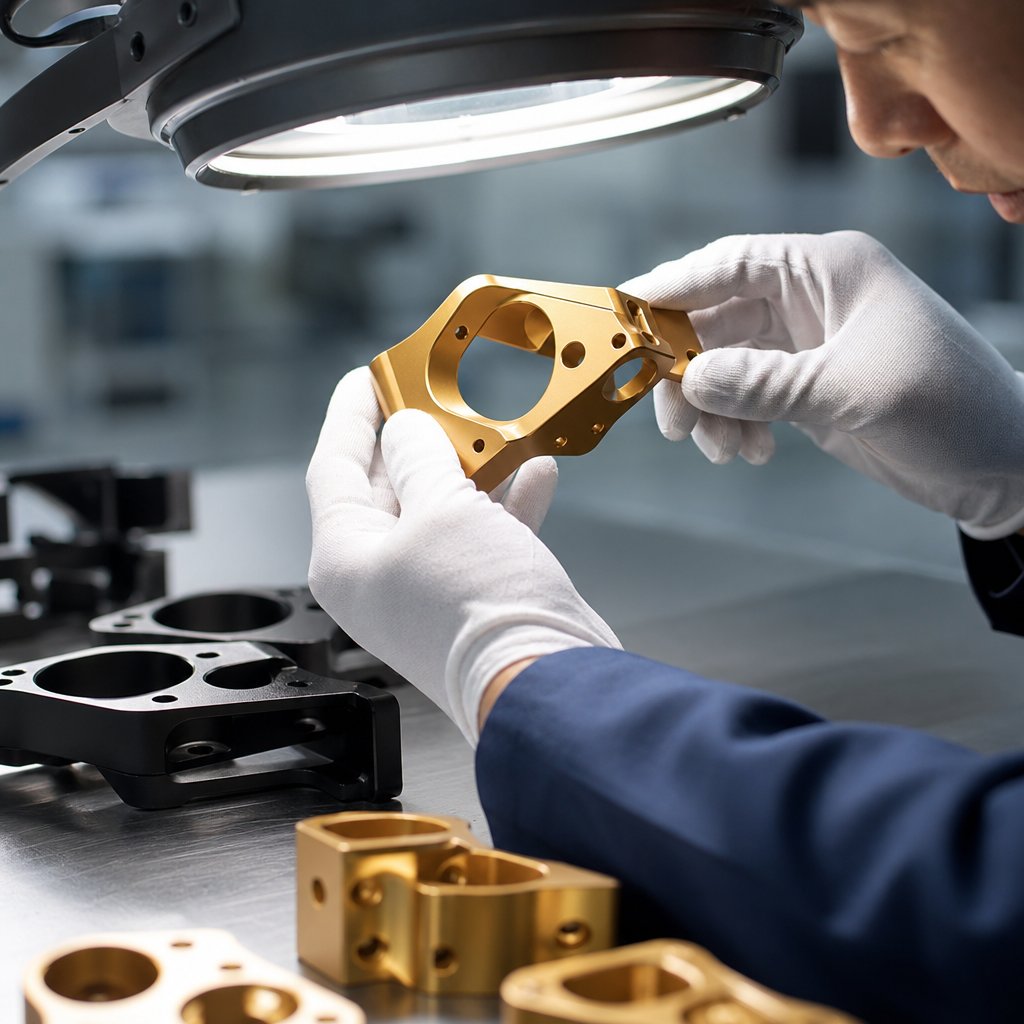
Color is often where alloy and process differences finally become easy to see. The oxide layer that forms during anodizing starts out porous, so it can accept dyes or other coloring media before the surface is sealed. Guidance from Xometry notes that the color is integrated into that oxide layer rather than painted on top, which is why many anodizing colors have better fade and peel resistance than a simple coating. In practical aluminum coloring work, the final shade can still shift with film thickness, dye concentration, metal type, and temperature.
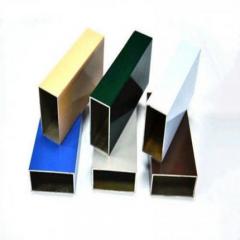
That porous structure is what makes dyed finishes possible. Xometry describes several coloring routes, including dye coloring, electrolytic coloring, integral coloring, and interference coloring. For many commercial parts, dyeing is the most familiar approach. It is also the finish people usually mean when they ask about black anodizing, black anodized aluminum, or decorative tones such as gold anodized aluminum. Black finishes typically come from black dye in the pores, while other colors are created by matching the coloring method to the desired look and durability target.
Sealing is the step that turns a colorable oxide into a more service-ready finish. Xometry describes sealing as a hot water hydration step that traps dye molecules in the pores, while Anoplate emphasizes that porous anodized coatings often need sealing to achieve strong corrosion resistance. So, does anodized aluminum rust? Strictly speaking, aluminum does not rust like iron or steel. It oxidizes. A properly sealed anodized layer greatly improves corrosion resistance, but poor sealing, contamination, or physical damage can still leave the surface vulnerable to staining or deterioration.
If you are wondering how to tell if aluminum is anodized, inspection gives a few practical clues. The finish should look built into the metal, not laid on top of it. A clear or colored surface should keep a metallic character rather than looking like paint. A well-made black anodized aluminum part should appear even in tone, and a sealed finish should show better stain resistance during handling and service. Edges deserve extra attention because sharp corners can develop lighter areas or burn-like roughness when current crowds at those locations.
| Visible symptom | What it often points to |
|---|---|
| Uneven light and dark areas | Non-uniform current distribution, rack shadowing, or inconsistent film thickness |
| Streaking or banding | Inconsistent current density or weak solution agitation |
| Patchy coloration | Surface contamination or incomplete cleaning before anodizing |
| Bright white or gray rough spots | Film burn from excessive local current or poor electrical contact |
| Dull color or weak dye uptake | Electrolyte contamination, poor oxide formation, or bath drift |
| Color fading or poor stain resistance after finishing | Inadequate sealing response or unstable post-treatment control |
A defect guide from Allstar Metal ties these visible problems back to upstream causes such as contamination, unstable current density, bath drift, and poor sealing control. That is why the finished look is never just cosmetic. It is also evidence of how disciplined the line really is, which becomes crucial when choosing a production partner.
A finish can look great on a sample part and still become a production problem if the supplier cannot control the full line. That is why buying anodized aluminum is really a process-control decision. If you are comparing vendors, it helps to answer a basic question first: what is an anodizer? In practical terms, an anodizer is the company or finishing operation that prepares the metal, runs the electrochemical process, manages coloring and sealing, and verifies the finished surface before shipment. A dependable anodized aluminum supplier should be able to explain that chain clearly, not just quote a color and a lead time.
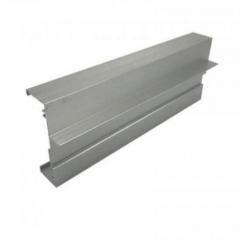
Custom profiles raise the stakes because alloy choice, geometry, and finishing response all interact. For anodized aluminium work, it often helps when one team can review the part from drawing stage through final inspection. Fewer handoffs usually mean clearer accountability when finish consistency matters.
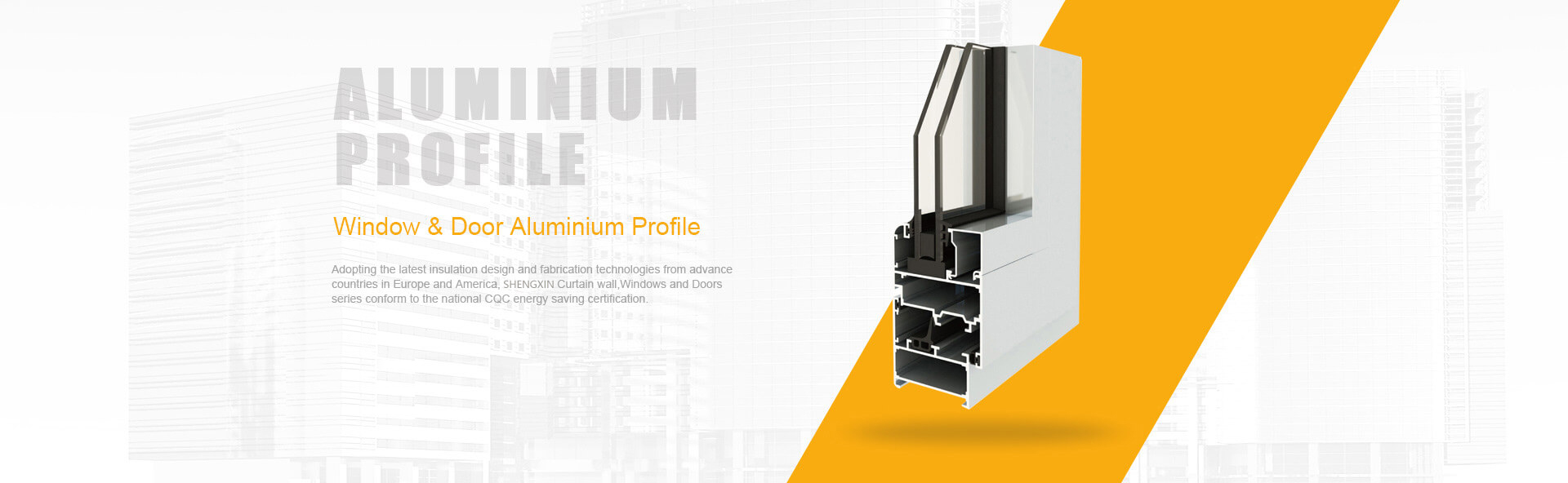
One real-world example is Shengxin Aluminium. Its published capability pages describe more than 30 years of aluminum profile manufacturing experience, 35 extrusion machines, in-house anodizing lines, and technical support that starts with drawings and carries through production. For industrial buyers who need precise extrusion plus a stable finish, that integrated model can be worth considering alongside any specialist anodizer. In the end, the strongest supplier is the one that can make its process transparent before it ever makes your parts.
Anodizing changes the aluminum surface itself into aluminum oxide through an electrochemical process. Paint and plating add a separate material on top, so they behave more like external coatings. Because the anodized layer is built into the metal, it keeps a metallic look and usually offers stronger adhesion and better edge durability than a finish that simply sits on the surface.
Fresh anodized oxide forms in an acidic bath where oxide growth and slight oxide dissolution happen at the same time. That creates a thin barrier region near the metal and an open pore structure above it. Those pores are useful because they can accept dye, but sealing is needed afterward to improve stain resistance, color retention, and long-term corrosion performance.
No. Alloy chemistry, product form, fabrication history, and part geometry can all change the final appearance and performance. Some wrought alloys usually give more predictable decorative results, while cast or high-strength grades may show more variation or require tighter control. If visual consistency matters, the alloy should be reviewed before production rather than after sample approval.
Aluminum does not rust like steel, but it can still oxidize, stain, or corrode under harsh conditions. A properly formed and sealed anodized layer improves protection significantly, yet poor sealing, contamination, or physical damage can reduce that benefit. The chosen anodizing type also matters, since decorative finishes and hardcoat finishes are built for different service demands.
Ask about alloy experience, pretreatment sequence, bath control, coloring and sealing methods, inspection standards, and how repeat orders are kept consistent. For extrusion-based parts, also ask whether the supplier can support design review, profile manufacturing, and anodizing in one workflow. Integrated manufacturers such as Shengxin Aluminium are one example of this approach, which can help reduce handoff issues when finish quality and dimensional consistency both matter.



 Интернет Сервис
 0086 136 3563 2360
 sales@sxalu.com
 +86 136 3563 2360
 русский
 English
 français
 Deutsch
 español
 português
 العربية
 ไทย
ไทย Việt
Việt Українська