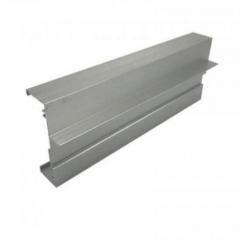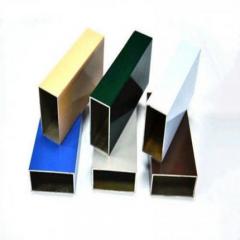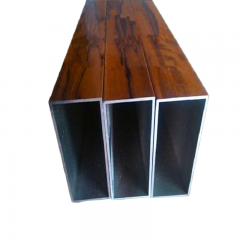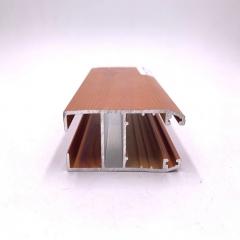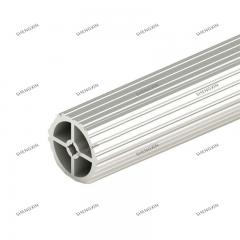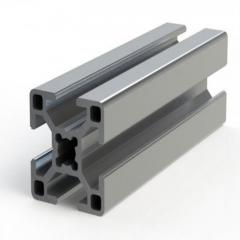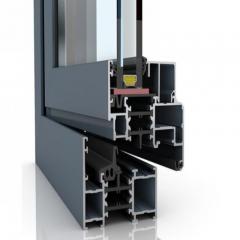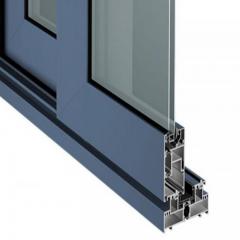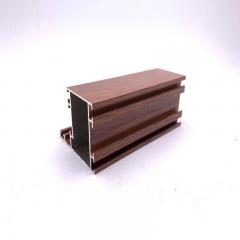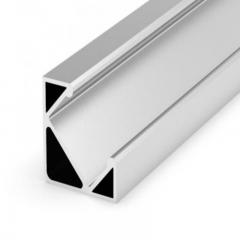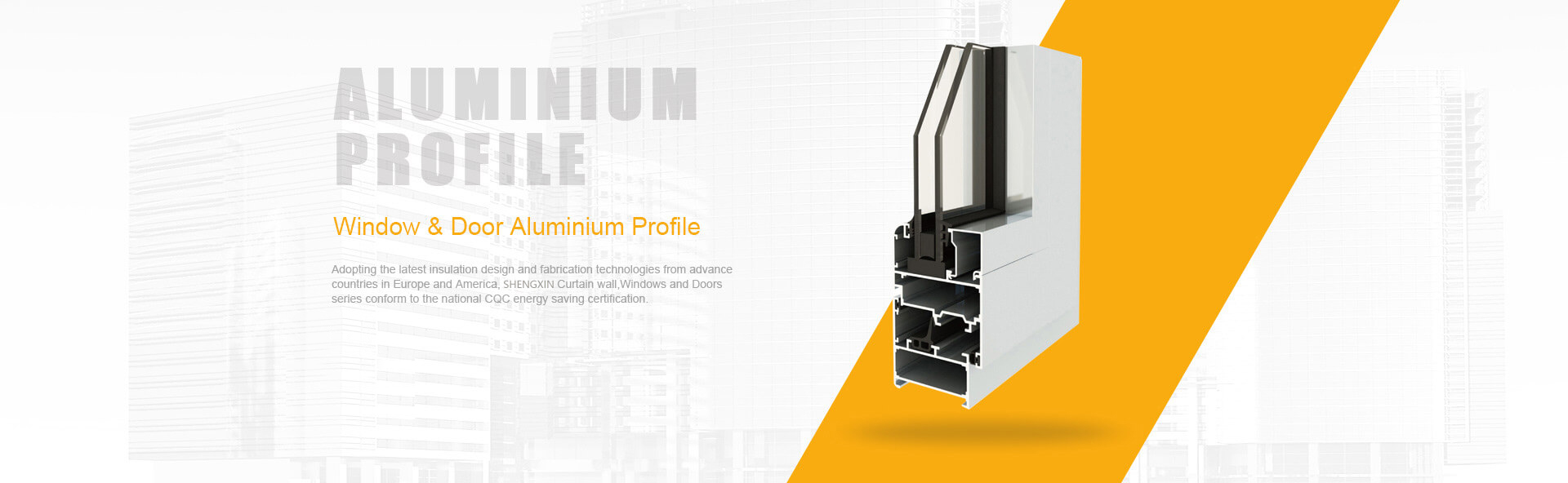
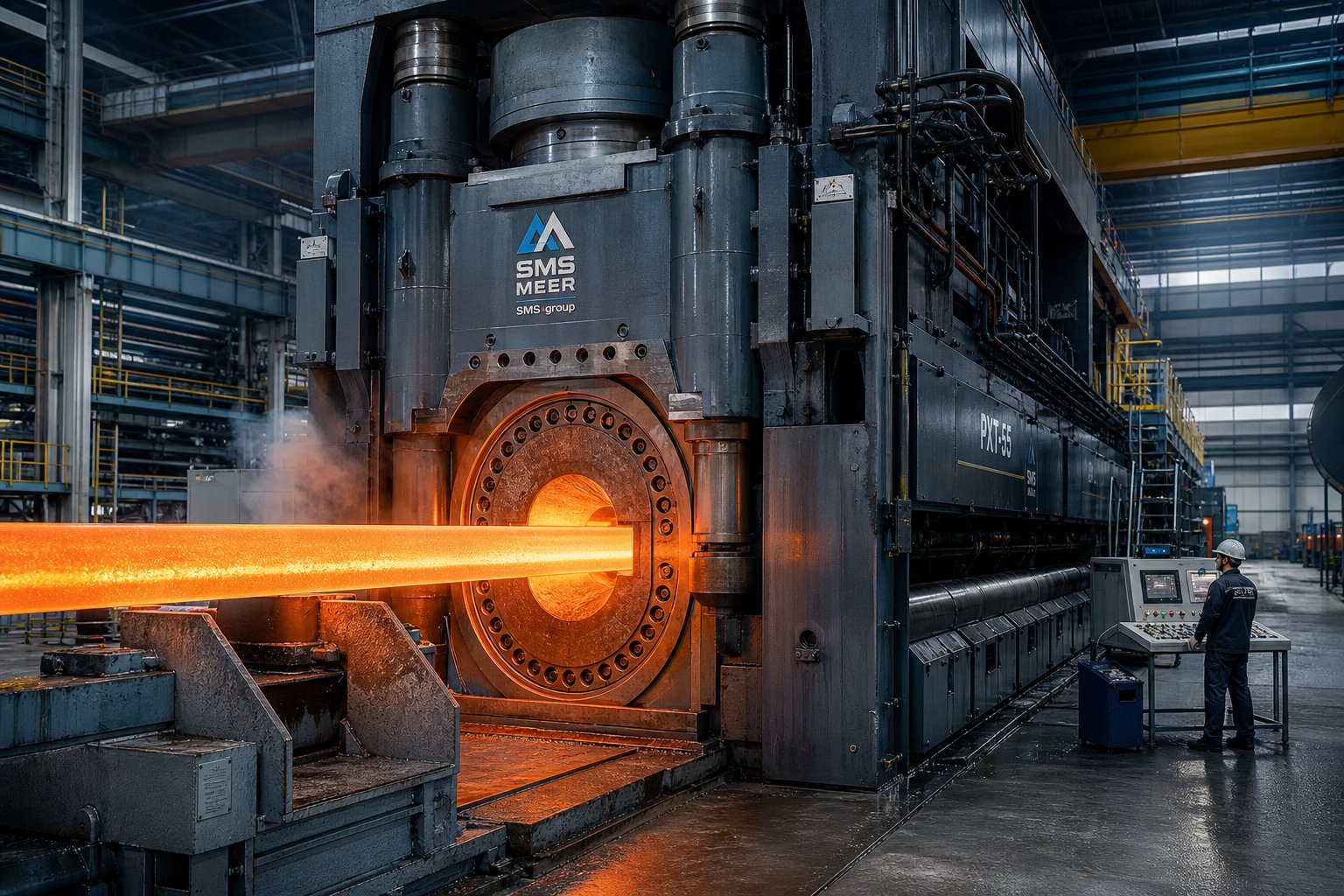
When you look around at modern buildings, vehicles, and machinery, you're seeing aluminum extrusion profiles everywhere—from sleek window frames to structural components in aircraft. But what exactly goes into creating these versatile shapes, and why does your choice of manufacturer matter so much?
Aluminum profile extrusion is a manufacturing process where heated aluminum billets are forced through precision-engineered dies to create specific cross-sectional shapes. Think of it like pushing dough through a pasta maker, except you're working with aluminum heated to around 700-930°F (370-500°C) and applying up to 15,000 tons of hydraulic pressure. The result? Aluminum profiles that can be simple bars and angles or incredibly complex custom configurations.
The manufacturers who specialize in this process serve as the backbone of countless industries. They transform raw aluminum into the extruded aluminum profiles that become everything from 4040 aluminum extrusion frames for industrial automation to architectural curtain walls that define city skylines.
Why choose extrusion over other metal forming techniques like casting? The answer lies in the distinct advantages extrusions offer. Unlike casting, where molten aluminum is poured into molds and may contain porosity or seam imperfections, extruded aluminum profiles emerge with excellent surface finishes and superior structural integrity.
The extrusion process enables complex geometries that would be impossible or prohibitively expensive with other manufacturing methods—features like snap-fit joints, screw ports, tongue-and-groove connections, and integrated heat sink fins can all be incorporated into a single aluminum profile.
According to Howard Precision Metals, a new custom extrusion shape can be produced in as little as 8 weeks, with die engineering fees significantly lower than casting tooling. This makes aluminum extrusion particularly attractive for projects requiring complex cross-sections without massive upfront investment.
At the heart of every extrusion operation sits the die—a steel disk with a carefully designed opening that determines the exact shape of your finished profile. The quality of this die directly impacts everything from dimensional accuracy to surface finish.
There are three primary die types used by aluminum profile extrusion manufacturers:
Quality manufacturers invest heavily in die design and maintenance because these tools endure tremendous stress during production. When you're evaluating potential partners for your project, understanding their die design capabilities and maintenance programs gives you real insight into the consistency and quality you can expect from their aluminum profiles.
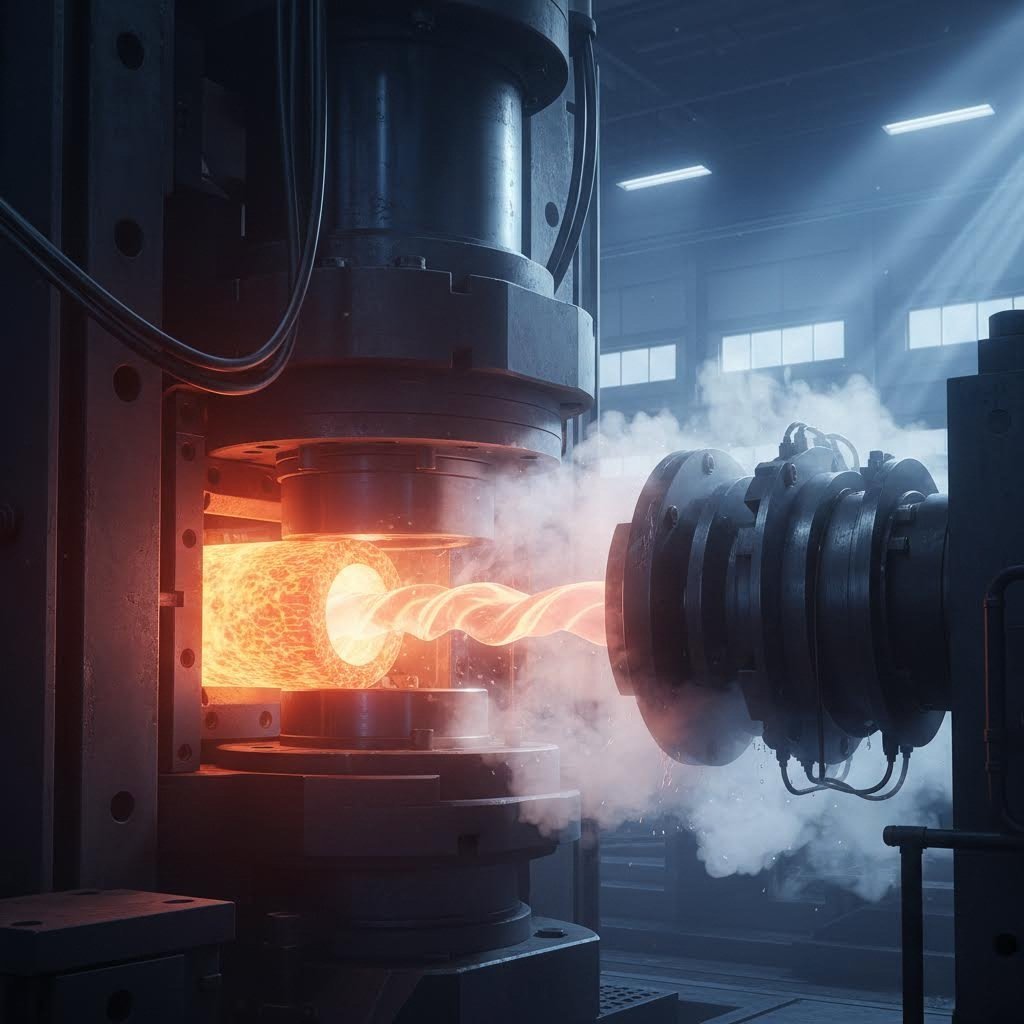
Ever wondered how extruded aluminum is made? The journey from raw aluminum to finished aluminium extruded profile involves a carefully orchestrated sequence of steps, each critical to the final product's quality. Understanding this process helps you evaluate whether a manufacturer has the expertise and equipment to deliver extrusion products that meet your specifications.
The aluminium extrusion process transforms cylindrical aluminum billets into precisely shaped profiles through heat, pressure, and expert handling. Let's walk through each stage so you know exactly what happens behind the scenes at quality extrusion aluminum facilities.
Whether you need a simple aluminum extrusion tube or a complex architectural profile, the fundamental manufacturing process follows the same sequence. Here's how manufacturers aluminum extrude raw material into finished products:
Temperature isn't just one factor among many in aluminum extrusion—it's the most important parameter controlling production quality, material waste, and even press lifespan. Even small deviations from optimal temperature ranges can lead to defects, inconsistent properties, or scrapped material.
Consider what happens at each temperature-critical stage:
Quality aluminum profile extrusion manufacturers invest in precise temperature monitoring systems, including non-contact pyrometers at billet heating, press exit, and cooling table positions. This continuous temperature control ensures every profile achieves consistent properties—something you should verify when evaluating potential manufacturing partners.
The heat treatment stage deserves special attention. According to industry data, untreated 6061 aluminum (T4 temper) has a tensile strength of 241 MPa, while heat-treated 6061 (T6 temper) reaches 310 MPa—a 29% increase in strength from this single post-extrusion step. Understanding your project's strength requirements helps you communicate effectively with manufacturers about proper alloy and temper specifications.
Now that you understand how aluminum profiles are made, how do you separate exceptional aluminum extrusion companies from average ones? The difference often comes down to capabilities that aren't immediately visible—press capacity, die design expertise, certifications, and finishing options. Let's explore what to look for when researching a partner for your custom aluminum extrusions.
Imagine trying to squeeze toothpaste through a tiny opening versus a wide tube—the force required differs dramatically. The same principle applies to aluminum extrusion. Press tonnage directly determines what profile sizes, wall thicknesses, and complexities a manufacturer can produce.
According to industry guidance, different applications require specific press capacities:
Why does this matter for your project? A manufacturer with only small presses simply cannot produce large curtain wall sections or thick-walled industrial profiles. Conversely, using an oversized press for small electronic enclosure profiles wastes energy and may compromise precision. When reviewing an aluminum extrusion profiles catalog, pay attention to the press range—it tells you immediately whether that manufacturer can handle your specific requirements.
Certifications aren't just plaques on a wall—they represent documented systems for consistent quality, traceability, and continuous improvement. When evaluating any international extrusion corporation or domestic supplier, verify their certifications match your industry requirements.
ISO 9001 serves as the baseline. This certification confirms the manufacturer has established processes for quality management, from initial quoting through final delivery. According to manufacturing experts, ISO 9001 certification means the company follows documented procedures, conducts regular audits, and implements corrective actions when issues arise.
For specialized industries, additional certifications become essential:
An extruded aluminum corporation holding multiple certifications signals operational maturity and reduced risk of supply disruptions from quality failures or compliance issues.
When researching potential partners, use this framework to compare key differentiators:
| Capability Category | Entry-Level Manufacturers | Mid-Tier Manufacturers | Premium Manufacturers |
|---|---|---|---|
| Press Range | Single press size (typically under 1,500T) | 2-5 presses spanning 600T-3,000T | Multiple presses from 600T-5,500T+ for full flexibility |
| Certifications | ISO 9001 only | ISO 9001 plus one industry-specific certification | ISO 9001, IATF 16949, AS9100, and environmental certifications |
| Surface Treatments | Basic anodizing or outsourced finishing | In-house anodizing and powder coating | Full range: anodizing, powder coating, PVDF, specialty finishes |
| Minimum Order Quantities | Higher MOQs to offset limited capacity | Moderate MOQs with flexibility for repeat customers | Flexible MOQs with capacity to scale from prototypes to mass production |
Beyond press capacity and certifications, evaluate a manufacturer's die design capabilities. The die determines your aluminum extrusion profile's exact dimensions, tolerances, and surface quality. Quality manufacturers employ experienced die designers who can:
According to industry sources, a manufacturer's experience serving your specific industry matters significantly. Different sectors have unique requirements and regulations—a supplier familiar with your application will be better equipped to meet your needs and anticipate potential challenges.
When requesting quotes, ask about Design for Manufacturability (DFM) feedback. Manufacturers who proactively suggest improvements demonstrate engineering depth that translates to better extrusion profiles and fewer production issues. This collaborative approach often saves both time and money compared to working with suppliers who simply quote whatever you submit.
With these evaluation criteria in hand, your next decision involves selecting the right aluminum alloy for your specific performance requirements.
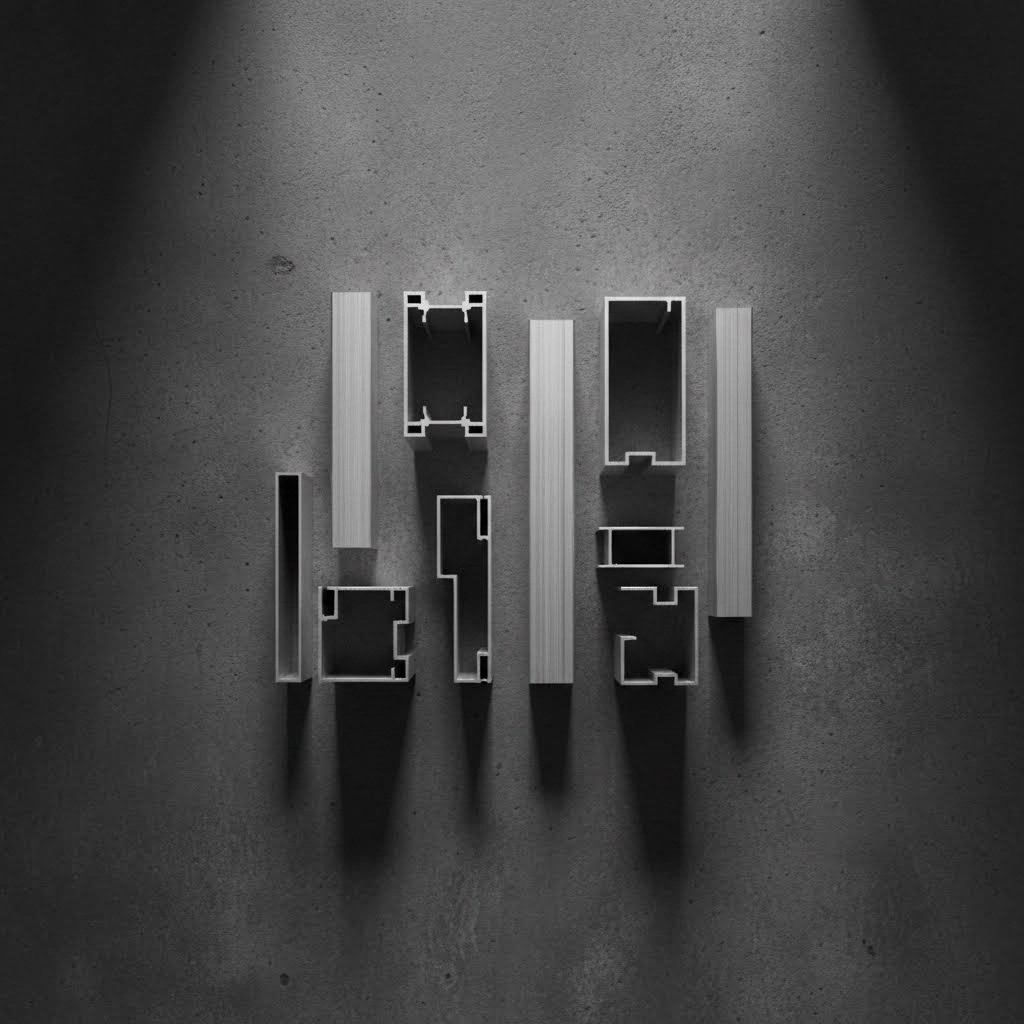
You've identified capable aluminum profile extrusion manufacturers and understand their processes—but here's where many projects succeed or stumble: choosing the right aluminum alloy. The alloy you specify affects everything from how easily manufacturers can produce your aluminum extrusion shapes to how the finished profiles perform in your application.
Think of alloy selection like choosing the right wood species for furniture. Oak, pine, and maple all come from trees, but each brings distinct characteristics that make it ideal for specific purposes. The same logic applies to aluminum alloys—6063, 6061, 6005, and specialty grades each offer unique advantages depending on your project's demands.
When manufacturers discuss extruded aluminum shapes, two alloys dominate the conversation: 6063 and 6061. Understanding their differences helps you communicate effectively with suppliers and ensures you receive aluminium profile solutions that actually meet your requirements.
6063 Aluminum: The Architectural Standard
Often called the "architectural alloy," 6063 contains approximately 0.4% silicon and 0.7% magnesium. According to Tri-State Aluminum's alloy specifications, this composition makes 6063 the most cost-efficient choice for a wide range of architectural applications. Why? Because 6063 offers:
You'll find 6063 in window frames, door systems, handrails, furniture, and decorative trim—anywhere appearance matters as much as function.
6061 Aluminum: The Structural Workhorse
When your project demands higher mechanical performance, 6061 steps in. This alloy contains approximately 0.6% magnesium, 0.25% copper, and 0.09% chromium—about 30-50% more magnesium and silicon than 6063. The result is a profile aluminum material with:
Manufacturers recommend 6061 for truck frames, aerospace components, marine hardware, structural members, and applications requiring welded or heavily machined profiles.
The Trade-Off You Need to Understand
Here's what many buyers miss: 6061's superior strength comes at the cost of surface finish quality. As industry specifications note, 6061 has a "poor finishing response" compared to 6063. If your aluminium profile will be visible to end users and aesthetics matter, this becomes a critical consideration.
Beyond the 6063/6061 decision, the 6000 series offers additional options that balance different priorities. Understanding these alternatives helps you optimize for your specific application.
6005/6005A: The Middle Ground
Positioned between 6063 and 6061, the 6005 alloy family offers an attractive compromise. According to Ya Ji Aluminum's technical analysis, 6005 delivers:
You'll encounter 6005 in bus and truck frames, railway cars, conveyor systems, and curtain wall structures—applications requiring structural performance with good production efficiency.
6463: When Appearance Is Everything
For applications demanding the highest aesthetic standards, 6463 produces a bright, mirror-like finish unmatched by other extrusion alloys. Shower enclosures, picture frames, automotive trim, and premium display fixtures often specify this alloy when visual impact justifies the additional cost.
Use this comparison table when discussing requirements with aluminum profile extrusion manufacturers:
| Property | 6063-T6 | 6061-T6 | 6005-T6 | 6463-T6 |
|---|---|---|---|---|
| Tensile Strength | 241 MPa | 310 MPa | 310 MPa | 240 MPa |
| Yield Strength | 214 MPa | 276 MPa | 260 MPa | 215 MPa |
| Corrosion Resistance | Excellent | Good | Very Good | Excellent |
| Weldability | Very Good | Good | Excellent | Good |
| Surface Finish Quality | Excellent | Fair | Good | Superior (mirror-like) |
| Extrudability | Excellent | Moderate | Good | Good |
| Typical Applications | Windows, doors, furniture, architectural trim | Aerospace, trucks, marine, structural members | Transportation frames, industrial structures | Decorative trim, premium displays |
Selecting the wrong alloy creates problems that ripple through your entire project. Consider these practical implications:
Extrudability and Die Life: Harder alloys like 6061 wear dies faster and require slower extrusion speeds. This affects lead times and may influence pricing, especially for complex flextrude aluminum shapes with thin walls or intricate features.
Surface Treatment Compatibility: Both 6061 and 6063 anodize well, but 6063's superior surface adhesion produces more consistent colored finishes. If your project requires custom anodizing in specific colors, discuss alloy selection with your manufacturer early.
Secondary Processing: Planning extensive CNC machining? 6061's better machinability reduces tool wear and improves dimensional accuracy. For profiles requiring significant bending or forming, 6063's higher ductility (15% elongation versus 12% for 6061) makes it the better choice.
Cost Considerations: According to industry data, 6063 is more commonly stocked, typically has lower minimum order requirements, and costs less than 6061. For high-volume production, this difference compounds significantly.
When you're uncertain which alloy fits your application, experienced manufacturers can provide guidance based on your specific performance requirements, production volumes, and budget constraints. The right alloy choice—made early in your project—prevents costly redesigns and ensures your finished profiles perform exactly as intended.
You've selected the right alloy and identified key manufacturer capabilities—but where should your aluminum extrusion suppliers actually be located? This decision impacts far more than shipping costs. In 2025, the domestic versus international sourcing question has become increasingly complex, shaped by tariff policies, compliance requirements, and supply chain realities that didn't exist just a few years ago.
The simple "who quotes the lowest price" approach no longer works. According to Monarch Metal's 2025 sourcing guide, today's sourcing decisions hinge on lead time, compliance risk, quality control, and total landed cost—not just the line item on a quote sheet. Let's break down when each option makes strategic sense for your project.
American aluminum extrusion facilities offer compelling benefits that extend well beyond geographic proximity. When evaluating american aluminum manufacturers, consider these practical advantages:
Dramatically Shorter Lead Times
Domestic extruders routinely turn around dies and production runs in three to eight weeks once billet is booked. For repeat orders with existing dies, lead times can drop to as low as two weeks from order to delivery. Compare this to ocean freight from Asia—approximately 32 days door-to-port for West Coast destinations, or 52 days to the East Coast, not counting customs clearance and drayage.
Agile Design Iteration
Need to make last-minute design changes or run through PPAP cycles quickly? US aluminum companies excel at fast DFM (Design for Manufacturability) feedback loops. They can fine-tune die design, adjust tongue ratios, and modify hollow features in days rather than weeks. This agility proves invaluable during product launches or when engineering changes emerge mid-project.
Simplified Communication
Working within the same time zones and language eliminates the communication delays that plague international sourcing. When quality issues arise or specifications need clarification, you can resolve them in hours instead of days.
Compliance and Documentation Advantages
For projects tied to public infrastructure, aerospace, or OEM assemblies requiring strict documentation, domestic sourcing isn't just faster—it's safer. The Build America, Buy America (BABA) rules now fully enforced mean many federally funded highway and infrastructure projects require aluminum products to be U.S. made unless a specific waiver applies.
Additionally, with UFLPA (Uyghur Forced Labor Prevention Act) scrutiny on aluminum imports, domestic sources eliminate the need to trace the entire supply chain from bauxite to finished extrusion. Some of the largest aluminum companies in USA already use high-recycled billet, helping meet ESG targets and pre-positioning products for EU CBAM compliance.
International aluminum extrusion suppliers still hold a strong position under the right conditions. If your demand is steady, high-volume, and price-sensitive, importing can deliver meaningful savings—provided you have the working capital to manage longer supply pipelines.
Potential Cost Advantages
Well-established operations in Asia, Europe, and the Middle East often quote lower unit prices at scale. For buyers with predictable schedules and no BABA obligations, offshore sourcing can still fit budget-driven programs.
Larger Production Capacity
Some international facilities offer massive press capacities and production volumes that exceed what many domestic suppliers can provide. For very large orders with extended timelines, this capacity advantage matters.
The Hidden Costs You Must Calculate
However, those apparent savings must be weighed against real-world factors that erode the price advantage:
The smartest sourcing teams now calculate total landed cost (TLC) instead of focusing on per-pound pricing:
TLC = Ex-works price + Freight + Duties + Tariffs + Compliance + Carrying Cost + Risk Buffer
Whether you're evaluating aluminium companies in USA or international sources, standardize your RFQ process with these essential questions:
Many OEMs and fabricators now run a dual-source model: domestic suppliers for fast-turn, compliance-critical, or lower-volume work, while maintaining international partnerships for steady, cost-driven production. You can also cut the master die domestically for IP protection and send a licensed replica overseas once qualified—pairing this with two to four weeks of domestic safety stock gains both cost control and supply chain resilience.
Understanding the domestic versus international trade-offs positions you to make sourcing decisions grounded in facts rather than assumptions. Next, we'll explore how surface treatments and tolerance specifications further differentiate manufacturer capabilities and affect your finished profiles.
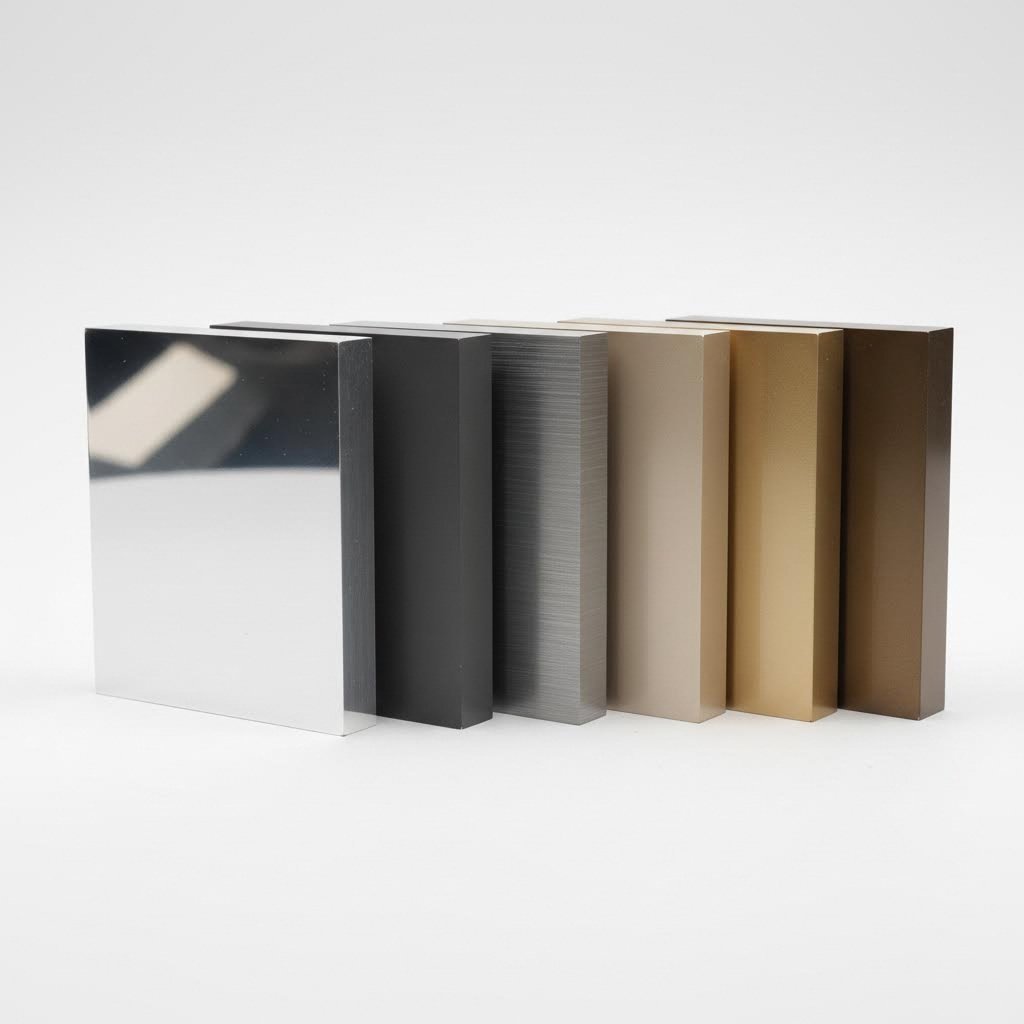
Your aluminum extrusion profile leaves the press with a clean, functional surface—but that's rarely the end of the story. The finish you apply determines how your profiles look, how long they last, and whether they'll perform in demanding environments. Meanwhile, the tolerances you specify affect whether profiles fit precisely into assemblies or require costly secondary machining.
Understanding these finishing options helps you communicate effectively with manufacturers and ensures your extruded aluminum track, aluminium rail extrusions, or architectural trim arrives ready for installation. Let's explore what each treatment offers and when it makes sense for your application.
Anodizing isn't a paint or coating applied to the surface—it's an electrochemical process that transforms the aluminum's own surface into a super-hard aluminum oxide layer. According to Accurate Metal's design guide, this oxide layer acts as both an insulator and an excellent substrate for decorative finishes, providing corrosion protection that becomes part of the metal itself.
The military standard MIL-A-8625F characterizes anodize by Type and Class, giving you a precise specification language when working with manufacturers:
One critical design consideration: you cannot hardcoat over existing hardcoat, anodize over anodize, or simply add thickness to an existing coating. If your aluminium extrusion profile requires rework, the original finish must be completely stripped first.
What affects anodizing results?
Your alloy choice significantly impacts anodizing outcomes. Different alloys produce different natural colors and maximum coating thicknesses. For example, 2024 alloy may achieve a maximum coating of 0.005" but will appear gray in color. Coatings over 0.0035" tend to chip and become milky—generally reserved only for salvaging defective parts.
Welded profiles present special challenges. According to industry specifications, acid becomes entrapped in welds during anodizing, causing color variations around welded areas. The high welding temperature creates a "halo" effect where the surrounding metal appears slightly lighter, making the weld zone seem larger than it actually is.
When your project demands unlimited color options or specific performance characteristics, organic coatings offer capabilities anodizing cannot match.
Powder Coating
According to Minh Dung Holdings' technical comparison, powder coating uses a dry powder charged electrostatically and sprayed onto grounded aluminum parts. The coated parts then cure in an oven, where the powder melts and flows into a smooth, durable finish.
Key advantages include virtually unlimited RAL colors and textures, excellent cost-effectiveness for batch production, good durability for indoor and moderate outdoor use, and an environmentally friendly process with no VOC emissions. Powder coating works exceptionally well for aluminum extrusion trim, window frames, fencing, furniture, and industrial components where specific color matching is essential.
PVDF Coatings (Kynar 500)
Architects consider PVDF the "gold standard" for exterior projects. This high-performance liquid paint system offers superior UV resistance maintaining color stability for 20+ years, exceptional chemical resistance against environmental pollutants, outstanding performance in coastal and industrial atmospheres, and self-cleaning properties that reduce maintenance requirements.
PVDF excels on monumental architecture, building facades, curtain walls, and metal roofing—anywhere long-term appearance retention justifies the premium cost. The trade-off? Higher application costs, longer lead times, and limited repair options compared to powder coating.
Use this comparison when discussing finish requirements with your manufacturer:
| Treatment | Durability Rating | Color Options | Cost Level | Best Applications |
|---|---|---|---|---|
| Clear Anodize (Type II, Class 1) | Excellent | Natural metallic | Low-Medium | Electronics, precision parts, extruded aluminum rails |
| Colored Anodize (Type II, Class 2) | Excellent | Limited palette (black, bronze, gold, champagne) | Medium | Architectural trim, consumer products, decorative profiles |
| Hardcoat Anodize (Type III) | Superior | Gray/dark (natural) | Medium-High | Wear surfaces, extruded aluminium track, industrial machinery |
| Powder Coating | Good-Excellent | Unlimited RAL colors | Low-Medium | Furniture, fencing, window frames, indoor applications |
| PVDF Coating | Superior | Wide range with custom matching | High | Curtain walls, facades, harsh outdoor environments |
| Micro-Arc Oxidation | Superior | Limited | High | Aerospace, marine, extreme wear applications |
Surface treatment gets the attention, but tolerance specifications often determine whether your profiles actually work in their intended application. According to The Aluminum Association's standard tolerance tables, extrusion tolerances vary based on profile type, temper, and dimensional characteristics.
Why tolerances matter differently across industries:
Architectural applications typically accept standard tolerances. Window frames and curtain wall mullions don't require the precision demanded by aerospace or automation equipment. Standard straightness tolerances of 0.0125" per foot of measured length work perfectly for most building applications.
Precision industrial applications demand tighter control. Extruded aluminum track for linear motion systems, machine frames requiring precise alignment, or profiles that must interface with mating components need tolerances beyond standard specifications. The Aluminum Association standards show that flatness tolerances range from 0.004" for narrow, thick-walled profiles up to 0.016" for wider, thinner sections.
Key tolerance categories to specify:
When your application requires tighter-than-standard tolerances, discuss this with manufacturers early. Achieving precision beyond standard specifications often requires specific temper selections (TX510 or TX511 stress-relieved tempers), modified extrusion parameters, and additional straightening or machining operations—all affecting lead time and cost.
Selecting the right surface treatment starts with understanding where your profiles will live:
Outdoor Architectural (Moderate Climate): Powder coating or standard anodizing provides excellent value. For visible architectural elements like aluminum extrusion trim, colored anodize offers long-term durability with a premium appearance.
Harsh Outdoor (Coastal, Industrial, High UV): PVDF coating justifies its premium cost through decades of color stability and corrosion resistance. For aluminium rail extrusions exposed to salt spray or industrial pollutants, this investment protects your profile's appearance and structural integrity.
Industrial Machinery: Hardcoat anodize (Type III) excels where wear resistance matters more than color. For extruded aluminum track in linear motion systems or conveyor guides, the coating's hardness—exceeding tool steel—dramatically extends service life.
Consumer Products: Balance appearance requirements with cost. Standard colored anodize works beautifully for electronics enclosures and premium consumer goods, while powder coating offers unlimited color options for furniture and appliances at lower cost.
The surface treatment and tolerance specifications you select directly impact your project's success and total cost. With these finishing considerations understood, you're ready to evaluate how different industries impose additional requirements on manufacturer selection.
Different industries demand vastly different capabilities from aluminum profile extrusion manufacturers. A supplier perfectly suited for window frames might lack the certifications required for aerospace components, while an industrial automation specialist may not offer the aesthetic finishing your consumer product needs.
Understanding what matters most in your specific sector helps you narrow your search to manufacturers equipped to deliver exactly what your project requires. Let's explore the must-have capabilities and certifications for each major industry vertical.
When your aluminium profiles will become window frames, curtain walls, storefronts, or building facades, aesthetic consistency and long-term durability drive your manufacturer selection. Architectural projects demand precision at scale—thousands of feet of extruded aluminum framing that must match perfectly across an entire building envelope.
What architectural projects require from manufacturers:
According to the Aluminum Extruders Council, architectural anodizing follows strict classifications: Class I architectural finishes (0.7 mil minimum thickness) handle the most critical outdoor applications, while Class II finishes (0.4 mil minimum) serve commercial applications receiving regular maintenance. When specifying your project, verify your manufacturer's anodizing meets AAMA 611-98 standards for architectural-grade performance.
For modular aluminum framing systems used in interior partitions, display fixtures, or cleanroom enclosures, look for manufacturers offering complete T-slot or framing extrusion product lines with matching connectors, panels, and hardware. This integrated approach simplifies procurement and ensures component compatibility.
Industrial applications—machine frames, conveyor systems, automation equipment, and material handling—prioritize structural performance and dimensional precision over aesthetic finishing. Your manufacturer selection should focus on engineering capability and alloy expertise.
Essential capabilities for industrial applications:
ISO 9001 certification represents the baseline for industrial suppliers. For manufacturers serving automotive OEMs or Tier 1 suppliers, IATF 16949 certification becomes essential—this automotive-specific quality management standard builds on ISO 9001 with additional requirements for defect prevention, variation reduction, and supply chain management.
Aerospace aluminum extrusions operate under the most stringent quality requirements in any industry. There's zero tolerance for material defects, dimensional errors, or documentation gaps when components become part of aircraft structures, satellite assemblies, or defense systems.
Non-negotiable requirements for aerospace suppliers:
Why does AS9100 matter even for non-aerospace applications? The certification signals a manufacturer's commitment to the highest quality standards. Companies that achieve and maintain AS9100 have demonstrated systematic approaches to risk management, configuration control, and continuous improvement that benefit all customers—regardless of industry.
Automotive, rail, and marine applications share common threads: weight reduction drives aluminum adoption, while safety requirements demand verified material properties and consistent quality.
Automotive manufacturer requirements:
Rail and mass transit requirements:
Consumer-facing applications demand the perfect balance of appearance, functionality, and cost efficiency. Whether you're producing laptop enclosures, furniture frames, or sporting equipment, your manufacturer must deliver cosmetic-grade profiles at competitive pricing.
Key capabilities for consumer applications:
For electronics applications, consider manufacturers offering EMI/RFI shielding expertise and understanding of thermal management requirements. Heat sink extrusions, for example, require specific fin geometries and alloy selections optimized for thermal conductivity.
The certification and capability requirements across industries create natural segmentation among aluminum profile extrusion manufacturers. A supplier holding AS9100 certification has invested significantly in quality systems—they're unlikely to compete on price for commodity architectural profiles. Conversely, a high-volume window frame specialist may lack the traceability systems aerospace applications demand.
When evaluating potential partners, match their demonstrated industry experience to your application. Ask for case studies or references from similar projects. A manufacturer who's solved problems like yours before will anticipate challenges and deliver better results than one learning your industry's requirements on your project.
Understanding these industry-specific requirements positions you to ask the right questions during manufacturer evaluation. Next, we'll explore how pricing and cost factors should influence your sourcing decisions.
You've identified the right alloy, surface treatment, and manufacturer capabilities for your project—but how much will it actually cost? Pricing for custom aluminum products often surprises first-time buyers because so many variables influence the final quote. Understanding these cost drivers helps you budget accurately and identify opportunities to optimize spending without compromising quality.
Unlike commodity materials where you simply check a price sheet, aluminum profile extrusion pricing reflects a complex equation of tooling investment, material costs, processing complexity, and order volume. Let's break down each factor so you can have informed conversations with manufacturers and make strategic decisions that balance performance with budget.
The die that shapes your custom extrusions represents a one-time tooling investment that significantly impacts project economics—especially for small aluminum extrusions or prototype runs. According to Gabrian International, tool costs for extrusion dies used in normal architectural and industrial applications typically range from $400 to $1,000, while large aluminum extrusions requiring 2,000-4,000 ton presses could see die costs as high as $2,000.
Profile complexity drives these costs higher. Profile Precision Extrusions reports their custom dies typically fall between $1,250 and $1,950 depending on profile type:
Here's the good news: many manufacturers refund tool costs if you purchase a stipulated volume within two years. Most also don't charge for replacement tooling after the die's useful life expires—provided you continue ordering. Normal die turnaround is 3-5 weeks, with production following within a week of sample approval.
How to think about die amortization:
According to Ya Ji Aluminum's cost analysis, solid dies typically last for 20,000-50,000 kg of extrusion, while hollow dies last 10,000-30,000 kg depending on section geometry and alloy. High-strength alloys like 7075 reduce die life by up to 30% due to increased wear.
Consider this amortization example: A $2,000 die with 40,000 kg lifetime adds just $0.05 per kilogram to your production cost. For large aluminum extrusions ordered in volume, tooling becomes negligible. For small prototype runs of small aluminum extrusions, that same $2,000 spread across 500 kg adds $4.00 per kilogram—a significant factor in your per-unit cost.
Beyond tooling, several factors influence your per-pound or per-piece pricing. Understanding their relative impact helps you prioritize optimization efforts:
The volume-pricing relationship:
Minimum order quantities exist because manufacturers must recoup setup and preparation costs. For custom extrusions, these fixed costs remain similar whether you order 100 pieces or 10,000. As Gabrian explains, if the manufacturer needs to recoup die and setup expenses across a small number of parts, the cost per piece rises accordingly. Increase production volume, and per-unit costs drop as those fixed expenses spread across more pieces.
Smart buyers find ways to reduce costs through design and procurement decisions rather than pushing for cheap aluminum that compromises performance. Consider these strategies:
Design for manufacturability:
Consolidate features into single profiles:
According to Ya Ji Aluminum, integrating multiple design features into one aluminum profile extrusion reduces total tooling investment. Adding screw ports instead of separate mounting brackets, or integrating tracks directly into the cross-section, eliminates dies and simplifies assembly.
Batch die orders when possible:
If your project requires multiple profile variations, ordering dies together can reduce costs through shared setup charges, bulk steel pricing, and parallel machining. Suppliers may offer discounts for multiple designs ordered simultaneously.
Optimize aluminum extrusion sizes for standard dies:
Where your design permits flexibility, ask manufacturers whether existing die inventory could meet your needs. Standard shapes eliminate tooling costs entirely and often ship faster than custom profiles.
Choose vertically integrated manufacturers:
Facilities combining extrusion, fabrication, and finishing minimize logistics complexity and reduce costs compared to coordinating operations between multiple vendors. When anodizing, machining, and cutting happen under one roof, you eliminate handling, shipping, and coordination overhead between suppliers.
Lock in material pricing for ongoing production:
For projects with predictable ongoing needs, some manufacturers will purchase aluminum in advance at current rates, protecting you from market volatility. This approach makes extrusion costs more predictable over time.
Understanding these cost dynamics positions you to request quotes strategically and evaluate proposals on total value rather than line-item pricing alone. With budget considerations clear, you're ready to explore what the actual working relationship with a manufacturer looks like—from initial design consultation through final delivery.
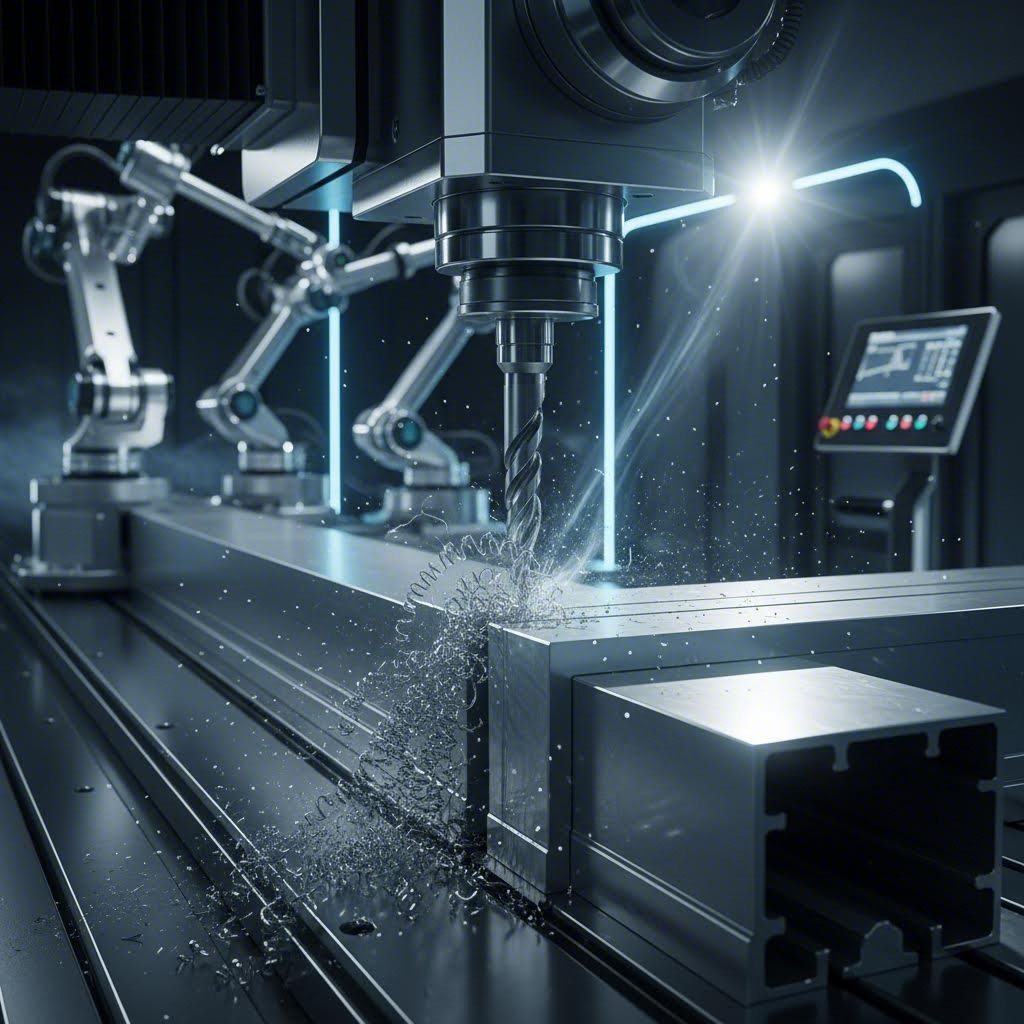
You've evaluated capabilities, selected your alloy, and identified promising aluminum profile extrusion manufacturers—now what? The journey from concept to finished aluminium extrusion profiles involves a structured engagement process that determines whether your project succeeds smoothly or encounters frustrating delays and costly revisions.
Understanding each stage of this partnership helps you prepare the right information, ask the right questions, and set realistic expectations for timing and costs. Whether you're ordering custom aluminum extrusion for the first time or looking to improve your current sourcing process, this walkthrough reveals what happens behind the scenes and how to maximize value from your manufacturing relationship.
The path from your initial idea to aluminum extruded products ready for shipment follows a predictable sequence. Each stage builds on the previous one, and shortcuts at early steps often create expensive problems later. Here's what a typical engagement looks like with a quality manufacturer:
Stage 1: Initial Consultation and Requirements Definition
Your first conversation with a manufacturer should focus on understanding—not selling. Quality suppliers ask detailed questions about your application, performance requirements, quantity expectations, and timeline before discussing pricing. Expect to share information about intended use environment, mechanical load requirements, surface finish expectations, assembly interfaces with other components, and estimated annual volume and order frequency.
During this stage, experienced manufacturers begin assessing whether your project fits their capabilities. A supplier with 35 extrusion presses ranging from 600T to 5500T can handle virtually any profile complexity, while a smaller operation might need to decline projects requiring large press capacity or specialty alloys.
Stage 2: Design Review and DFM Feedback
This is where good manufacturers distinguish themselves. According to Ya Ji Aluminum's DFM design guide, early supplier involvement allows extrusion engineers to flag risk features and propose die-friendly alternatives before you've committed to tooling.
What does effective DFM feedback address?
The reference materials highlight a practical example: a high-aspect-ratio fin design with 25 mm tall fins and 3 mm gaps (8.3:1 ratio) caused die tongue stress and waviness problems. The DFM solution reduced fin height, widened gaps to 6 mm, and added backing ribs—achieving a 4:1 ratio that extruded faster with better quality.
Stage 3: Quotation and Project Approval
With design refinements complete, manufacturers provide formal quotations covering die tooling costs and lead time, per-unit pricing at various quantity breaks, surface treatment costs, secondary processing charges (if applicable), and estimated production timeline.
Review quotes carefully. The lowest price isn't always the best value—consider whether the manufacturer demonstrated genuine understanding of your requirements and whether their DFM feedback suggested they'll produce quality profile precision extrusions or struggle with your design.
Once you approve the quotation and place your order, die development begins. This critical phase transforms your 2D drawings into the precision steel tooling that will shape every profile you receive.
Die Design and Engineering
Experienced die designers analyze your profile geometry to determine optimal bearing lengths for uniform material flow, pocket geometry to control metal velocity, mandrel design (for hollow profiles) that balances strength with material flow, and feeder plate configuration for challenging sections.
For complex custom profile extrusions, some manufacturers use flow simulation (FEM/CFD analysis) to predict metal behavior before cutting steel. This computational approach reduces trial iterations and accelerates time to production-ready tooling.
Die Fabrication Timeline
According to CDN Inc., die turnaround typically runs 3-5 weeks for standard profiles. Complex hollow dies or multi-cavity configurations may require additional time. During this period, the manufacturer machines the die from tool steel, heat treats for hardness and durability, polishes bearing surfaces for optimal surface finish, and inspects dimensional accuracy against your specifications.
Die Trials and Sample Production
Before full production begins, manufacturers run die trials to verify the tooling produces profiles meeting your specifications. This sampling phase typically yields first-article samples for your dimensional inspection and approval, surface finish evaluation, mechanical property verification (if specified), and fit-testing with mating components.
Don't rush sample approval. According to DFM best practices, establishing a measurement plan that reflects extrusion realities matters greatly. Mark critical-to-function dimensions, provide gauge-friendly datums, and specify straightness sampling intervals that match your assembly requirements.
Die Modifications and Optimization
First trials rarely produce perfect results. Expect manufacturers to make minor adjustments—refining bearing lengths, adjusting pocket geometry, or modifying feeder configurations—before achieving consistent production quality. Quality manufacturers build this optimization time into their quoted lead times rather than surprising you with delays.
With approved samples in hand, production scaling begins. Understanding what happens during this phase helps you anticipate delivery timing and quality outcomes.
Production Run Execution
According to Richardson Metals, the production sequence follows the steps outlined earlier in this article: billet preparation, heating, extrusion through your approved die, cooling, stretching, cutting, and heat treatment. Quality manufacturers monitor temperature, pressure, and speed throughout production to maintain consistency.
For extruded aluminum bar stock or simple profiles, production moves quickly once dialed in. Complex extruded aluminium profiles with tight tolerances may require slower speeds and more frequent quality checks.
In-Process Quality Verification
Quality inspection occurs throughout production, not just at the end. Effective manufacturers implement first-piece inspection against your approved sample, dimensional checks at regular intervals during the run, surface finish monitoring for defects or die wear, and straightness and twist verification on long profiles.
When your project involves custom extrusion aluminum for precision applications, ask about statistical process control (SPC) data availability. Manufacturers tracking process capability can demonstrate consistent quality rather than relying on end-of-line sorting.
Post-Extrusion Processing
Many projects require additional processing beyond raw extrusion. Manufacturers offering integrated deep processing capabilities—like Shengxin Aluminium's CNC machining services for cutting, drilling, and bending—simplify your supply chain by completing fabrication under one roof.
With over 30 years of industry experience and state-of-the-art CNC machining centers, experienced manufacturers provide end-to-end support from die development through mass production. Their technical teams offer DFM guidance that anticipates downstream processing requirements, ensuring your profiles arrive ready for assembly rather than requiring additional fabrication.
Surface treatment follows machining. Whether you've specified anodizing (available in custom colors like Champagne and Rose Gold), powder coating, PVDF, or micro-arc oxidation, integrated manufacturers coordinate finishing timing to maintain your project schedule.
Documentation and Certification
Before shipment, quality manufacturers compile documentation packages including material test reports verifying alloy composition and temper, dimensional inspection reports against your specifications, surface treatment verification (coating thickness, adhesion testing), and certificates of conformance for certified applications.
For aerospace or automotive applications, expect additional documentation: full material traceability, heat treatment lot records, and PPAP packages as required.
Packaging and Shipping
Proper packaging protects your investment. Manufacturers should use protective wrapping to prevent surface scratches during transit, interleaving between profiles to avoid contact damage, appropriate crating or bundling for profile length and fragility, and clear labeling for receiving and inventory management.
Questions to Ask Throughout the Process
Maximize your manufacturing partnership by asking informed questions at each stage:
Working with manufacturers who offer comprehensive capabilities—from die design through finishing and secondary processing—streamlines projects and reduces the coordination complexity of managing multiple suppliers. When you're ready to move forward with your aluminum extrusion project, selecting a partner with proven experience and integrated services positions you for successful outcomes from first sample through ongoing production.
You've now explored every critical aspect of working with aluminum profile extrusion manufacturers—from understanding how profiles are made to evaluating alloy options, surface treatments, and industry-specific requirements. The question remains: how do you pull all this knowledge together and make a confident decision?
Selecting the right manufacturing partner isn't about finding the lowest quote or the flashiest website. It's about identifying a supplier whose capabilities, experience, and service approach align with your project's specific demands. The manufacturers who deliver consistently excellent results share common characteristics—and the checklist below captures exactly what to verify before committing to any aluminum extrusion supply relationship.
Use this comprehensive checklist when evaluating potential partners for custom extruded aluminum projects. According to RPM Industries, researching suppliers systematically—rather than rushing decisions under deadline pressure—ensures you end up with superior quality finished products.
Armed with this evaluation framework, you're prepared to identify manufacturers who genuinely fit your requirements—not just those who claim capabilities they can't deliver. The difference between a frustrating sourcing experience and a successful long-term partnership often comes down to thoroughness at this selection stage.
Remember that top aluminum suppliers for custom products distinguish themselves through integrated service offerings. When die design, extrusion, surface treatment, and secondary processing happen under one roof, you eliminate the coordination headaches of managing multiple vendors. You also reduce transit damage risks, shorten overall lead times, and maintain clearer accountability for quality outcomes.
Consider what comprehensive capability looks like in practice. Manufacturers like Shengxin Aluminium demonstrate this integrated approach with 35 extrusion presses spanning 600T to 5500T, extensive CNC machining centers for precision cutting, drilling, and bending, plus diverse finishing options including custom anodizing in colors like Champagne and Rose Gold, powder coating, PVDF, and micro-arc oxidation. With over 30 years of industry experience, their technical teams provide end-to-end support from die development through mass production—exactly the comprehensive aluminum extrusion services that simplify complex projects.
As you move forward with your manufacturer evaluation, keep this article as your reference guide. Return to specific sections when questions arise about alloy selection, tolerance specifications, or industry certification requirements. The knowledge you've gained positions you to ask informed questions, evaluate proposals critically, and ultimately select a manufacturing partner who delivers extruded metal profiles meeting your exact specifications.
Your next step? Reach out to two or three manufacturers whose capabilities align with your checklist criteria. Share your project requirements, request DFM feedback on your designs, and evaluate not just their pricing but their responsiveness, technical depth, and willingness to collaborate. The right top aluminum supply partner will demonstrate genuine interest in understanding your application—and that engagement quality often predicts the quality of everything that follows.
Leading U.S. aluminum extrusion manufacturers include companies like Taber Extrusions, International Extrusions, Paramount Extrusions, and Superior Extrusion. When selecting a manufacturer, focus on their press capacity range, quality certifications (ISO 9001, AS9100, IATF 16949), surface treatment capabilities, and industry experience rather than just company size. Manufacturers like Shengxin Aluminium offer comprehensive services with 35 extrusion presses ranging from 600T to 5500T, providing flexibility for projects of all scales.
Choose 6063 aluminum for architectural applications requiring excellent surface finish and anodizing response—ideal for window frames, furniture, and decorative trim. Select 6061 when your project demands higher tensile strength (310 MPa vs 241 MPa) for structural applications like truck frames, aerospace components, or heavily machined profiles. The trade-off is that 6061 has a poorer surface finish quality, so if aesthetics matter, 6063 is the better choice.
ISO 9001 certification serves as the baseline for quality management systems. For automotive applications, require IATF 16949 certification. Aerospace projects demand AS9100 certification plus NADCAP accreditation for special processes. Environmental responsibility is demonstrated through ISO 14001. These certifications signal documented processes, regular audits, and systematic quality control that reduce supply disruption risks.
Custom extrusion die costs typically range from $400 to $3,000 depending on complexity. Solid dies cost $300-$800, semi-hollow dies run $800-$1,500, and hollow dies with internal cavities cost $1,000-$3,000 or more. Many manufacturers refund tooling costs if you purchase a stipulated volume within two years. Die turnaround is typically 3-5 weeks, with production following within a week of sample approval.
Domestic manufacturers offer shorter lead times (3-8 weeks vs 8-12 weeks for overseas), easier communication, simplified compliance documentation, and agile design iteration. International sourcing may provide lower unit costs at high volumes but faces tariff exposure (50-100% on certain imports), longer inventory cycles, UFLPA compliance requirements, and quality oversight challenges. Calculate total landed cost including freight, duties, tariffs, and carrying costs rather than comparing per-pound pricing alone.



 Интернет Сервис
 0086 136 3563 2360
 sales@sxalu.com
 +86 136 3563 2360
 русский
 English
 français
 Deutsch
 español
 português
 العربية
 ไทย
ไทย Việt
Việt Українська