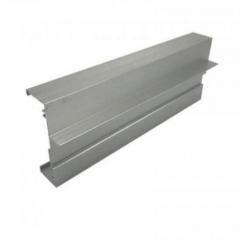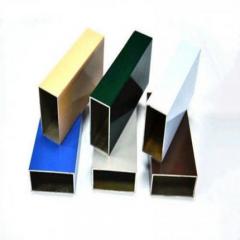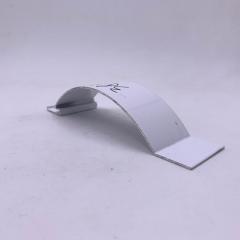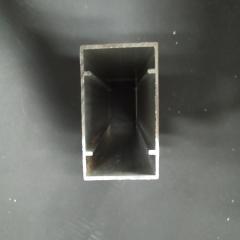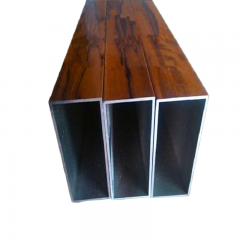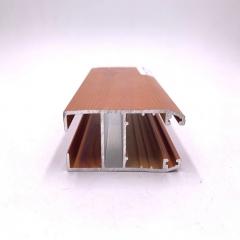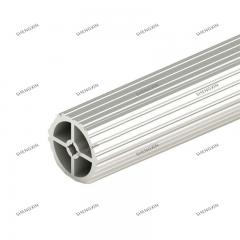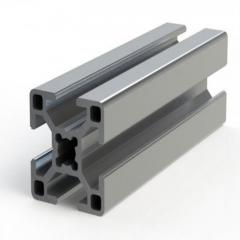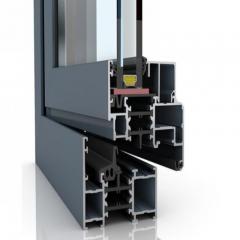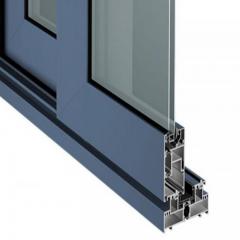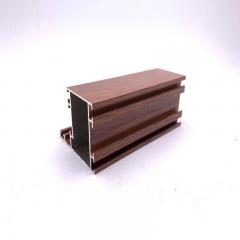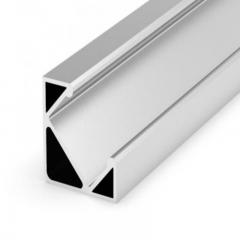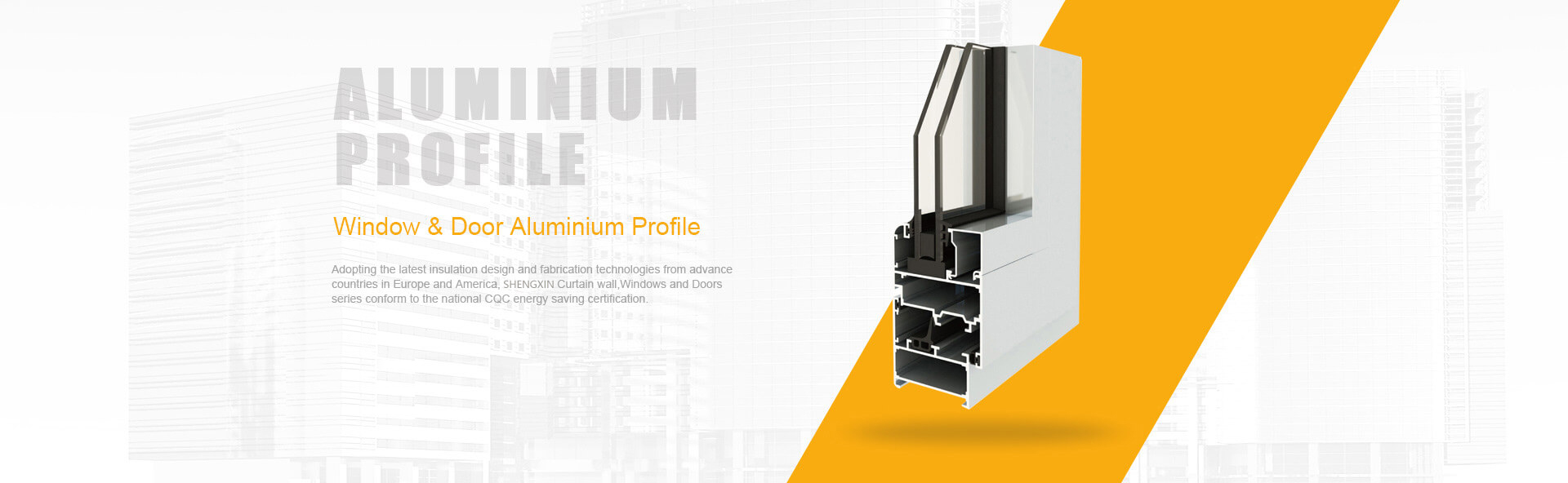
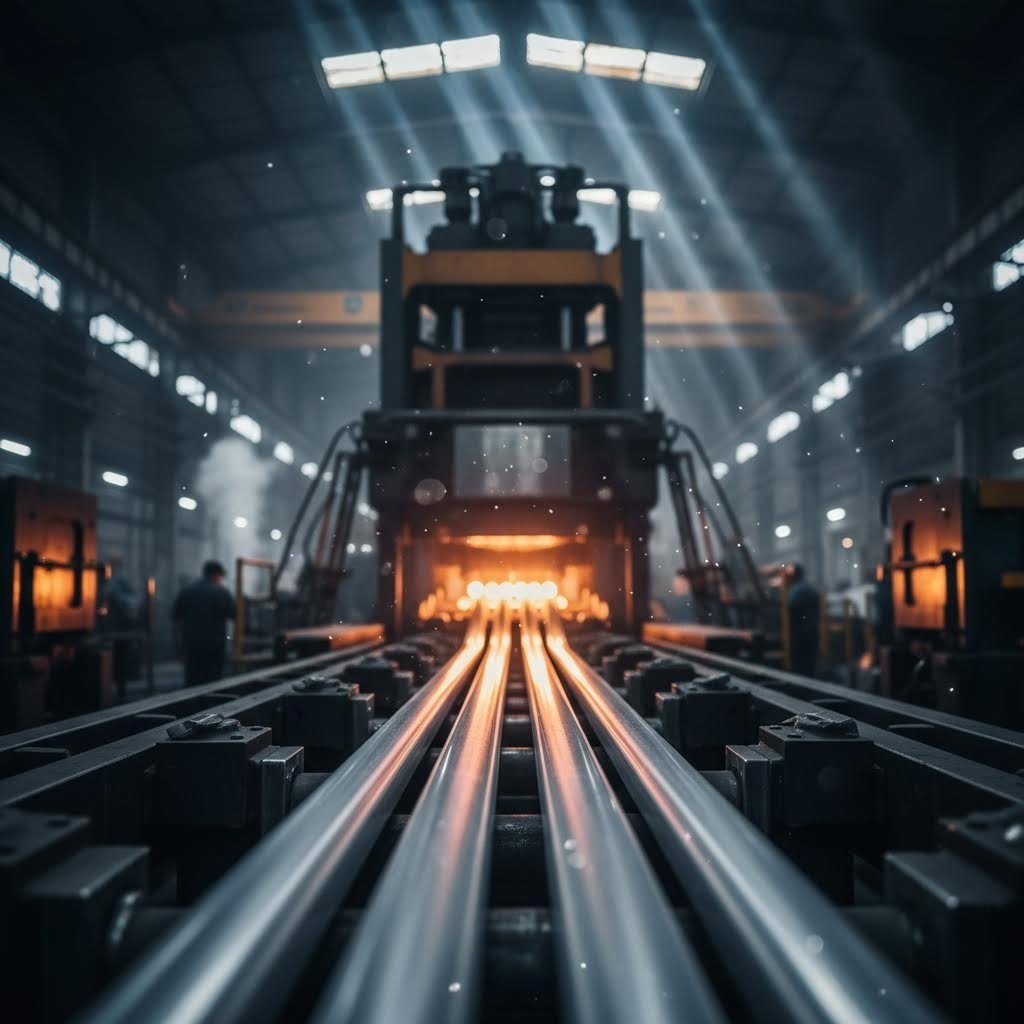
Aluminum extrusion tubing refers to hollow, tubular profiles created by forcing heated aluminum alloy through a specially designed die. Unlike rolled or welded aluminum tubes, extruded aluminum tubing emerges as a seamless, one-piece profile with exceptional dimensional consistency. This manufacturing approach allows for precise wall thicknesses, uniform cross-sections, and complex hollow shapes that other fabrication methods simply cannot match.
Sounds complex? Imagine squeezing toothpaste through a tube opening. The paste takes the exact shape of that opening as it exits. Aluminum extrusion works on the same principle—except you're working with softened metal and hydraulic presses capable of exerting up to 15,000 tons of pressure.
The tube extrusion process relies on specialized tooling called a hollow die. When creating an aluminum extrusion tube, the die contains both an outer opening that forms the tube's exterior diameter and an internal "mandrel" that shapes the hollow interior. As the heated aluminum flows through the die, it separates around the mandrel supports, then welds back together under immense pressure to form a seamless tubular profile.
This al extrusion method produces superior results compared to welded tubing because there are no seams or joints that could compromise structural integrity. The extruded tube maintains uniform wall thickness throughout its length, ensuring consistent performance in demanding applications.
The aluminum extrusion process follows a carefully controlled sequence that transforms raw material into precision tubing. Here's how extrusion aluminum manufacturers bring your tubing to life:
What makes this process remarkable is its repeatability. Once the die is created, manufacturers can produce thousands of identical aluminum tubing profiles with tight tolerances. Each extruded tube matches the next, which is why industries from aerospace to architecture rely on this method for critical components requiring absolute consistency.
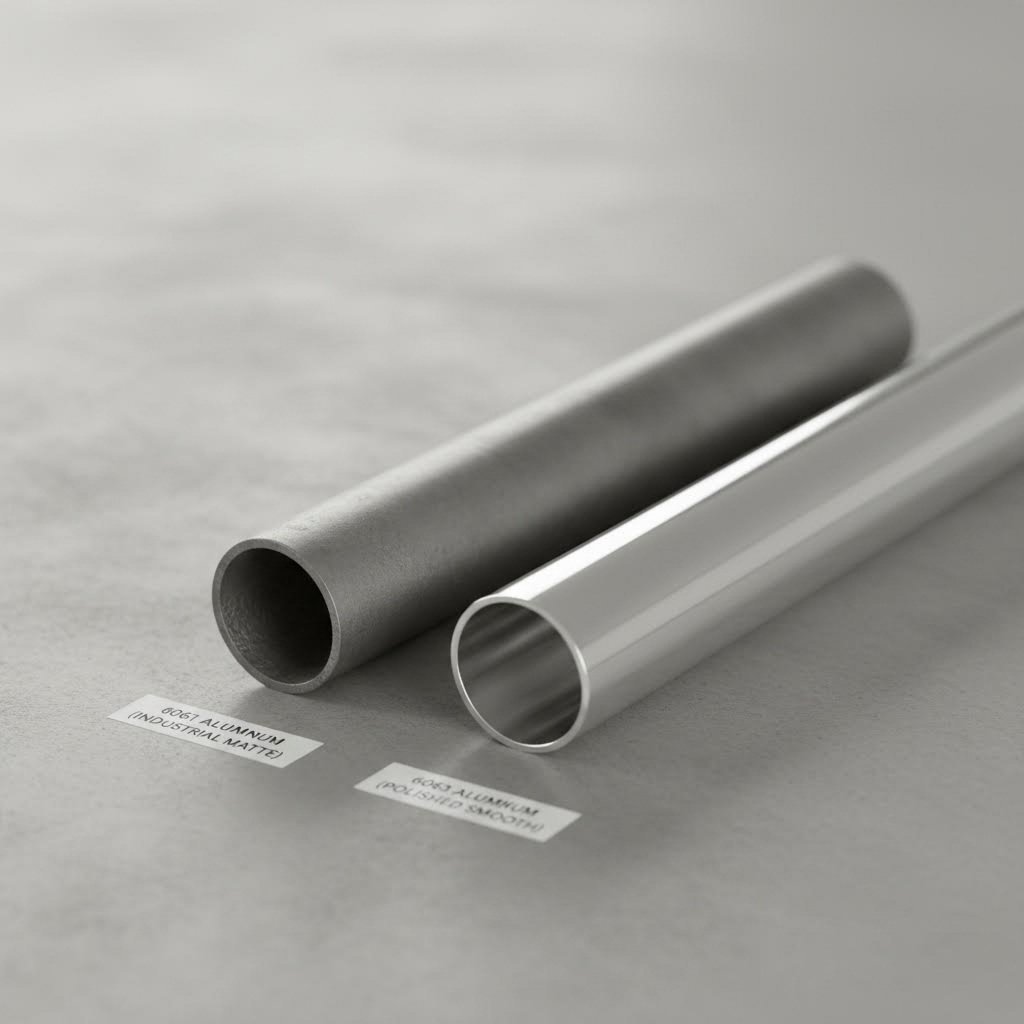
Now that you understand how aluminum extrusion tubing is manufactured, the next critical decision involves selecting the right alloy. When browsing aluminum extrusion profiles, you'll encounter cryptic codes like "6061-T6" or "6063-T52." What do these designations actually mean for your project? Understanding the difference between alloys and their temper conditions determines whether your tubing will perform flawlessly or fall short of expectations.
The 6000 series aluminum alloys dominate the extrusion market because they combine excellent extrudability with strong mechanical properties. Within this family, 6061 aluminum tubing and 6063 represent the two most widely used options—each optimized for different performance priorities.
Think of 6061 and 6063 as siblings with distinct personalities. Both belong to the aluminum-magnesium-silicon alloy family, but their chemical compositions create meaningful performance differences.
6061 aluminum alloy contains higher levels of magnesium, silicon, copper, and chromium—approximately 30-50% more magnesium and silicon than 6063. This enhanced composition delivers superior strength and hardness, making 6061 tubing the go-to choice for structural applications demanding load-bearing capacity.
6063 aluminum alloy, by contrast, prioritizes formability and surface quality. Its lower alloying element content allows it to flow more easily through complex die shapes, producing extruded aluminum profiles with smoother finishes and tighter tolerances on intricate geometries.
Here's a practical comparison to guide your selection:
| Property | 6061-T6 | 6063-T52 | What This Means |
|---|---|---|---|
| Tensile Strength | 310 MPa (45,000 psi) | 186 MPa (27,000 psi) | 6061 handles heavier loads |
| Yield Strength | 276 MPa (40,000 psi) | 145 MPa (21,000 psi) | 6061 resists deformation better |
| Brinell Hardness | 95 HB | 60 HB | 6061 is harder and more wear-resistant |
| Formability | Good | Excellent | 6063 bends and shapes more easily |
| Weldability | Good | Excellent | 6063 welds with less distortion |
| Corrosion Resistance | Excellent | Very Good | 6061 slightly edges out 6063 |
| Surface Finish Quality | Good | Superior | 6063 anodizes more uniformly |
| Thermal Conductivity | 170 W/m-K | 200 W/m-K | 6063 dissipates heat faster |
| Typical Applications | Structural frames, machine components, marine fittings | Architectural trim, window frames, furniture | Application determines best choice |
When should you choose each alloy? Select 6061 tubing when your aluminum extrusion profile must support significant mechanical stress—think truck frames, aerospace components, or industrial machinery. Choose 6063 when visual appearance matters and the application involves complex shapes requiring smooth, anodizable surfaces.
The letter-number suffix after the alloy designation tells you exactly how the aluminum was processed after extrusion. These temper designations dramatically affect mechanical properties, yet they're rarely explained in product listings.
Here's what the common tempers mean:
According to Engineers Edge, the -T designation indicates thermally treated products, with the following number specifying the exact treatment sequence. For 6061 tubing applications demanding peak strength, T6 is the standard specification. For 6063 extruded aluminum profiles in architectural applications, T5 or T52 provides the optimal balance of properties and cost.
Understanding these designations empowers you to specify exactly what your project requires—and to recognize when a supplier's offering matches your performance expectations.

With your alloy and temper selected, the next decision shapes your project—literally. Aluminum extrusion tubing comes in three primary profiles: round, square, and rectangular. Each geometry distributes stress differently, connects to other components in unique ways, and suits specific applications. Choosing the wrong shape can mean overbuilt, heavy assemblies or undersized components that fail under load.
So how do you decide? It comes down to understanding what each profile does best.
An aluminum round tube excels where other shapes struggle—under internal pressure and torsional stress. The circular cross-section distributes force evenly around the entire wall, eliminating stress concentration points that weaken square or rectangular profiles.
Imagine inflating a balloon. The air pressure pushes equally in all directions, and the balloon expands uniformly. Aluminum round tubing behaves similarly under pressure. According to Orange Aluminum, this even stress distribution makes round tubes inherently stronger and more durable than equivalent square profiles—while weighing approximately 20% less at comparable dimensions.
Round tubing also handles torsional forces exceptionally well. When you twist a round tube, the rotational stress flows smoothly around the cylindrical wall without the corner stress risers that plague angular profiles. This makes aluminum round tubing the preferred choice for:
The tradeoff? Round tubing is harder to connect. You can't simply bolt two round tubes together flat—you'll need specialized clamps, welded joints, or machined connection points.
When your project involves building frames, supports, or modular assemblies, aluminum square tubing and rectangular aluminum tubing deliver distinct advantages. Their flat surfaces create natural connection points, making fabrication faster and more straightforward.
A square aluminum tube distributes loads evenly across all four walls, providing excellent compression strength and rigidity. According to Westfield Steel, square tubing's high moment of inertia makes it resistant to bending or warping under pressure—ideal for load-bearing columns, framework, and structural supports.
Rectangular aluminum tubing offers directional strength. The longer dimension provides greater bending resistance along that axis, making it perfect for applications where loads come primarily from one direction. Think floor joists, trailer frames, or horizontal spans where vertical loads dominate.
Both profiles excel for:
The following table summarizes how each shape performs across key selection criteria:
| Criteria | Round Tubing | Square Tubing | Rectangular Tubing |
|---|---|---|---|
| Load Distribution | Uniform in all directions; handles pressure and torsion excellently | Even across all four walls; superior compression strength | Directional; strongest along longer axis |
| Ease of Connection | Challenging; requires clamps or welding | Excellent; flat surfaces simplify bolting and welding | Very good; flat surfaces accommodate hardware |
| Aesthetic Applications | Curved, organic appearance; ideal for handrails | Clean, modern lines; suits industrial design | Low-profile; blends into framing applications |
| Weight Efficiency | Highest strength-to-weight ratio; ~20% lighter than equivalent square | Good balance of strength and weight | Moderate; heavier for equivalent strength |
| Cost Considerations | Often lower material cost per foot; fabrication may add expense | Mid-range; widely available in standard sizes | Comparable to square; custom sizes cost more |
| Fabrication Ease | Bends smoothly; cutting and welding require more precision | Easy to cut and position; straightforward welding | Similar to square; directional grain affects bending |
Beyond shape, wall thickness dramatically impacts performance. Whether you're working with aluminum square tube, round profiles, or rectangular aluminum tubing, selecting the right wall gauge balances strength, weight, and cost.
Thin wall aluminum tubing (typically 0.035" to 0.065" walls) suits applications where weight reduction takes priority:
Thick wall aluminum tubing (0.125" and above) delivers when strength and durability are non-negotiable:
As FastMetals notes, thicker walls increase both strength and cost. The key is matching wall thickness to your actual requirements—overbuilding wastes material and budget, while underbuilding risks failure.
One practical guideline: the greater the outside diameter and the thinner the wall, the more susceptible tubing becomes to distortion during bending or shaping. If your project involves forming operations, factor fabrication requirements into your wall thickness decision.
You've selected your alloy, chosen your profile shape, and determined the right wall thickness. But why choose aluminum tubes over steel, copper, or plastic in the first place? Understanding the material properties that make aluminum extrusion tubing exceptional helps you justify the specification—and recognize when alternative materials might serve you better.
The answer often comes down to a single compelling advantage that aluminum delivers better than any other structural material: the strength-to-weight ratio.
When engineers compare aluminum tube performance against steel, one fact stands out immediately:
Aluminum weighs approximately one-third as much as steel while maintaining excellent structural properties—making it the material of choice when weight reduction matters without sacrificing load-bearing capacity.
According to Endura Steel, aluminum has a density of just 2.7 g/cm³ compared to steel's 7.85 g/cm³. This dramatic weight difference transforms project possibilities. An aluminium tube that would weigh 10 pounds in steel comes in under 3.5 pounds—without compromising the structural integrity your application demands.
What does this mean practically? Consider these scenarios:
Yes, steel offers higher absolute tensile strength—approximately 400-550 MPa for mild steel versus 310 MPa for 6061-T6 aluminum. But when you calculate strength per unit weight, aluminum closes the gap significantly. For many applications, thin wall aluminum tubing provides adequate strength at a fraction of the weight.
Here's something that surprises many first-time aluminum users: extruded aluminium doesn't rust. Ever. Unlike steel, which requires paint, galvanizing, or powder coating to survive outdoor exposure, aluminum protects itself.
How does this work? When aluminum contacts air, it instantly forms a thin oxide layer (Al₂O₃) across its entire surface. According to AZoM, this protective barrier measures just 2-3 nanometers thick yet provides remarkable defense against environmental attack. Even more impressive—if scratched or damaged, this oxide layer regenerates almost immediately.
This inherent corrosion resistance means aluminium tubes perform reliably in:
While anodizing can increase the oxide layer thickness to 5-25 micrometers for enhanced durability, many applications use mill-finish aluminum tubing successfully without any surface treatment at all.
Need to move heat efficiently? Aluminum tubes excel here too. With thermal conductivity of 237 W/m·K, aluminum transfers heat approximately six times faster than steel. This property makes it invaluable for:
The combination of high thermal conductivity and low weight makes alu pipes particularly attractive for heat exchanger applications where both properties matter.
The following table provides a comprehensive comparison between aluminum tubing and competing materials:
| Property | Aluminum (6061-T6) | Mild Steel | Stainless Steel (304) | Copper | Plastic (PVC) |
|---|---|---|---|---|---|
| Density (g/cm³) | 2.7 | 7.85 | 8.0 | 8.96 | 1.4 |
| Strength-to-Weight Ratio | Excellent | Moderate | Moderate | Low | Poor |
| Corrosion Resistance | Excellent (natural oxide) | Poor (rusts without coating) | Excellent | Good | Excellent |
| Thermal Conductivity (W/m·K) | 167-237 | 50 | 16 | 401 | 0.19 |
| Electrical Conductivity | Good (62% of copper) | Poor | Poor | Excellent | None |
| Machinability | Excellent | Good | Difficult | Good | Excellent |
| Recyclability | 100% (infinite cycles) | High | High | High | Limited |
| Relative Cost | Moderate | Low | High | High | Low |
In an era of increasing environmental awareness, aluminum tub recycling offers a compelling sustainability story. According to AZoM, aluminum is 100% recyclable without any loss of quality—recycled aluminum retains identical properties to primary aluminum produced from bauxite ore.
The environmental math is striking: recycling aluminum requires only 5% of the energy needed to produce primary aluminum. This translates to dramatically lower greenhouse gas emissions and reduced demand for bauxite mining. Recent advancements have even demonstrated successful recycling of aircraft-grade 7075 aluminum alloys into high-quality ingots meeting stringent aerospace standards.
For projects where lifecycle environmental impact matters, specifying aluminum tubing contributes to a genuinely circular materials economy—unlike plastics with limited recyclability or coated steels requiring coating removal before recycling.
Understanding these material advantages positions you to match aluminum's properties precisely to your application requirements—and to communicate that value when specifying materials for your next project.

Now that you understand aluminum's material properties, you're probably wondering: where does all this tubing actually go? The answer spans nearly every industry you can imagine. From the window frames in skyscrapers to the internal structures of aircraft, aluminum extrusions solve problems that other materials simply cannot address as effectively.
But here's what most guides miss—they list industries without explaining why designers choose aluminum extrusion tubing for each application. Let's change that by connecting the specific properties you've learned to real-world performance requirements.
Walk through any modern city and you're surrounded by aluminum extrusion shapes. The material's unique combination of aesthetics, durability, and design flexibility makes it indispensable for contemporary architecture.
According to Taber Extrusions, structural aluminum gained widespread adoption in construction following the Empire State Building's 1931 construction, which utilized aluminum extensively in both structural and decorative elements. Today, the 6XXX series alloys enable larger spans and innovative designs without compromising structural integrity.
Key architectural applications include:
Why aluminum over steel for these applications? The weight difference matters enormously. Curtain wall systems must hang from floor slabs without adding excessive structural load. An extruded aluminum frame achieves the same span as steel at one-third the weight—simplifying installation and reducing building costs.
As Chalco Aluminum notes, anodized aluminum tubes provide aesthetically pleasing and corrosion-resistant structural support for building decoration, including curtain walls, window and door frames, railings, and handrails.
Beyond architecture, aluminum channel extrusions power the machinery and vehicles that keep modern economies moving. The performance requirements here differ dramatically—structural strength, thermal management, and weight optimization take priority over visual aesthetics.
Industrial equipment applications:
Transportation applications:
The same properties that serve industrial needs translate directly to consumer goods—often with greater emphasis on finish quality and design flexibility.
Notice the pattern? Each application matches specific aluminum properties to project requirements. Architectural projects prioritize anodized finishes and complex shapes—making 6063 the natural choice. Structural frames demand load-bearing capacity, pointing toward 6061-T6. Weight-sensitive transportation applications benefit from thin-wall tubing that maintains strength while minimizing mass.
Understanding these connections helps you move beyond simply knowing that aluminum extrusion tubing exists—toward specifying exactly the right combination of alloy, profile, and finish for your unique application.
You've selected your alloy, profile shape, and understood the material advantages. Now comes the practical question every buyer faces: what aluminum tubing sizes are actually available, and how do you specify exactly what you need? This is where many projects hit unexpected snags—ordering the wrong dimensions, misunderstanding tolerances, or failing to communicate custom requirements clearly.
Understanding aluminum tube dimensions and industry-standard sizing conventions prevents costly mistakes and ensures your tubing arrives ready to use. Let's break down exactly how to read specifications and communicate your requirements to suppliers.
Aluminum extrusion tubing follows established sizing conventions that vary by profile type. Knowing these conventions helps you quickly identify available options and specify your requirements correctly.
Round tubing is specified by two measurements: outside diameter (OD) and wall thickness. According to Thomas Publishing, round tubing may also be defined by inside diameter (ID) and stub gauge for specialized applications. The inside diameter is simply calculated as OD minus twice the wall thickness.
For example, 1 inch aluminum tubing with a 0.125" wall has an inside diameter of 0.750" (1.000" - 2 × 0.125" = 0.750").
Square tubing uses side dimension (the outside measurement of one flat side) plus wall thickness. A "2 inch square" with 0.125" wall means the outer dimensions are 2" × 2", with an interior opening of 1.75" × 1.75".
Rectangular tubing specifies width × height × wall thickness. The width refers to the longer dimension in most conventions, though suppliers sometimes list height first. Always verify orientation when ordering aluminum rectangular tubing sizes to avoid confusion.
Based on standard industry offerings, here are typical aluminum tubing sizes you'll find in stock:
| Profile Type | Common Outside Dimensions | Typical Wall Thicknesses | Standard Lengths |
|---|---|---|---|
| Round Tubing | 1/4" to 12" OD | 0.035" to 1.000" | 12 ft, 20 ft, 24 ft |
| Square Tubing | 3/4" to 6" per side | 0.062" to 0.500" | 21 ft - 24 ft |
| Rectangular Tubing | 1/2" × 1" to 4" × 8" | 0.062" to 0.500" | 21 ft - 24 ft |
According to Alro Steel's Metals Guide, 6061-T6 round tubing ranges from 1" OD with 0.065" wall (0.225 lbs/ft) up to 10" OD with 0.250" wall (9.005 lbs/ft). Aluminum square tubing sizes commonly range from 1" to 6" per side, while rectangular tubing sizes chart from 1/2" × 1" up to 4" × 8" for standard stock.
When specifying aluminum extrusion tubing, ASTM B221 serves as the governing standard for extruded bars, rods, wire, profiles, and tubes. This specification covers chemical composition, mechanical properties, and dimensional tolerances that suppliers must meet.
What tolerances should you expect? According to the Alro Metals Guide, extruded tube tolerances depend on diameter and wall thickness:
| Specified Diameter | Mean Diameter Tolerance (±) | Diameter at Any Point Tolerance (±) |
|---|---|---|
| 0.500" - 0.999" | 0.010" | 0.020" |
| 1.000" - 1.999" | 0.012" | 0.025" |
| 2.000" - 3.999" | 0.015" | 0.030" |
| 4.000" - 5.999" | 0.025" | 0.050" |
| 6.000" - 7.999" | 0.035" | 0.075" |
Wall thickness tolerances vary with both diameter and wall gauge. For tubing under 1.250" OD with walls under 0.047", expect tolerances of ±0.006" to ±0.007". Thicker walls on larger diameters may see tolerances reaching ±0.045" or more.
These tolerance ranges matter for fit-critical applications. If your design requires mating parts with tight clearances, factor these standard tolerances into your engineering calculations—or specify precision tolerance extruded rounds, which offer tolerances approximately one-third tighter than standard.
Standard stock lengths work for some projects, but many applications require custom cutting. Communicating your requirements clearly prevents delays and ensures you receive usable material.
When ordering cut-to-length aluminum tubing, understand what tolerances apply:
Specify your tolerance requirements upfront. If your application can accept ±1/8", say so—you'll likely receive better pricing than requesting unnecessary precision.
How the cut ends appear matters for many applications. Common options include:
Each finishing step adds cost, so specify only what your application genuinely requires.
When ordering aluminum pipe sizes or tubing in custom configurations, be prepared for minimum order requirements:
For small quantities of standard aluminum tube sizes, purchasing from distributor stock offers the fastest lead times and lowest minimums. Larger production volumes justify direct mill orders with better per-foot pricing.
When communicating with suppliers, include all critical details in your specification:
Clear specifications prevent miscommunication and ensure you receive exactly what your project requires. When in doubt, ask your supplier to confirm their understanding before production begins.
With sizing conventions and specification practices understood, the next consideration involves surface treatments—how finishes like anodizing and powder coating enhance both performance and appearance of your aluminum extrusion tubing.
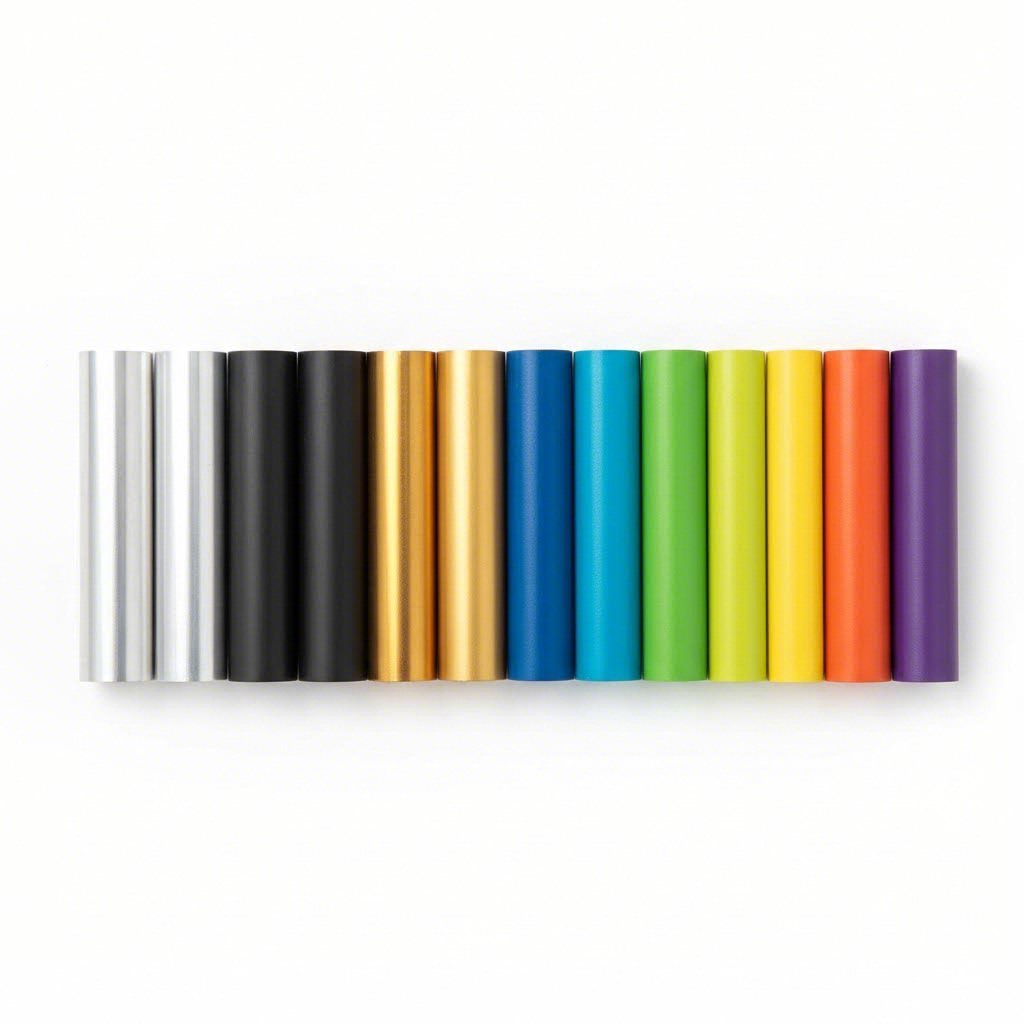
Your extruded aluminum tube arrives from the press with a basic mill finish—functional, but far from optimized. Surface treatments transform this raw material into finished components with enhanced durability, improved aesthetics, and application-specific performance characteristics. Whether you need a sleek architectural appearance or maximum wear resistance for industrial use, the right finish makes all the difference.
So which finish should you choose? That depends entirely on what your application demands. Let's explore the options available for extruded aluminum tubing and when each makes sense.
Unlike paint or powder coating, anodizing doesn't apply a separate layer to your aluminum—it transforms the surface itself. According to Xometry, this electrochemical process stimulates aluminum's naturally-occurring oxide layer to grow thicker and more structured. The result? A surface that's chemically bonded to the base metal and won't chip, peel, or flake.
Here's how it works: Your aluminum tube stock is immersed in an electrolyte solution (typically sulfuric or chromic acid), then an electrical current is applied. The current releases electrons, leaving positively charged aluminum ions that combine with negatively charged oxygen ions to form aluminum oxide. By controlling current density, time, temperature, and electrolyte concentration, manufacturers adjust the oxide layer thickness from 2.5 micrometers to over 50 micrometers.
Three anodizing types serve different needs:
The porous structure of anodized surfaces accepts dyes before sealing, enabling colors from subtle architectural tones to bold product branding. Black aluminum extrusion finishes remain particularly popular for both industrial equipment and consumer electronics. However, as Xometry notes, expect some color variation between batches—exact Pantone or RAL matching isn't always achievable.
Anodized coatings typically last 10-20 years depending on environmental exposure and maintenance. The treatment also creates an electrically insulating surface—a critical consideration for aluminum tracking systems in electrical applications or situations where conductivity must be eliminated.
When your aluminium extruded profile requires precise color matching or enhanced impact resistance, powder coating delivers what anodizing cannot. This process electrostatically applies dry paint powder to cleaned aluminum surfaces, then bakes the coating to create a smooth, durable finish.
According to Gabrian, powder coatings aren't as hard as anodized surfaces, but they excel at providing exceptional appearance and corrosion resistance—as long as the coating remains intact. The process is also more environmentally friendly than liquid painting, avoiding the volatile organic compounds (VOCs) that solvent-based paints release.
Beyond anodizing and powder coating, several other finishes serve specific applications:
Selecting the right finish means matching surface properties to your specific demands:
When ordering custom tubing, specify your finish requirements clearly: anodizing type and thickness, color codes for dyed or powder-coated surfaces, and any masking requirements for areas that must remain uncoated. Most full-service suppliers offer multiple finishing options in-house, streamlining production and ensuring consistent quality from extrusion through final treatment.
You've specified your alloy, profile shape, dimensions, and finish. Now comes a decision that determines whether your project succeeds or stumbles: choosing the right supplier. When you're ready to buy aluminum tubing, the options can feel overwhelming—from local distributors selling stock lengths to overseas manufacturers offering custom extrusions for sale. How do you evaluate which source delivers the quality, capability, and reliability your project demands?
The answer lies in understanding what separates transactional suppliers from true manufacturing partners. Let's break down the evaluation criteria that matter most when sourcing aluminum extrusion tubing.
Finding aluminum tubes for sale is easy. Finding a supplier who can consistently deliver quality profiles that meet your specifications? That requires deeper investigation. According to industry sourcing experts, evaluating aluminum extrusion supply capabilities involves examining several critical factors:
Beyond capabilities, certifications demonstrate a supplier's commitment to quality and traceability. Look for:
Request traceable lot data and QA certificates with each batch—essential for industrial customers requiring documentation throughout the supply chain.
When should you buy aluminum tube from stock versus investing in custom die development? This decision significantly impacts project cost, timeline, and performance optimization.
Purchasing extruded aluminum for sale from distributor inventory offers distinct advantages:
Standard stock works best for prototyping, small production runs, maintenance replacements, or applications where common profiles satisfy your requirements.
Custom die development makes sense when:
Custom extrusion also enables design for manufacturability (DFM) improvements. Experienced suppliers provide feedback on your drawings, suggesting modifications that improve extrudability, reduce costs, or enhance performance before committing to tooling.
Where to buy aluminum extrusion ultimately depends on what level of support your project requires. Transactional suppliers sell metal. Manufacturing partners solve problems.
A capable supplier handles the entire production journey:
This integrated approach—exemplified by manufacturers like Shengxin Aluminium, which offers end-to-end support from die development through mass production—delivers consistent results, lower rework rates, and predictable lead times. Their comprehensive surface treatment capabilities, including anodizing in custom colors, powder coating, PVDF, and micro-arc oxidation, mean your aluminum tubing for sale arrives ready for immediate use.
Ready to source your aluminum extrusions for sale? Consider these approaches based on your project requirements:
| Project Type | Recommended Source | Key Considerations |
|---|---|---|
| Prototype/R&D | Local distributor stock | Speed and flexibility; accept standard profiles |
| Small Production (under 500 lbs) | Distributor with cutting services | Cut-to-length options; minimal MOQ |
| Medium Production (500-5,000 lbs) | Direct mill order or specialized supplier | Better pricing; may require standard die profiles |
| Large/Ongoing Production | Custom extrusion manufacturer | Custom die investment; integrated processing; technical support |
| Complex/Critical Applications | Full-service extrusion partner | End-to-end capabilities; quality certifications; DFM support |
Regardless of which path you choose, request samples before committing to production volumes. Evaluate dimensional accuracy, surface quality, and consistency against your specifications. A supplier confident in their capabilities welcomes this scrutiny—those who resist may have something to hide.
With your sourcing strategy established, the final step involves pulling everything together into a systematic selection process that ensures your aluminum extrusion tubing meets every project requirement.
You've now explored everything from alloy chemistry and profile geometry to surface treatments and supplier evaluation. But how do you transform this knowledge into confident purchasing decisions? The difference between a successful aluminum extrusion tubing project and a frustrating one often comes down to systematic decision-making—working through each specification step before contacting suppliers.
Let's consolidate everything you've learned into an actionable framework that guides you from initial concept to final order.
Before you aluminum extrude your next component or buy stock tubing, work through these six critical decisions in sequence. Each step builds on the previous one, ensuring your final specification addresses every performance requirement:
The most successful aluminum tubing projects match material properties precisely to application requirements—then partner with suppliers capable of delivering consistent quality from die development through final inspection.
With your specifications defined, you're ready to engage suppliers. For standard aluminum square or round profiles in common aluminum extrusion sizes, local distributors offer fast turnaround and low minimums. For custom 6063 aluminum tubes, specialized profiles, or integrated processing requirements, manufacturers with comprehensive capabilities deliver better long-term value.
Experienced suppliers do more than fill orders—they catch specification errors before production, suggest cost-saving alternatives, and ensure your tubing arrives ready for immediate use. Companies like Shengxin Aluminium, with over 30 years of industry experience, exemplify this partnership approach. Their technical team supports projects from initial die development through mass production, while factory-direct pricing eliminates intermediary markups.
Whether you need extruded aluminum accessories for a prototype or production volumes of custom tubing, the framework you've learned positions you to specify confidently, evaluate suppliers objectively, and achieve results that match your project vision. Your aluminum extrusion tubing journey starts with clear requirements—and succeeds through informed decision-making at every step.
Standard aluminum extrusion tubing sizes vary by profile type. Round tubing ranges from 1/4" to 12" outside diameter with wall thicknesses from 0.035" to 1.000". Square tubing spans 3/4" to 6" per side, while rectangular tubing ranges from 1/2" x 1" up to 4" x 8". Standard lengths typically run 12 to 24 feet. Custom sizes require minimum order quantities and may involve die development costs.
6061 aluminum contains higher magnesium and silicon levels, delivering superior tensile strength (310 MPa vs 186 MPa) and hardness—ideal for structural applications like frames and machine components. 6063 aluminum prioritizes formability and surface finish quality, making it perfect for architectural trim, window frames, and decorative applications that require smooth anodizing. Choose 6061 for load-bearing needs and 6063 for aesthetic applications.
Round tubing excels for pressure applications and torsional loads due to uniform stress distribution—ideal for pneumatic systems, fluid transport, and rotating components. Square tubing offers excellent compression strength with flat surfaces that simplify bolting and welding for modular framing. Rectangular tubing provides directional strength along its longer axis, making it suitable for floor joists and horizontal spans where vertical loads dominate.
Common finishes include mill finish (raw, as-extruded), clear anodized (transparent protection), color anodized (integrated colors that won't chip), powder coating (precise color matching), brushed (directional grain patterns), and polished (mirror-like reflective surface). Specialty options include PVDF coating for exterior architectural use and sublimation for wood grain patterns. Anodizing types range from Type I (thinnest) to Type III hard coat for maximum wear resistance.
For standard stock profiles, local metal distributors offer fast turnaround with low minimums. For custom extrusions, partner with manufacturers offering end-to-end capabilities including die development, multiple press capacities, CNC machining, and in-house surface treatments. Evaluate suppliers based on press range, alloy availability, secondary processing options, quality certifications like ISO 9001, and technical support. Full-service manufacturers like Shengxin Aluminium provide factory-direct pricing with comprehensive processing from die design through finished product.



 Интернет Сервис
 0086 136 3563 2360
 sales@sxalu.com
 +86 136 3563 2360
 русский
 English
 français
 Deutsch
 español
 português
 العربية
 ไทย
ไทย Việt
Việt Українська