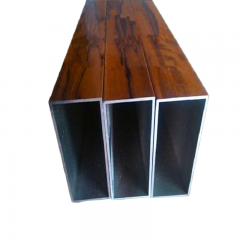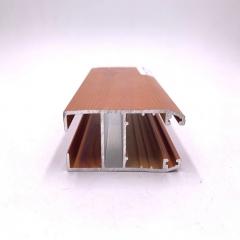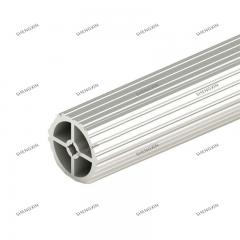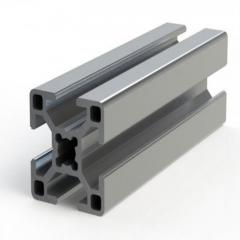
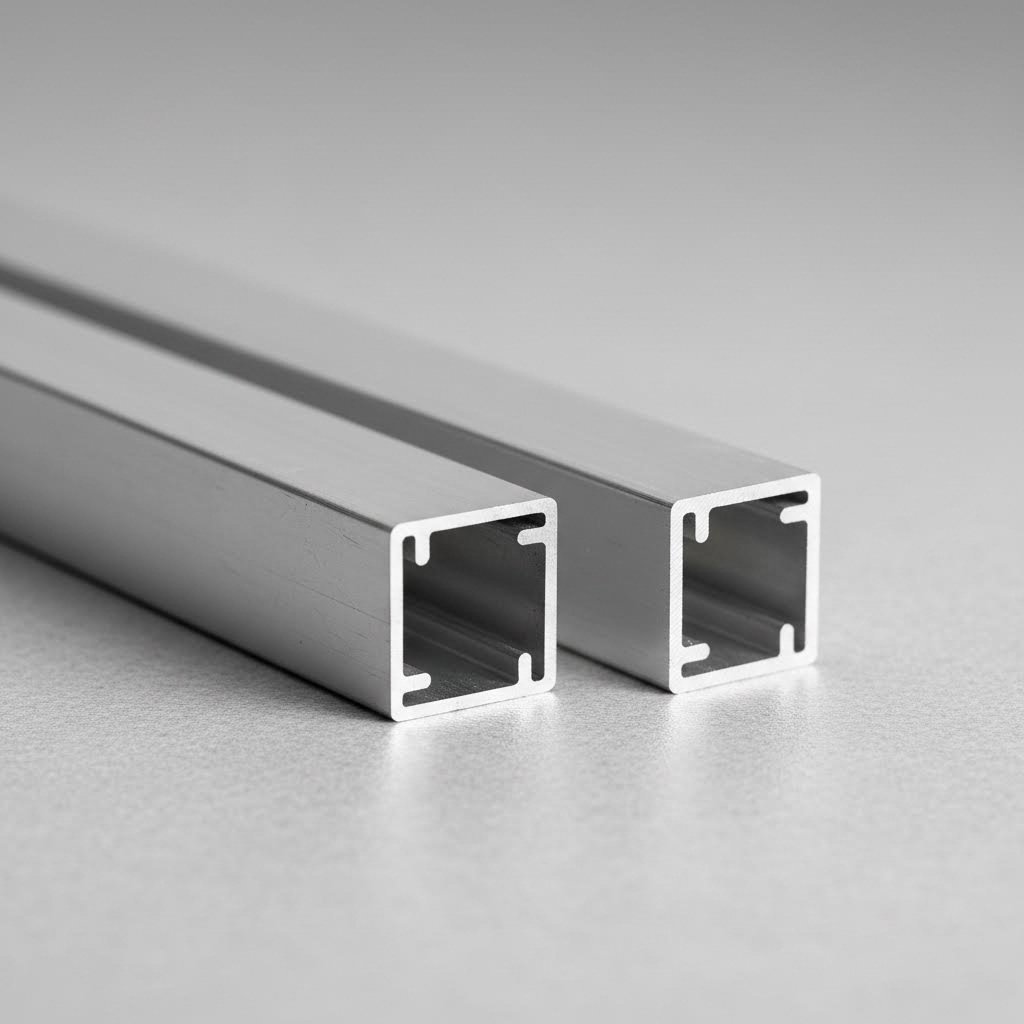
When you're planning a custom frame, CNC machine, or 3D printer build, one question inevitably comes up: should you go with 2020 or 2040 aluminum extrusion? It's a decision that directly impacts your project's structural integrity, weight, and overall cost. Yet despite being one of the most common questions builders face, finding a clear, dedicated comparison between these two profile sizes isn't easy.
Whether you're a DIY enthusiast tackling your first build or a professional engineer specifying materials for industrial applications, understanding the practical differences between these profiles will save you time, money, and potential headaches down the road.
The naming convention for aluminum extrusion profiles is surprisingly straightforward once you understand the system. These numbers directly describe the cross-sectional dimensions of the profile in millimeters.
According to ProLean Tech, profiles are classified into series based on the shorter side of the cross-section. Both 2020 and 2040 belong to the 20 series, sharing the same 20mm height dimension. The key difference lies in the width—2040 essentially doubles the width of 2020 aluminium extrusion, which significantly changes its structural properties and application suitability.
Each profile typically uses 6063-T6 or 6061 aluminum alloy, with T-slots measuring approximately 6mm in width and 5-5.5mm in depth. These standardized slot dimensions ensure compatibility with a wide range of hardware and accessories.
Choosing between 2020 extrusion and 2040 extrusion isn't just about dimensions—it's about matching your profile selection to your project's specific demands. Here's why this decision deserves careful consideration:
In the sections ahead, you'll find a comprehensive breakdown of specifications, real-world applications, and practical guidance to help you make the right choice for your specific project requirements.
How do you objectively compare two aluminum extrusion profiles when both have their merits? Rather than relying on guesswork, applying a structured evaluation framework helps you make confident decisions based on your project's actual requirements. The criteria we use here can be applied to any extrusion comparison, whether you're choosing between 2020 and 2040 or evaluating other profile sizes entirely.
Think of this as your decision-making toolkit. By systematically working through each factor, you'll avoid the common trap of over-engineering (and overspending) or under-building and facing structural issues later.
Structural integrity forms the foundation of any successful build. When evaluating extruded aluminum rails for your project, consider these performance criteria:
Remember that both static loads (constant weight) and dynamic forces must be factored into your structural calculations.
Budget constraints and material accessibility play significant roles in profile selection. Here's what to evaluate on the financial side:
As noted by Canart's T-slot extrusion guide, larger and custom-cut profiles tend to be more expensive, but the flexibility and time saved during assembly often justify the additional investment.
Your specific application dictates which aluminum extrusion rail profile makes the most sense. Evaluate compatibility through these lenses:
The modularity of T-slot aluminum extrusions means your structure can be reconfigured without specialized tools or welding. This adaptability is one of the biggest advantages these profiles offer, but only if you choose a size compatible with your long-term plans.
Apply this evaluation framework before purchasing any materials. A systematic approach prevents costly redesigns and ensures your chosen profile meets both current needs and future possibilities.
With these criteria established, let's examine how 2020 profiles perform across each of these evaluation factors.
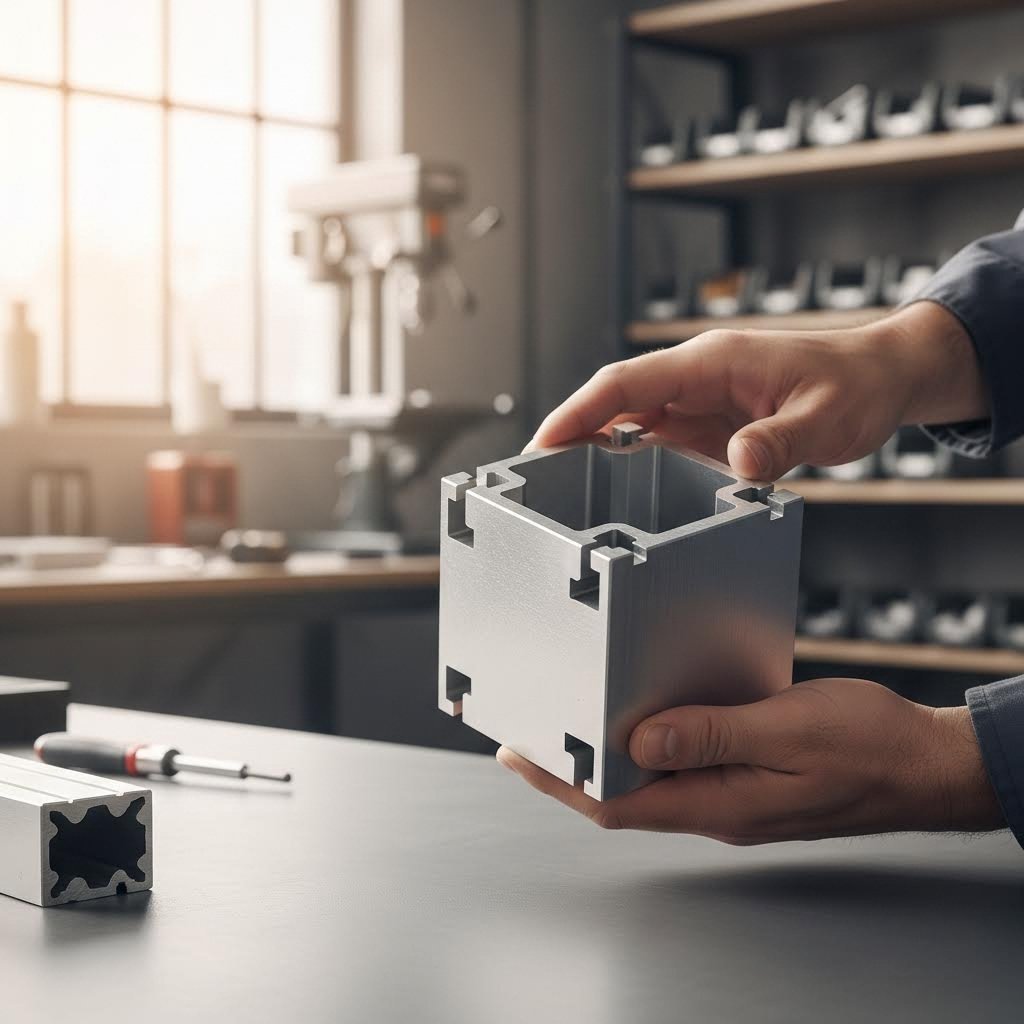
Now that you understand the evaluation criteria, let's dive into the specifics of 2020 extruded aluminum. This profile has earned its reputation as the go-to choice for countless DIY projects, prototypes, and lightweight applications. But is it the right fit for your build? Let's break down everything you need to know about this versatile square profile.
The 2020 aluminum profile strikes a balance between structural capability and practical handling. Its compact dimensions make it approachable for beginners while still offering enough strength for a wide range of applications. Understanding its exact specifications will help you determine whether it meets your project requirements.
The 2020 aluminum extrusion dimensions are precisely engineered for consistency and compatibility across manufacturers. Here's what you're working with:
| Specification | Value |
|---|---|
| Cross-section | 20mm x 20mm (square) |
| T-slot width | 6mm (standard) |
| T-slot depth | 5-5.5mm |
| Number of T-slots | 4 (one per side) |
| Weight per meter | Approximately 0.65 kg |
| Common material | 6063-T5 aluminum alloy |
According to VMT CNC's extrusion guide, the 2020 profile typically weighs about 0.65 kg per meter, making it one of the lightest standard T-slot options available. This lightweight characteristic becomes particularly valuable when you're building portable equipment or need to minimize the load on motors and actuators.
The 6063-T5 aluminum alloy used in most 2020 T-slot profiles offers an excellent combination of extrudability, surface finish, and moderate strength. While not as strong as 6061-T6 alloy, it provides sufficient structural integrity for the applications where 2020 profiles typically excel.
Understanding what 2020 aluminum can and cannot handle structurally is essential for successful project planning. The compact cross-section delivers adequate performance for many applications, but it has clear limitations you should respect.
What 2020 profiles handle well:
Where 2020 profiles struggle:
Here's an important point: specific load-bearing capacity numbers vary significantly between manufacturers based on wall thickness, alloy composition, and heat treatment. Always reference the manufacturer's specifications for your exact profile when calculating structural requirements. Generic estimates can lead to under-engineered builds that fail under load or over-engineered designs that waste money on unnecessary material.
The MPCNC (Mostly Printed CNC) community has extensively documented their experiences with 2020 profiles in CNC applications. Their general consensus? For smaller build envelopes and lighter cutting duties, 2020 performs admirably. However, builders consistently report that larger machines or those intended for milling aluminum benefit from upgrading to heavier profiles to reduce deflection and chatter.
Where does 2020 extruded aluminum truly shine? These applications leverage its strengths while working within its structural limitations:
The key to success with 2020 aluminum lies in honest assessment of your project requirements. When you need a compact, affordable, and easily workable profile for lighter-duty applications, it's hard to beat. But when structural demands increase, the next logical step is considering how 2040 profiles address those limitations.
Ready to step up from the compact 2020 profile? The 2040 aluminium extrusion offers a compelling upgrade path for builders who need more structural muscle without jumping to dramatically larger frame sizes. This rectangular profile doubles the width while maintaining the same 20mm height, creating a distinctly different set of performance characteristics worth exploring in detail.
If you've been following along with the 2020 analysis, you'll notice some familiar elements here. Both profiles share the same alloy compositions, T-slot dimensions, and accessory compatibility. The magic happens in how that extra 20mm of width transforms the structural behavior of the extrusion.
What happens when you stretch a square profile into a rectangle? The aluminum extrusion 2040 measures 20mm tall by 40mm wide, and this seemingly simple dimensional change delivers significant performance benefits.
| Specification | Value |
|---|---|
| Cross-section | 20mm x 40mm (rectangular) |
| T-slot width | 6mm (standard) |
| T-slot depth | 5-5.5mm |
| Number of T-slots | 6 (two on long sides, one on each short side) |
| Weight per meter | Approximately 1.0-1.2 kg |
| Common material | 6063-T5 aluminum alloy |
The rectangular geometry fundamentally changes how forces act on the profile. When oriented with the 40mm dimension vertical, you gain substantially increased resistance to bending in that plane. This directional stiffness is precisely why 2040 extruded aluminum excels in applications like CNC gantries, where loads primarily act in one direction.
Perhaps most importantly, the weight-to-stiffness ratio works in your favor. While the 2040 aluminum profile weighs roughly 50-80% more than its 2020 counterpart, the rigidity increase in the primary load direction can exceed 300%. You're not just adding material—you're adding it exactly where it delivers maximum structural benefit.
Where 2020 profiles reach their limits, 2040 profiles often just hit their stride. The increased cross-sectional area and moment of inertia translate directly into superior load-handling capabilities.
What 2040 profiles excel at:
The dual T-slot channels running along each 40mm face deserve special attention. These parallel slots enable you to mount components at two different positions along the profile's width, offering flexibility that simply isn't possible with the single-slot 2020 design. Need to mount a linear rail and a cable carrier on the same face? With 2040, you have room for both.
For CNC builders specifically, the reduced deflection under cutting forces translates to better surface finishes, improved dimensional accuracy, and the ability to take more aggressive cuts without introducing chatter. Many experienced builders report that the upgrade from 2020 to 2040 for their gantry axes made a noticeable difference in machine performance.
The 2040 aluminum profile finds its natural home in projects where structural demands justify the additional weight and cost. Here's where this rectangular profile truly delivers value:
When does upgrading from 2020 to 2040 make sense? Consider the switch when you're experiencing deflection issues with your current 2020 frame, planning a machine with a larger work envelope, mounting heavy components that require additional support, or building for industrial rather than hobbyist use. The extra investment pays dividends in reduced maintenance, improved precision, and longer service life.
Now that you understand what each profile brings to the table individually, the next step is examining them side by side to see exactly how these specifications compare in direct competition.
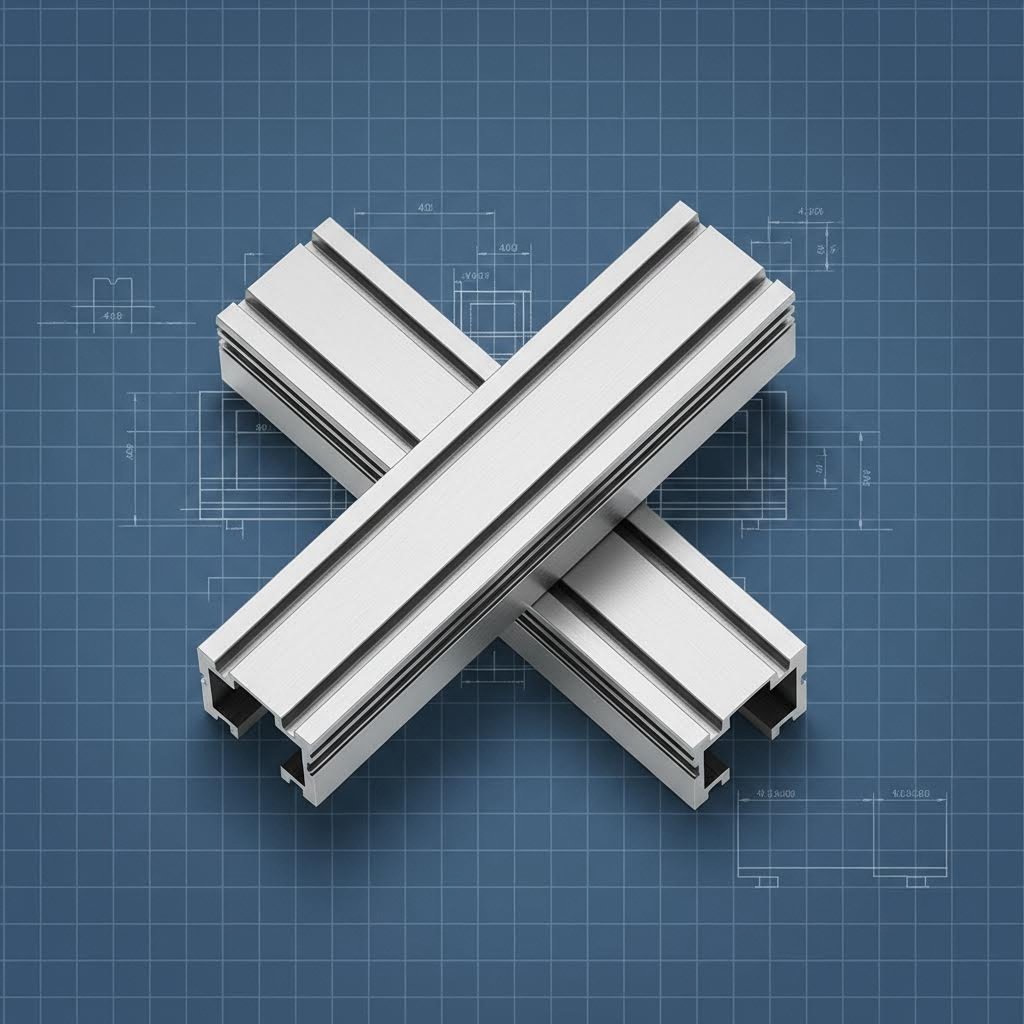
You've seen each profile analyzed individually. Now it's time to put them head-to-head. When you're standing in front of your workbench or browsing supplier catalogs, having a clear comparison makes the decision process much faster. Let's examine exactly how these two profiles stack up across every specification that matters.
This direct comparison addresses what many builders struggle to find: concrete numbers and practical differences presented side by side. Whether you're calculating material requirements or evaluating which extruded aluminum rail suits your application, the following breakdown gives you the data you need.
Understanding the 2040 aluminum extrusion dimensions alongside the 2020 specs reveals why these profiles serve different purposes despite sharing the same 20mm height. Here's the complete specification breakdown:
| Specification | 2020 Profile | 2040 Profile |
|---|---|---|
| Cross-section dimensions | 20mm x 20mm | 20mm x 40mm |
| Profile shape | Square | Rectangular |
| Weight per meter | ~0.65 kg | ~1.0-1.2 kg |
| Number of T-slot channels | 4 | 6 |
| T-slot width | 6mm | 6mm |
| T-slot depth | 5-5.5mm | 5-5.5mm |
| Deflection resistance | Moderate | High (in 40mm orientation) |
| Torsional rigidity | Lower | Higher |
| Relative cost per meter | Baseline | 40-60% higher |
| Cross-sectional area | ~116 mm² | ~232 mm² |
Notice that the cross-sectional area roughly doubles, yet the weight increase is closer to 50-80%. This efficiency comes from the internal geometry of extruded profiles, where strategic material placement maximizes strength without adding unnecessary mass. The 2040 aluminum extrusion dimensions create a profile that's genuinely stronger—not just heavier.
Here's where the practical differences become immediately apparent. The t slot 2040 configuration provides two channels on each long (40mm) face, plus one channel on each short (20mm) face. That's 50% more mounting surfaces than the aluminum extrusion 2020 rail offers.
What does this mean for your build?
The 2040 extrusion rail essentially gives you built-in flexibility that would require additional hardware or creative solutions with 2020 profiles. For complex assemblies with multiple components sharing the same frame member, this advantage compounds quickly.
Good news: since both profiles belong to the 20 series with identical T-slot dimensions, most hardware works interchangeably between them. Your existing collection of T-nuts, drop-in fasteners, and slot covers will fit either profile without modification.
Universal hardware that works with both profiles:
Where compatibility diverges:
When mixing profile sizes in a single build—which is common and practical—you'll need transition brackets or custom solutions where different sizes meet. Many suppliers offer hybrid corner connectors specifically designed to join 2020 to 2040 profiles at right angles.
Pro tip: Before committing to a mixed-profile design, verify that the brackets and connectors you need are actually available. Some combinations require custom fabrication or creative hardware solutions.
With specifications and compatibility clearly mapped out, the next logical question becomes: which profile fits which type of project? Let's explore specific application recommendations to match your build requirements with the right profile choice.
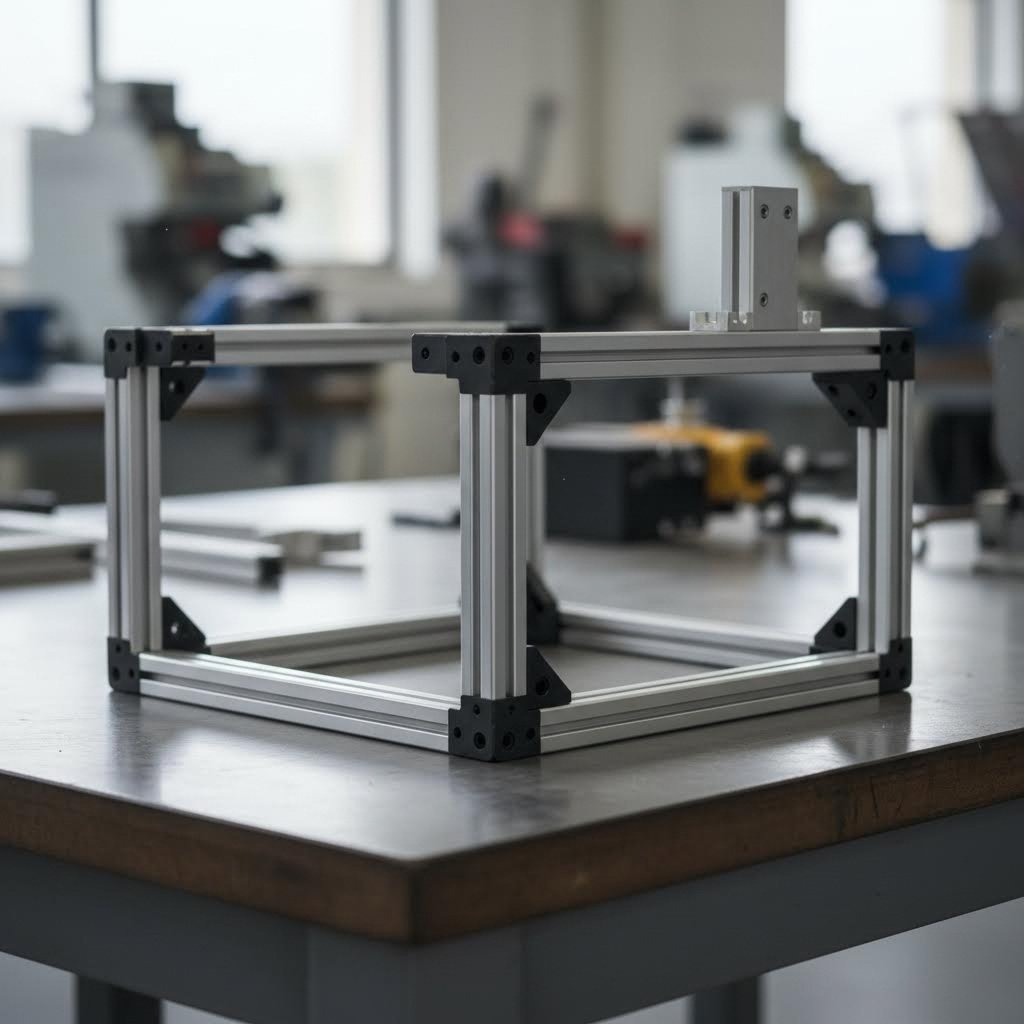
Specifications and compatibility are valuable, but what really matters is how these profiles perform in real-world applications. Whether you're building your first 3D printer or designing an industrial workstation, matching the right profile to your project type eliminates guesswork and prevents costly mid-build changes.
Let's walk through the most common application categories and examine which profile—2020 or 2040—earns the recommendation based on practical experience and community feedback.
Imagine you're planning a custom 3D printer or a compact laser engraver. Weight matters here because lighter frames mean less inertia for motors to overcome, which translates to faster acceleration and more precise movements.
Recommended profiles by application:
The maker community consistently reports that v slot extrusion variants of both 2020 and 2040 profiles offer advantages for builds using V-wheel motion systems. The V-shaped groove machined into standard T-slot profiles creates an integrated track for wheels, eliminating the need for separate linear rails in lighter-duty applications.
For builds prioritizing precision over cost savings, dedicated v slot linear rail systems mounted to standard T-slot profiles often outperform integrated V-wheel approaches—but at significantly higher expense.
When cutting forces enter the equation, everything changes. A CNC router milling aluminum or hardwood generates substantial lateral forces that amplify any frame flexibility into visible defects on your workpiece.
Recommended profiles by application:
Here's a consideration that often gets overlooked: v slot extruded aluminum versus standard T-slot for linear motion. If your CNC design uses V-wheels for axis movement, aluminum extrusion v slot profiles serve double duty as both structural frame members and motion tracks. This integration reduces part count and simplifies alignment.
However, for machines demanding the highest precision, many builders prefer standard T-slot profiles paired with separate linear rails. The v slot rail approach works well for 3D printers and lighter CNC machines, but dedicated linear guides typically offer superior accuracy and longevity under heavy cutting loads.
Workbenches represent one of the clearest cases for 2040 profiles. You're building something that will support heavy tools, absorb impacts, and potentially hold hundreds of pounds of material and equipment.
Recommended profiles by application:
The dual T-slot channels on 2040's long faces prove particularly valuable for workbenches. You can mount clamps, vises, and fixtures along one channel while using the parallel slot for cable management, lighting, or tool holders—without any interference between components.
Quick decision guide: If the application involves supporting your body weight, heavy machinery, or items that would cause significant damage if dropped, default to 2040 for primary structural members.
With clear application recommendations established, you might be wondering what mistakes to avoid during profile selection. The next section covers common pitfalls that trip up both first-time builders and experienced fabricators alike.
Even experienced builders sometimes choose the wrong profile size. The frustrating part? Most mistakes become obvious only after assembly, when fixing them means disassembling your work, ordering new materials, and starting over. Learning from others' missteps saves you time, money, and that sinking feeling when your frame flexes more than expected.
Here's what trips people up most often when selecting between 2020 aluminum extrusions and their 2040 counterparts—and how to sidestep these pitfalls before they derail your project.
The most common mistake? Choosing 2020 extrusions because they're cheaper, then discovering mid-build that the structure lacks adequate rigidity. This false economy costs more in the long run than selecting appropriate aluminum extrusion rails from the start.
Warning signs you've undersized your profiles:
The temptation to save 40-60% on material costs by sticking with 2020 aluminum extrusions makes sense on paper. But when your CNC router produces wavy cuts or your workbench sags under a heavy vise, that savings evaporates quickly. Experienced builders in online forums consistently recommend erring on the side of larger profiles for any application involving cutting forces, heavy loads, or spans exceeding 600mm.
Horizontal members behave differently than vertical ones. A profile that works perfectly as a support column may deflect unacceptably when turned on its side and asked to span a distance. This directional difference catches many first-time builders off guard.
Critical factors affecting horizontal deflection:
Here's a practical rule many builders follow: for unsupported horizontal spans under moderate load, 2020 profiles work reliably up to about 400-500mm. Beyond that distance, 2040 profiles oriented correctly become the safer choice. For spans exceeding 800mm with any significant loading, consider even larger profiles or add intermediate supports.
Don't forget that dynamic loads—moving gantries, tool engagement, vibration—amplify deflection effects beyond what static calculations suggest. If your application involves motion or impact, factor in additional safety margin.
Your project requirements today may not match your needs six months from now. Choosing profiles based solely on current specifications ignores the modular nature of T-slot construction and the inevitable desire to upgrade, expand, or repurpose your build.
Future-proofing considerations:
The extra T-slot channels on 2040 profiles provide mounting flexibility you'll appreciate when modifications become necessary. Builders who chose 2020 often report wishing they'd invested in 2040 once they started adding accessories, cable management, sensors, or upgraded components that compete for limited mounting space.
Quick troubleshooting checklist before ordering:
When forum discussions turn to cost justification, the consensus is clear: spending 40-60% more on 2040 profiles for critical structural members is almost always worth it compared to rebuilding later. However, using 2040 everywhere when 2020 would suffice wastes money without adding value. The skill lies in identifying which members genuinely need the upgrade and which can safely use the lighter option.
With these pitfalls mapped out, you're equipped to make confident profile selections. The final step is translating this knowledge into actionable recommendations and identifying reliable sources for quality extrusions.
You've explored specifications, applications, and common pitfalls. Now it's time to distill everything into clear, actionable guidance. Whether you're finalizing a parts list or still weighing options, these recommendations will help you commit to the right profile with confidence.
The choice between 2020 and 2040 aluminum extrusion ultimately comes down to matching your profile selection to your project's actual demands—not what seems impressive or what costs least. Let's break this down into practical decision points.
The 2020 profile earns its place as the default starting point for countless projects. If your application checks most of these boxes, you can confidently proceed with the lighter, more economical option:
Projects where 2020 consistently delivers excellent results include FDM 3D printer frames, laser engravers, lightweight enclosures, prototype fixtures, and cable management systems. The aluminum extruded rail format in 2020 size provides adequate structure while keeping builds nimble and affordable.
Stepping up to 2040 isn't about over-engineering—it's about recognizing when your project genuinely demands more capability. Run through this decision sequence to determine if the upgrade makes sense:
CNC router gantries, industrial workstations, automation equipment, and any structure supporting concentrated loads represent prime candidates for 2040 profiles. The weight-to-stiffness advantage means you're adding meaningful capability, not just unnecessary bulk.
Selecting the right profile size solves half the equation. The other half? Sourcing quality material from a supplier capable of meeting your specific requirements. Whether you need standard lengths, precise custom cuts, or specialized surface treatments, your supplier choice directly impacts project success.
When evaluating potential suppliers for extruded rail products, consider these factors:
For builders seeking comprehensive aluminum extrusion solutions, Shengxin Aluminium offers an interesting combination of capabilities. With over 30 years of industry experience and 35 extrusion presses ranging from 600T to 5500T capacity, they handle everything from standard 2020 and 2040 profiles to complex custom shapes. Their CNC machining centers provide precise cutting and drilling to your specifications, while surface treatment options including anodizing in custom colors, powder coating, and PVDF finishes apply equally to both profile sizes discussed in this guide.
Whether you ultimately choose 2020 for a compact 3D printer build or invest in 2040 for a production-grade CNC router, the principles remain consistent: match your profile to your actual requirements, plan for reasonable future modifications, and source from suppliers who can deliver the quality your project deserves. Factory-direct pricing from established manufacturers often makes the difference between a budget that works and one that forces compromises elsewhere in your build.
The right aluminum extrusion profile isn't the biggest or the cheapest—it's the one that precisely matches your project's structural demands, mounting requirements, and long-term goals.
The 2020 profile measures 20mm x 20mm with four T-slots, while 4040 measures 40mm x 40mm with eight T-slots. The 4040 offers significantly higher load capacity and structural strength, making it suitable for heavy industrial applications. The 2020 is lighter, more affordable, and ideal for 3D printers and small CNC builds where weight matters.
2020 aluminum extrusion made from 6063-T5 alloy offers tensile strength between 230-270 MPa. It weighs approximately 0.65 kg per meter and handles vertical compression loads and short horizontal spans effectively. However, for spans exceeding 500mm or applications with significant cutting forces, upgrading to 2040 or larger profiles is recommended.
Load capacity for 2040 extrusion varies based on manufacturer specifications, alloy composition, and load application method. Generally, when oriented with the 40mm dimension vertical, 2040 profiles resist bending forces approximately 3 times better than 2020 profiles. Always reference manufacturer datasheets for specific load ratings based on your span length and mounting conditions.
Use 2020 for lightweight applications like 3D printer frames, laser engravers, enclosures, and spans under 500mm. Choose 2040 for CNC router gantries, workbenches, industrial frames, and spans exceeding 600mm. The 2040 also provides six T-slots versus four, offering more mounting flexibility for complex assemblies with multiple components.
Most T-slot hardware including M5 T-nuts, hammer nuts, and fasteners work with both profiles since they share identical 6mm slot dimensions. However, corner brackets, end plates, and joining plates are size-specific. When mixing profiles in one build, you'll need transition brackets designed specifically to connect 2020 to 2040 sections.



 Интернет Сервис
 0086 136 3563 2360
 sales@sxalu.com
 +86 136 3563 2360
 русский
 English
 français
 Deutsch
 español
 português
 العربية
 ไทย
ไทย Việt
Việt Українська