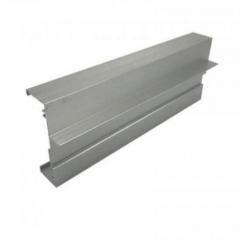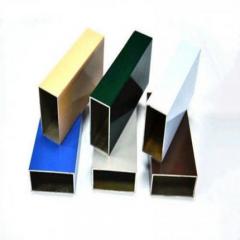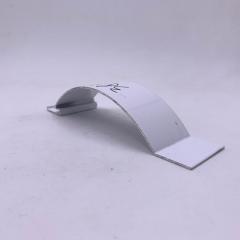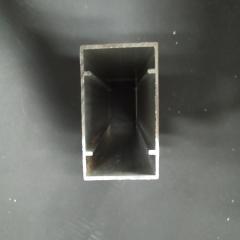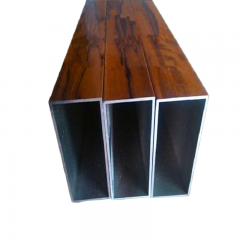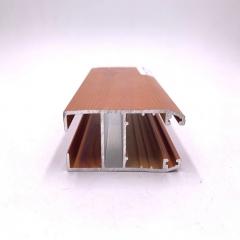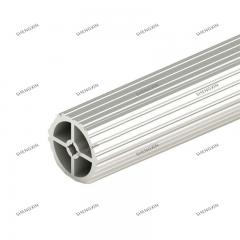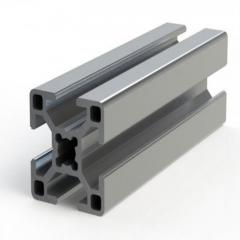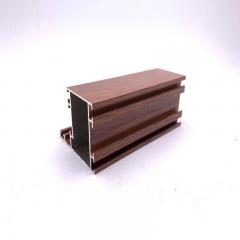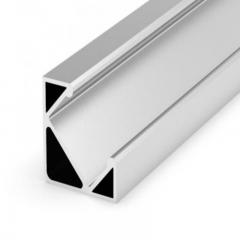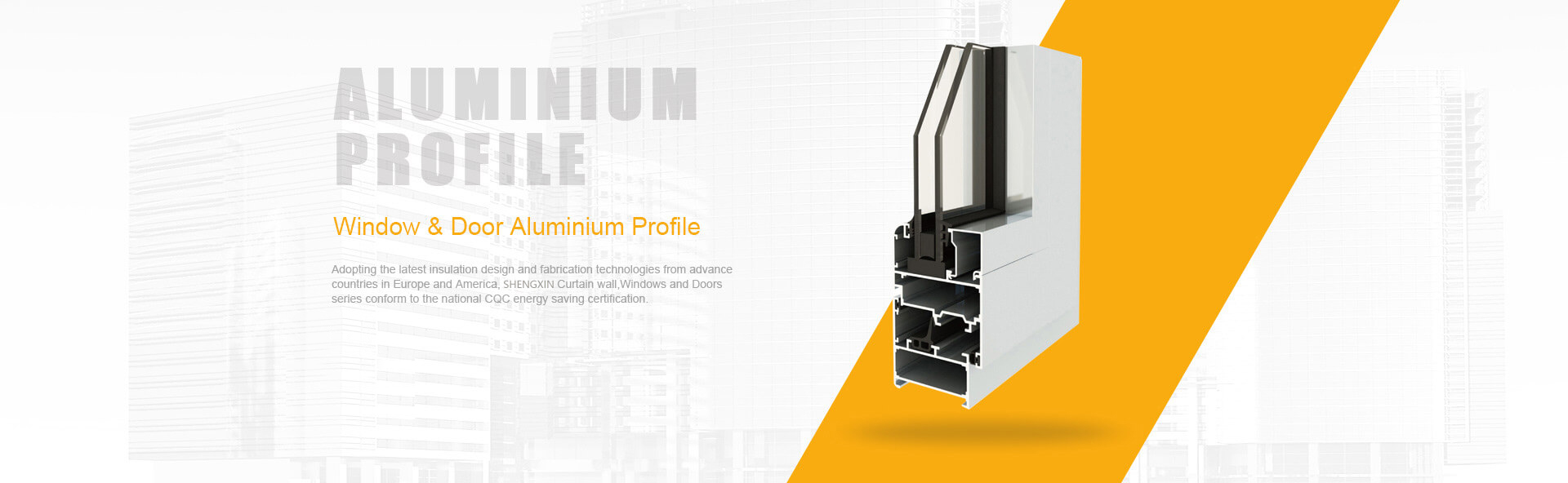
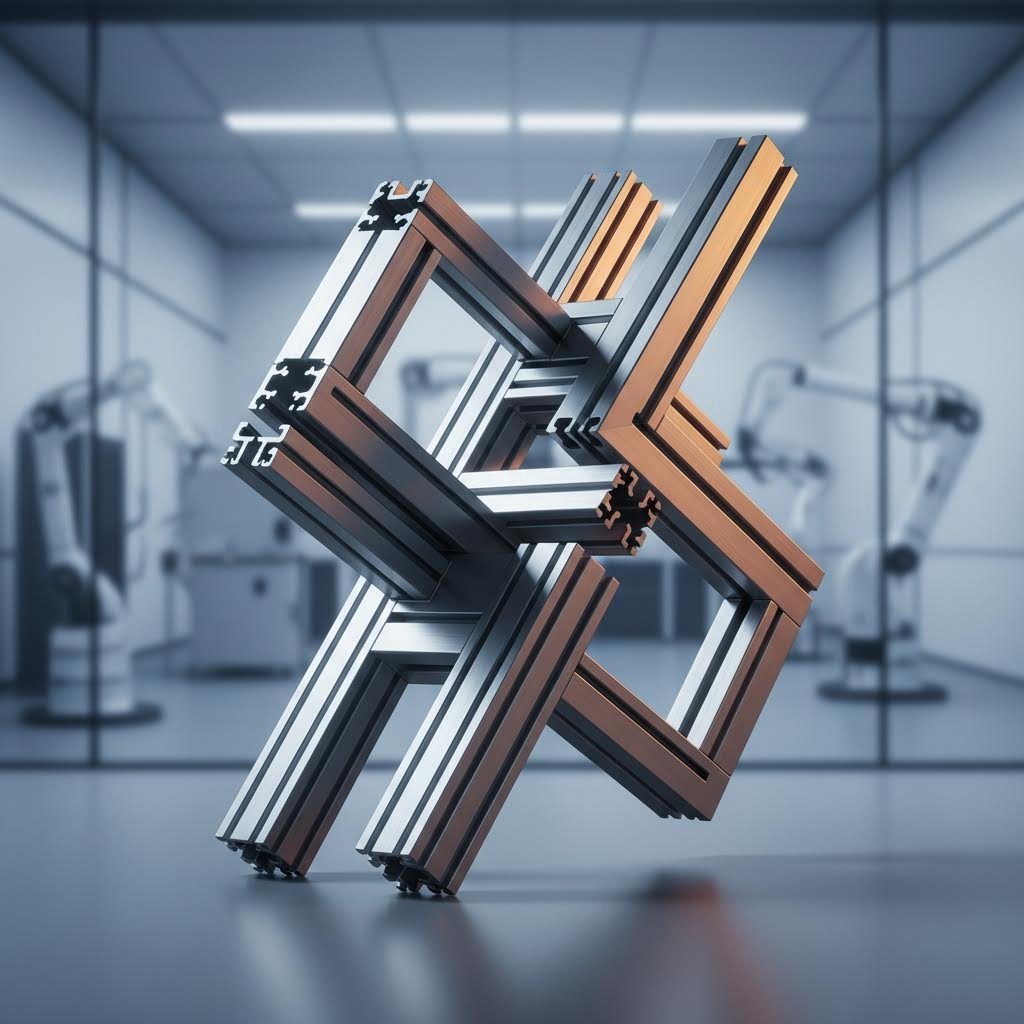
Ever wondered how engineers create those perfectly uniform aluminum beams, channels, and frames that hold up everything from factory equipment to building facades? The answer lies in a fascinating manufacturing process called structural aluminum extrusion. Unlike standard aluminum extrusion profiles designed primarily for appearance, structural versions must carry real loads and meet strict mechanical requirements.
At its core, aluminum extrusion is a process that transforms raw aluminum alloy into shapes with consistent cross-sections. Imagine squeezing toothpaste through a tube—the paste emerges in the exact shape of the opening. Structural extrusions work the same way, except the "toothpaste" is heated aluminum, and the "opening" is a precision-engineered steel die. The result? Extruded aluminum profiles that maintain identical dimensions along their entire length, making them ideal for load-bearing frameworks.
The journey from raw material to finished extrusion aluminum product follows a carefully controlled sequence. It starts with an aluminum billet—essentially a cylindrical log of aluminum alloy. According to Eagle Aluminum, this billet is heated to a specific temperature where it becomes soft and malleable, yet remains solid enough to maintain its integrity during forming.
Once heated, the softened billet moves into a press container where lubricant prevents sticking. Here's where the magic happens: a powerful hydraulic ram applies tremendous pressure, forcing the aluminum through the die opening. The extruded material emerges on the other side as a continuous length of perfectly shaped profile—whether it's an angle, channel, tube, or complex custom design.
But the process doesn't end there. The newly formed extrusion travels along a run-out table for cooling, then moves to a stretcher for straightening and initial work hardening. Finally, heat treatment in age ovens brings the aluminum to its specified strength levels. This last step is critical for structural applications, as it determines the profile's load-bearing capacity.
When you need a material that balances strength with practicality, aluminum delivers advantages that make engineers take notice:
These characteristics explain why extruded aluminum appears everywhere—from industrial machine frames and conveyor systems to architectural curtain walls and transportation equipment.
Structural extrusions are engineered to meet specific mechanical property requirements including yield strength, tensile strength, and hardness specifications. Decorative extrusions prioritize surface finish and appearance. This fundamental difference determines alloy selection, temper treatment, and quality testing protocols.
Understanding this distinction matters because choosing the wrong extrusion type can lead to structural failures. A profile designed for trim work around a storefront window simply cannot handle the same stresses as one engineered for a machine frame or safety guarding system. As noted by Extrude-A-Trim, structural aluminum alloys like 6061 are selected specifically for their strength, weldability, and formability—properties that take priority over the smooth finishing characteristics valued in architectural applications.
With this foundation in place, you're ready to explore the material science behind alloy selection and understand why specifications like "6061-T6" matter for your structural projects.
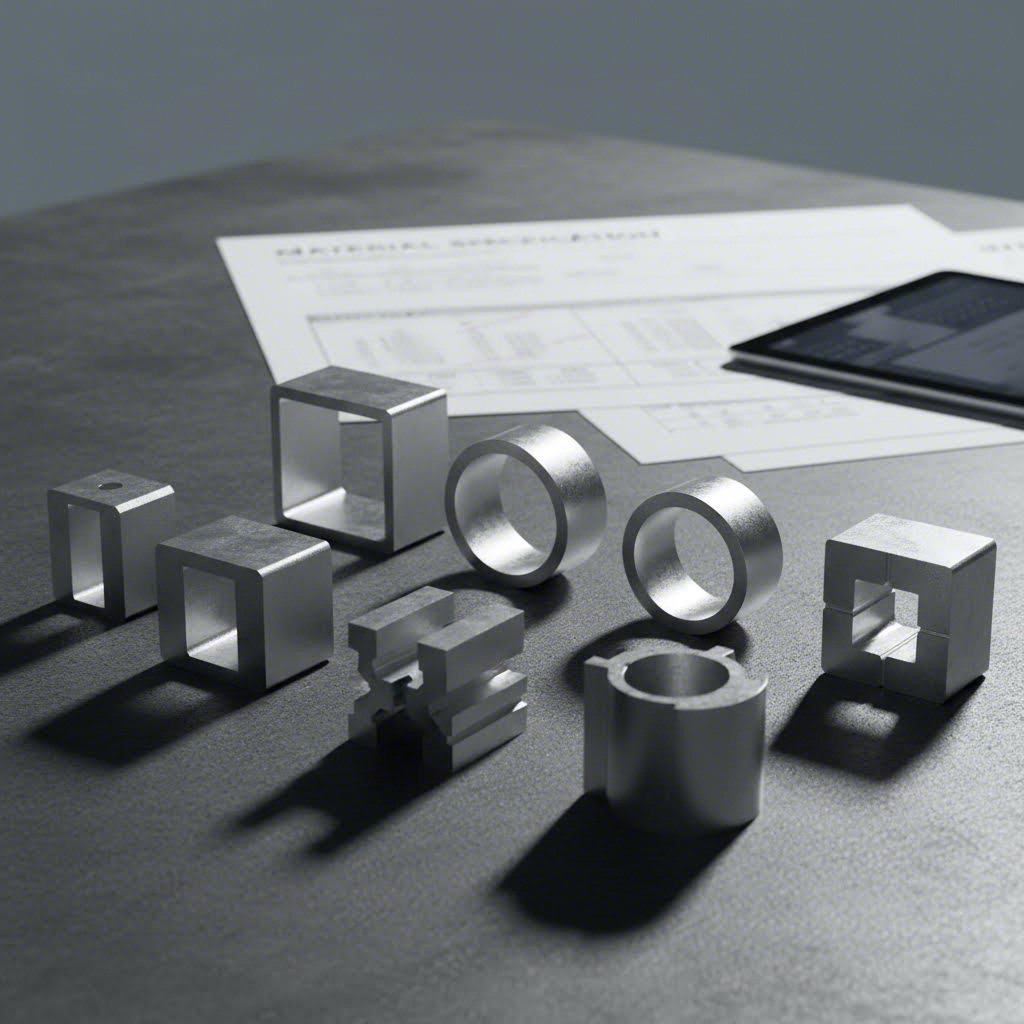
You've seen the specifications on countless product sheets: 6061-T6, 6063-T5, 6082-T6. But what do these codes actually mean for your structural project? Understanding alloy and temper designations isn't just technical jargon—it's the difference between an aluminum extrusion profile that performs flawlessly and one that fails under load.
The truth is, not all aluminum extrusions are created equal. The alloy determines what the material can do, while the temper designation tells you how strong it's been made. Let's decode both so you can specify with confidence.
The 6000 series aluminum alloys dominate the structural extrusion market for good reason. According to VMT CNC, these alloys are primarily composed of magnesium and silicon, which offer a balanced combination of strength, corrosion resistance, and weldability. This specific chemistry creates what engineers call a precipitation-hardening alloy—meaning these materials can be heat-treated to achieve significantly higher strength levels.
Think of magnesium and silicon as the dynamic duo in your extruded aluminium. The magnesium content contributes directly to strength and corrosion resistance, while silicon lowers the melting temperature and improves the material's ability to flow through extrusion dies. When combined in the right proportions, these elements form microscopic structures within the aluminum matrix that dramatically increase load-bearing capacity.
So what separates 6061 from 6063? The Kloeckner Metals comparison reveals that 6061 aluminum contains up to double the iron and typically has substantially more silicon, copper, and chromium than 6063. This higher alloy content translates to greater strength, making 6061 the go-to choice when structural performance takes priority. Meanwhile, 6063 contains less of each alloying element, resulting in lower strength but superior surface finish and extrudability—perfect for complex shapes and architectural applications.
For projects requiring angle aluminum or aluminum bar stock in load-bearing roles, this distinction matters enormously. A 6061 aluminum profile will handle higher stresses than its 6063 counterpart, even when both have identical dimensions and temper treatments.
Here's where things get interesting. The letter-number code following the alloy designation—like T5 or T6—describes the thermal and mechanical processing the aluminum has undergone. These aren't arbitrary labels; they define the material's actual strength characteristics.
According to Engineering Express, the heat treatment process involves raising the alloy temperature to about 980 degrees F and holding it there for about an hour. This dissolves all alloying elements into a solid solution within the aluminum. The material is then quenched in water—not primarily to strengthen it, but to cool it rapidly enough to prevent the alloying elements from precipitating during cooling.
What follows determines whether you get T5 or T6 material:
During aging, the alloying elements form ordered arrays of atoms called GP zones within the aluminum matrix. These microscopic structures strengthen the aluminum considerably by impeding the movement of dislocations—the defects that cause material deformation under stress. The result? A material that can handle significantly more load before yielding.
| Alloy | Typical Applications | Yield Strength | Weldability | Corrosion Resistance |
|---|---|---|---|---|
| 6061-T6 | Machine frames, structural components, aerospace parts, automotive frames | High (approx. 276 MPa) | Excellent | Good (B rating) |
| 6063-T5 | Architectural extrusions, window frames, decorative trim, furniture | Moderate (approx. 145 MPa) | Excellent | Very Good (A-B rating) |
| 6063-T6 | Structural tubing, railing systems, higher-load architectural applications | Moderate-High (approx. 214 MPa) | Excellent | Very Good (A-B rating) |
| 6082-T6 | Heavy-duty structural components, bridges, transportation equipment | High (approx. 250 MPa) | Good | Good (B rating) |
Notice the substantial difference in yield strength between tempers? A 6063-T6 aluminum profile delivers nearly 50% more strength than the same alloy in T5 temper. For structural applications where safety margins matter, this distinction directly impacts design decisions, connection requirements, and overall assembly performance.
The corrosion resistance ratings in the table above come from sodium chloride spray or immersion testing. Materials rated A or B can be used in seacoast or industrial atmospheres without additional protection. The lack of copper in 6063 explains its superior corrosion performance compared to 6061—making it the better choice when outdoor exposure is a concern, even if you sacrifice some strength.
With alloy and temper selection clarified, you'll want to understand how these materials work within modular framing systems—the T-slot profiles and standardized components that have revolutionized structural aluminum assembly.
Imagine building a machine frame that you can reconfigure next month without cutting a single weld. That's the power of T-slot aluminum framing systems—modular building blocks that have transformed how engineers approach structural aluminum extrusion projects. Whether you're constructing a CNC enclosure, safety guarding, or a custom workstation, understanding these systems helps you choose between ready-made solutions and custom-designed profiles.
The T-slot ecosystem—sometimes called "industrial Meccano"—uses aluminum profiles with T-shaped channels running along their faces. These slots accept specialized nuts, connectors, and accessories, allowing you to assemble robust structures using only hand tools. No welding, no drilling, no permanent modifications required.
Profile dimensions directly determine what your structure can handle. According to GAP Engineering, T-slot profiles are typically categorized into series based on their cross-sectional dimensions, each suited to specific load requirements:
What makes one profile stronger than another? It comes down to two engineering properties: moment of inertia and cross-sectional area. The moment of inertia describes resistance to bending—higher values mean less deflection under load. According to Vention, even profiles with identical outer dimensions can vary significantly in rigidity depending on their internal geometry and area moment of inertia.
When evaluating 8020 aluminum profiles or similar systems, look for manufacturers who publish these specifications. A top performance indicator is the area moment of inertia to surface area ratio—profiles that score well here deliver maximum rigidity with minimum weight and cost.
Should you invest in a proprietary system like 80/20 framing extrusion, choose metric-standard alternatives, or design custom profiles? The answer depends on your project's complexity, timeline, and future flexibility requirements.
Proprietary systems such as 80 20 aluminum offer compelling advantages. According to CPI Automation, the 80/20 name references the Pareto principle—achieving 80% of results with 20% of effort. These systems provide extensive accessory ecosystems including v slotted aluminum insert options, corner brackets, linear bearings, and specialized connectors. You'll find components like rail button for 8020 aluminum mounting solutions that integrate seamlessly with the profile series you've selected.
However, proprietary systems come with trade-offs:
Metric-standard alternatives (20mm, 40mm, 45mm series) offer broader sourcing options and often lower costs. If your project prioritizes budget over accessory variety, these systems deliver excellent value. Just verify that your chosen supplier maintains consistent tolerances across production runs.
Beyond traditional T-slot systems, alternative framing approaches serve specific needs. The Ready Tube series offers pre-cut and pre-threaded tubes that simplify assembly for projects demanding efficiency. Quick Frame systems use snap-in connections for rapid assembly without additional fasteners—ideal for lightweight displays, temporary structures, or applications where speed trumps adjustability.
When does custom extrusion make more sense than modular framing? Consider custom dies when you need profiles with integrated features (cable channels, mounting bosses, unique cross-sections), when production volumes justify tooling costs, or when standard profiles can't meet specific load or dimensional requirements. For most one-off projects and prototype development, however, modular T-slot systems provide faster deployment and lower upfront investment.
The beauty of modular aluminum framing lies in its adaptability. Unlike welded steel structures that require cutting and re-fabrication for changes, T-slot assemblies can be loosened, repositioned, and reassembled as your needs evolve. This flexibility makes these systems particularly valuable in dynamic manufacturing environments where equipment configurations change frequently.
With profile selection and system architecture decisions made, your next challenge involves connecting these components into rigid, reliable assemblies—a topic that demands careful attention to joint design and fastener selection.
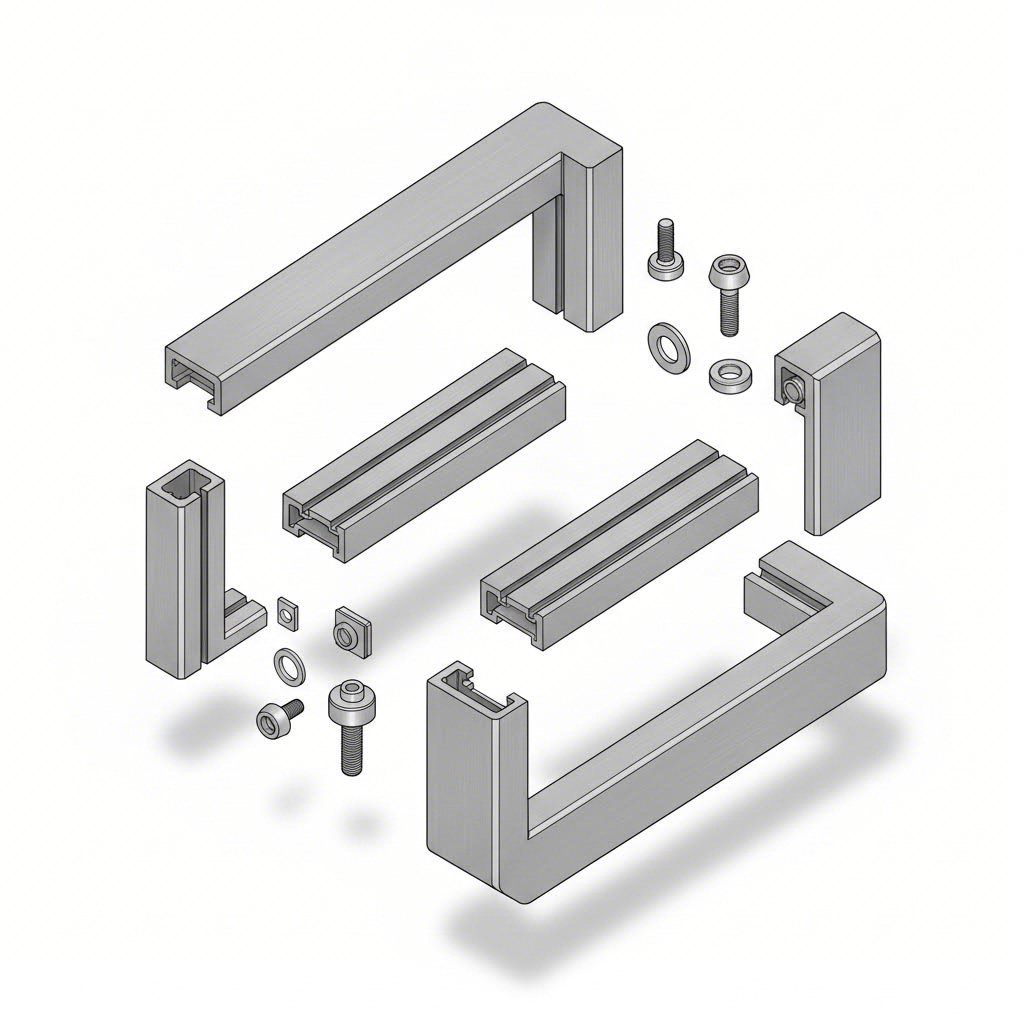
You've selected the perfect alloy and chosen your framing system. Now comes the part that separates sturdy structures from wobbly disappointments: connecting everything together. Sounds straightforward? Here's the reality—joint failures account for the majority of structural aluminum assembly problems. The profiles themselves rarely fail; it's the connections that give way first.
Understanding how to properly join aluminum extrusion profiles requires knowledge of bracket types, fastener specifications, and the subtle chemistry between dissimilar metals. Let's break down what you need to know to design connections that hold.
Corner brackets serve as the backbone of most modular aluminum assemblies. These components transfer loads between perpendicular profiles, and their design directly impacts structural rigidity. You'll encounter several categories depending on your application demands:
L-shaped brackets represent the most common connection solution. These simple right-angle connectors work well for light to medium loads where profiles meet at 90 degrees. Standard l shaped brackets bolt directly into T-slots on both faces, creating a straightforward connection point. For applications similar to 4x4 post brackets in wood framing, aluminum L-brackets provide comparable functionality with corrosion resistance advantages.
Corner braces take things further by adding diagonal reinforcement. Unlike basic L-brackets, corner braces triangulate the joint, dramatically increasing resistance to racking forces. When your structure needs to resist lateral loads—think safety guarding that might absorb impact—corner braces prevent the parallelogram-style deformation that causes assembly failure.
Gusset plates provide maximum reinforcement for critical connections. These flat plates span across multiple profile faces, distributing loads over larger areas. Metal u brackets and gusset configurations work particularly well where dynamic loading or vibration exists. They're also essential when bolts for 4x4 posts or similar heavy-duty fasteners need expanded bearing surfaces to prevent localized stress concentration.
According to MISUMI's load capacity guidelines, profile orientation significantly affects allowable loads. A 40x80mm profile oriented with the 80mm dimension vertical handles substantially more load than the same profile rotated 90 degrees. Your bracket selection must account for these directional strength differences—placing connections where profiles are strongest.
Choosing the right fastener involves more than grabbing whatever bolt fits the hole. Three factors demand attention: bolt grade, thread engagement, and galvanic compatibility.
Bolt grades matter more than size. According to Anglelock's torque specifications guide, the perception that larger bolts are always stronger isn't accurate. An M8 bolt only provides 5-10% more strength than an M6—not the 25% jump many assume. More importantly, a high-grade M6 bolt rated at 12.9 performs comparably to a standard-grade M8 rated at 10.9. Advanced framing systems increasingly use smaller, higher-grade bolts to reduce weight and footprint without sacrificing strength.
Thread engagement determines pull-out resistance. Aluminum is softer than steel, making threaded bolt inserts essential for repeatedly assembled joints. Direct threading into aluminum works for permanent connections but degrades with each disassembly cycle. For adjustable structures, insert threaded inserts or T-nuts that distribute loads across larger thread areas.
Galvanic compatibility prevents corrosion failures. When dissimilar metals contact each other in the presence of moisture, electrochemical reactions cause the more anodic material to corrode. According to Fastenal's corrosion resistance guide, steel and aluminum are relatively compatible—the galvanic potential difference is small enough that corrosion proceeds slowly. However, brass fasteners in contact with aluminum will cause severe aluminum corrosion because brass is significantly more cathodic.
The same reference notes that if passivated 304 stainless steel bolts connect brass and aluminum plates, both plates will corrode severely where they touch the stainless steel. The aluminum corrodes more heavily due to its greater anodic potential relative to stainless steel. This real-world scenario demonstrates why fastener material selection requires understanding the complete joint assembly—not just individual components.
| Connection Method | Load Capacity Rating | Assembly Complexity | Best Applications |
|---|---|---|---|
| T-Slot Nuts with Bolts | Moderate | Low | General framing, adjustable connections, temporary structures |
| L-Shaped Brackets | Moderate to High | Low | 90-degree corners, light-duty frames, furniture applications |
| Corner Braces (Diagonal) | High | Medium | Safety guarding, machine frames, structures resisting lateral loads |
| Gusset Plates | Very High | Medium | Heavy-duty connections, dynamic loading, vibration environments |
| Threaded Inserts | Moderate to High | Medium | Repeatedly assembled joints, adjustable fixtures, modular systems |
| Self-Aligning Connectors | High | Low | Precision assemblies, vibration-prone applications, quick installation |
Beyond connection method selection, several engineering considerations determine long-term joint performance:
One final consideration: fretting corrosion occurs when materials under load experience microscopic relative motion, typically from vibration. The worn particles react with atmospheric moisture to form hard oxides that accelerate wear. Solutions include adding lubricants between surfaces (though this transfers shear forces to fasteners), increasing clamp load, or applying polymer sealants between mating materials.
With connection methods established, your structural assembly is taking shape. But before finalizing designs, you'll need to understand how wall thickness, dimensional tolerances, and section geometry affect what your aluminum extrusion can—and cannot—accomplish.
Here's a question that trips up even experienced engineers: Why does a hollow aluminum square tube often outperform a solid bar of the same weight? The answer lies in section geometry—and understanding this principle separates successful structural designs from those that waste material or fail under load.
When specifying aluminum extrusion tube or extruded aluminum tube profiles, wall thickness and cross-sectional geometry determine everything from deflection under load to manufacturing feasibility. Let's explore the engineering fundamentals that govern these decisions.
Section modulus isn't just engineering jargon—it's the single most important metric for predicting how your aluminum tubing will behave under bending loads. Think of it this way: section modulus measures how efficiently your profile's geometry resists bending stress.
Consider two profiles with identical cross-sectional areas. A solid 1x1 square tubing bar concentrates all its material near the center, where it contributes least to bending resistance. An aluminum square tube with the same material distributed as walls—say, 2 square tubing with appropriate wall thickness—places material farther from the neutral axis. This distribution dramatically increases the section modulus, meaning more load capacity with the same material weight.
Material placed farthest from a profile's neutral bending axis contributes most to structural efficiency. This principle explains why hollow sections dominate load-bearing applications—they maximize section modulus per unit weight by positioning material where it works hardest.
So what minimum wall thickness do you actually need? The answer depends on your loading scenario:
When should you choose hollow versus solid profiles? Hollow aluminum extrusion tube profiles excel when bending resistance matters most—spanning distances, supporting distributed loads, or creating frameworks. Solid profiles make sense when concentrated bearing loads, machining requirements, or threaded connections dominate the design. A 3 aluminium tube handles span loading efficiently, while solid bar stock serves better as a pivot shaft or heavily machined component.
Tolerance specifications determine whether your profiles fit together precisely or require field modification. According to industry standards from the Aluminum Association, cross-sectional dimension tolerances vary based on profile size, wall thickness, and whether dimensions involve metal or space.
For metal dimensions where 75% or more of the dimension is solid aluminum, standard tolerances range from ±0.006 inches for dimensions under 0.125 inches to ±0.024 inches for dimensions between 2.000-3.999 inches. Space dimensions—measurements across voids or openings—carry wider tolerances that increase with distance from the profile's base.
Standard versus precision tolerances present a cost-performance trade-off:
Tolerance implications extend beyond initial fit. Wall thickness tolerances affect structural calculations—if your design assumes 3mm walls but tolerances allow 2.7mm, your safety factor decreases accordingly. Conservative designers account for minimum material conditions when calculating load capacity.
Structural aluminum extrusion excels in many applications, but honest engineering recognizes its limitations. According to Martin Perry Associates, aluminum presents specific disadvantages that sometimes make steel or other materials more appropriate:
Temperature considerations matter too. Aluminum maintains strength at cryogenic temperatures but loses significant capacity above 150°C. For high-temperature applications near heat-treating ovens or industrial processes, steel retains strength where aluminum would soften.
The decision framework comes down to priorities: choose aluminum when weight savings, corrosion resistance, or complex profile geometries drive value; choose steel when absolute strength, stiffness, or welding simplicity take precedence. Many successful structures combine both—aluminum frameworks with steel reinforcement at critical load points.
Understanding these dimensional and design constraints positions you to make informed material decisions. Next, we'll examine how surface treatments enhance structural performance while contributing to sustainability goals.
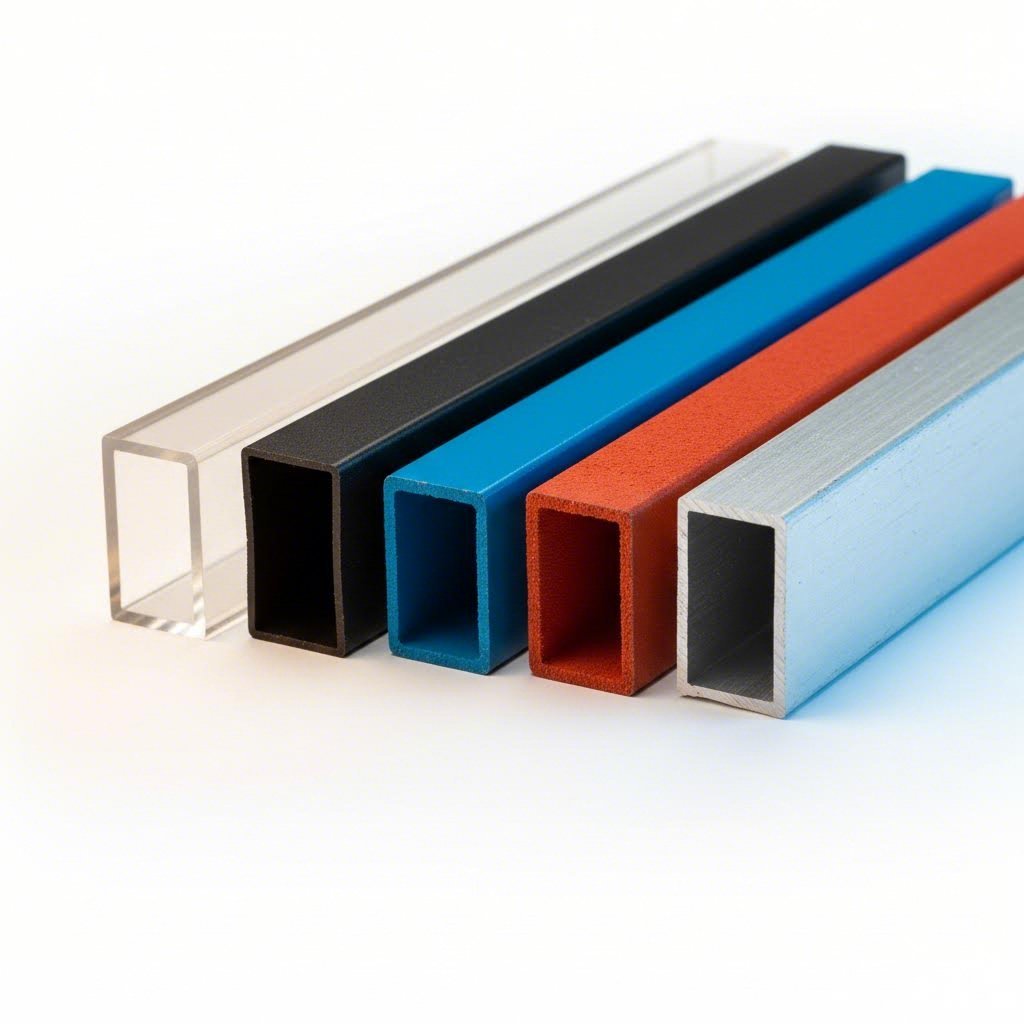
Think surface treatments are just about making aluminum look good? Think again. For structural aluminum extrusion applications, the right finish does far more than add color—it directly impacts corrosion resistance, wear performance, and even how your components fit together during assembly. Choosing between anodized aluminum extrusions, powder coating, or specialized finishes like PVDF determines how long your structure performs in demanding environments.
Here's what makes aluminum fascinating: it naturally protects itself. When exposed to air, aluminum forms a thin oxide layer that shields the underlying metal from further degradation. According to Gabrian, this passive layer works similarly to how human skin tans to protect itself from sun damage. Surface treatments take this natural phenomenon and supercharge it.
Anodizing doesn't apply a coating to aluminum—it transforms the surface itself. During the process, technicians submerge the aluminum extrusion in an electrolytic bath and pass electrical current through it. This controlled oxidation creates an oxide layer far thicker than what forms naturally, dramatically enhancing protective properties.
The resulting anodized layer exhibits ceramic-like characteristics. This means heightened resistance to wear, nicks, and scratches compared to untreated aluminum. For structural applications where aluminum channels slide against other components or aluminum track systems experience repeated friction, this wear resistance translates directly to longer service life.
Oxide layer thickness determines protection level. Industry standards categorize anodizing into three main types:
Beyond protection, anodizing creates a porous surface perfect for dye application. Colors become embedded within the oxide layer rather than sitting on top, meaning they won't fade, peel, or chip away. This makes anodized aluminum trim and decorative structural components maintain their appearance for decades.
One consideration often overlooked: anodizing slightly increases dimensions. The oxide layer grows both inward and outward from the original surface. For precision assemblies where aluminum flat bar or profile components must fit with tight tolerances, account for this dimensional change during design—or specify post-anodizing machining.
When you need vibrant colors, unique textures, or protection against UV fading, powder coating and PVDF coatings step in where anodizing reaches its limits. These treatments add material to the surface rather than transforming it, creating protective layers with distinct advantages.
Powder coating works through electrostatic attraction. According to Gabrian's comparison guide, technicians spray negatively charged powder particles onto grounded aluminum parts. The electrostatic charge holds the powder in place during oven curing, where it melts into a uniform, durable layer. No solvents are used, making powder coating an environmentally friendly finishing option.
The resulting finish offers excellent durability and brilliant color options unavailable with anodizing. Outdoor equipment, playground structures, architectural facades, and industrial equipment frequently feature powder-coated aluminum for this reason. The coating thickness—typically 60-80 micrometers—provides substantial protection while adding measurable dimension that designers must account for.
PVDF (polyvinylidene fluoride) coatings target the most demanding environments. When structures face constant UV exposure, salt spray, industrial pollution, or extreme weathering, PVDF delivers extended protection. Architectural applications particularly favor this finish because it maintains color stability and gloss retention for 20+ years in harsh conditions.
Here's a comparison of treatment options for structural applications:
Surface treatment selection also affects assembly considerations. Anodized surfaces, while not electrically conductive themselves, can still make electrical contact if the oxide layer is thin or scratched. Powder coatings provide complete electrical insulation—beneficial for some applications, problematic for others requiring grounding paths. Plan your grounding strategy before specifying finishes.
Beyond performance benefits, surface-treated aluminum extrusions contribute to sustainability goals that increasingly influence material selection. Aluminum is 100% recyclable without losing its properties—recycled aluminum requires only 5% of the energy needed to produce primary aluminum.
When compared to steel in many structural applications, aluminum's lower weight reduces transportation energy throughout the supply chain. The material's natural corrosion resistance, enhanced by proper surface treatment, extends service life and delays replacement cycles. And unlike some protective coatings that release volatile organic compounds, both anodizing and powder coating are environmentally responsible finishing methods.
These environmental considerations don't just satisfy corporate sustainability requirements—they often translate to lower lifecycle costs when energy savings, reduced maintenance, and extended service life enter the calculation.
With surface treatment fundamentals covered, you're ready to explore how these structural aluminum extrusion systems perform across specific industrial and architectural applications—including the failure modes you'll want to design against.
You've mastered alloy selection, connection design, and surface treatments. But how do these principles translate into real-world structures? Understanding how structural aluminum extrusion performs across different industries—and more importantly, how it fails—separates successful projects from costly redesigns.
Rather than listing generic "industries served," let's explore specific application challenges and the engineering decisions that address them. Whether you're designing a machine frame that must dampen vibration or a curtain wall system that will face decades of weather exposure, the same profiles behave very differently depending on how you deploy them.
Manufacturing environments push aluminum extrusions to their limits. According to Proax's manufacturing applications guide, the backbone of modern production operations relies on aluminum extrusions for machine bases, equipment frames, and workstation structures. Here's where these profiles truly earn their reputation.
CNC Enclosures and Equipment Frames: These structures must maintain precise dimensional stability while supporting heavy equipment and resisting vibration. Imagine a CNC router transferring cutting forces through its frame—any deflection translates directly to workpiece inaccuracy. Successful designs use larger-section profiles (40mm series or greater), incorporate diagonal bracing at corners, and specify gusset plates at motor mounting points. The goal? Keeping the framing square under dynamic loads that would rack lesser structures.
Conveyor Systems and Material Handling: Unlike static frames, conveyor structures experience constant dynamic loading as products move across them. The aluminum angle connections must handle not just weight but repetitive stress cycles that can lead to fatigue failures over time. Key applications in material movement include roller conveyor frames, belt conveyor supports, and gravity flow rack systems—each demanding attention to connection rigidity and load distribution.
Safety Guarding and Machine Enclosures: Essential safety applications demand impact resistance alongside visibility. Aluminum u channel profiles create frameworks for polycarbonate or wire mesh panels that protect operators while allowing visual monitoring of equipment. Critical components in automation include sensor brackets, cable management systems, and adjustable shelving brackets for tool organization.
Industrial pipe shelving and storage solutions represent another growing application. Workstation organization relies on aluminum extrusion frameworks that support pneumatics solutions, tool holders, and mounting applications for monitors and control panels. The modularity of T-slot systems proves particularly valuable here—workstations can be reconfigured as production requirements change without scrapping the underlying structure.
When aluminum extrusions transition from factory floors to building facades, the engineering challenges shift dramatically. Now you're designing for aesthetics, weathering, thermal performance, and building code compliance—all while maintaining structural integrity across decades of service.
Curtain Walls and Structural Glazing: Modern commercial buildings depend on aluminum framing systems to support massive glass panels while managing thermal expansion, wind loads, and seismic forces. These applications demand precise dimensional tolerances and consistent material properties across thousands of linear feet of profiles. Framing hangers and connection hardware must accommodate building movement without compromising weather sealing.
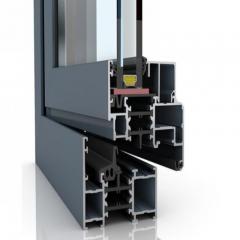
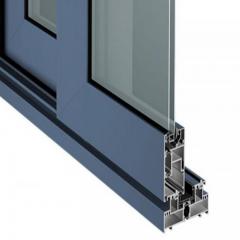
Window and Door Frames: Here, the aluminum extrusion serves multiple functions simultaneously—structural support, thermal break integration, hardware mounting, and weather sealing. The unistrut channel concept applies to specialized track systems that guide sliding panels and support operating hardware. Complex multi-chamber profiles manage condensation, provide thermal isolation, and accommodate glass thicknesses ranging from simple single-pane to heavy triple-glazed units.
Railing Systems and Exterior Structures: Outdoor aluminum applications face the harshest conditions—UV exposure, precipitation, temperature cycling, and physical impact. These environments demand careful attention to alloy selection (6063's superior corrosion resistance often outweighs 6061's strength advantage) and appropriate surface treatments that maintain appearance across seasons.
Choosing the right profile and connection approach depends heavily on your loading environment. Here's how applications cluster by structural demands:
Static Structures:
Dynamic and Vibration Environments:
Outdoor and Corrosive Conditions:
Understanding how aluminum structures fail helps you design against those specific weaknesses. Three failure modes dominate structural aluminum extrusion applications—and each demands different prevention strategies.
Connection Failures: The most common failure mode doesn't involve the aluminum profiles at all—it's the joints that give way first. Symptoms include loosening fasteners, bracket deformation, and progressive misalignment. Prevention requires proper torque specifications during assembly, thread-locking compounds for vibration environments, and bracket sizing that matches anticipated loads. When using a framing square during assembly, verify that connections remain perpendicular under hand pressure before final tightening.
Buckling: Long, slender profiles under compressive loads can buckle before the material itself reaches its yield strength. This geometric instability depends on profile length, cross-section geometry, and end fixity conditions. Prevention strategies include reducing unsupported span lengths through intermediate bracing, selecting larger-section profiles, and ensuring connections provide true fixed-end conditions rather than pinned joints that allow rotation.
Fatigue: Repetitive loading below the static failure threshold can still cause cracks that propagate over millions of cycles. Fatigue failures typically originate at stress concentrations—sharp corners, drilled holes, or surface defects. For dynamic applications, specify profiles with radiused internal corners, avoid drilling through load-bearing walls when possible, and oversize connections to reduce stress intensity at joints.
Design strategies that address all three failure modes simultaneously include:
One often-overlooked consideration: thermal expansion can stress connections over daily or seasonal temperature cycles. A 3-meter aluminum span expands approximately 2mm between winter and summer temperatures in temperate climates. Fixed-end connections that don't accommodate this movement develop progressive stress that accelerates fatigue failures. For outdoor structures, design at least one connection per span as a sliding joint.
With application engineering principles established, your next step involves making sourcing decisions—choosing between custom extrusion development and standard profiles, and evaluating potential manufacturing partners who can deliver your specifications reliably.
You've specified the alloy, designed the connections, and selected surface treatments. Now comes a decision that affects everything from project timeline to long-term costs: where do you source your aluminum extrusion profiles? The choice between custom dies and standard aluminum extrusions—and between domestic and imported suppliers—shapes your project's economics in ways that aren't immediately obvious.
Here's the reality many engineers discover too late: the cheapest quote often isn't the lowest total cost. When you factor in tooling amortization, lead time impacts, quality consistency, and value-added services, the sourcing decision becomes far more nuanced than comparing per-foot prices.
Should you invest in custom tooling or work within the constraints of existing aluminum extrusion sizes? The answer depends on volume, performance requirements, and how unique your cross-section needs to be.
When standard profiles make sense: Stock extruded aluminum profiles—angles, channels, tubes, bars—offer compelling advantages for many projects. According to Paramount Extrusions, standard shapes work best for prototyping, small projects, replacement parts, or simple structural applications. You'll find aluminum tubing for sale and aluminum channel extrusions readily available from distributors, often shipping within days rather than weeks.
The tradeoffs? Limited geometric options mean your design must adapt to available shapes. Standard profiles may include more material than structurally necessary—paying for weight you don't need. And when competitors can source identical profiles, you lose any product differentiation that custom geometry might provide.
When custom extrusion investment pays off: Custom dies unlock design freedom that standard profiles simply cannot match. According to Profile Precision Extrusions, die costs vary significantly based on complexity. A solid aluminum extrusion profile die averages around $750 with 2-3 week manufacturing time. Hollow designs require two-piece dies averaging $1,500 with 3-week lead times. Very complex hollow designs with multiple voids can reach $4,000-$5,000 and require up to 10 weeks to build.
These numbers reveal an important truth: custom tooling isn't prohibitively expensive for many applications. If your annual volume exceeds a few hundred feet, the die cost amortizes quickly. More importantly, custom aluminum extrusion profile geometry can integrate features that eliminate secondary operations—built-in channels for wiring, mounting bosses for hardware, or snap-fit features for panel retention.
Consider custom extrusion when:
Not all suppliers are created equal. According to Zetwerk's supplier evaluation guide, manufacturing experts emphasize that suppliers' technology, innovations, and characteristics directly influence end-product quality. Here's what separates adequate suppliers from exceptional partners:
Material expertise matters first. Reputable suppliers understand various aluminum alloys, grades, and their applications. Look for partners who source aluminum from trusted mills and can guide you in selecting the right alloy for your specific needs. This technical expertise prevents costly specification errors before production begins.
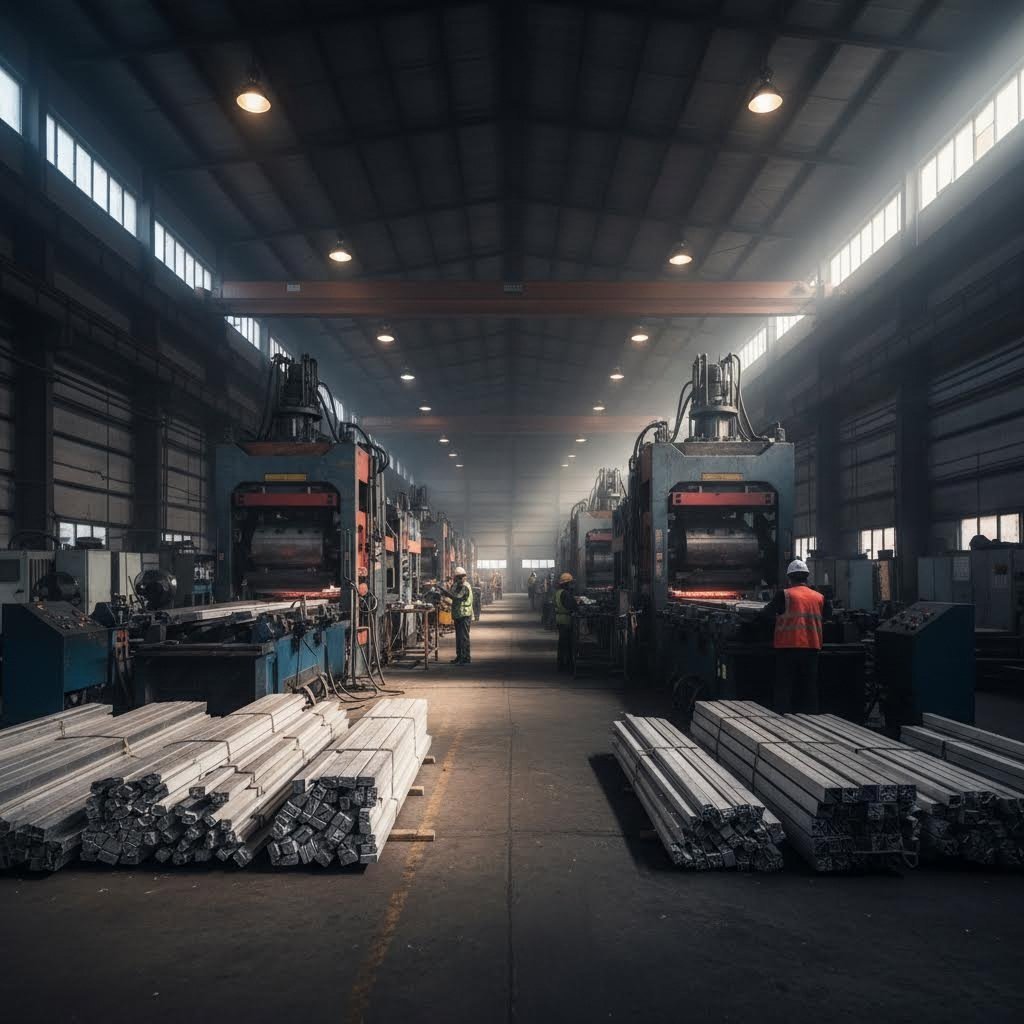
Press capacity determines capability range. Extrusion press tonnage limits both minimum and maximum profile sizes. Small presses (under 1000T) excel at precision small-section profiles but cannot produce larger structural sections. Large presses (3000T+) handle heavy structural profiles but may not economically produce delicate small sections. Full-service providers like Shengxin Aluminium operate diverse press fleets—35 extrusion presses ranging from 600T to 5500T—enabling them to match the right equipment to each project's requirements.
Secondary processing capabilities reduce supply chain complexity. The aluminum extrusion itself is often just the starting point. Most structural applications require cutting, drilling, machining, or specialized surface treatments. Suppliers with integrated CNC machining centers can deliver finished components rather than raw extrusions, eliminating the need to coordinate multiple vendors. For projects requiring precision cutting, drilling, bending, or specialized surface treatments, this end-to-end processing capability streamlines both logistics and quality control.
Surface treatment options expand application possibilities. Comprehensive finishing capabilities—anodizing (including custom colors), powder coating, PVDF, and advanced options like micro-arc oxidation—mean your supplier can deliver ready-to-install components. This integration reduces handling damage, eliminates shipping between facilities, and ensures finish specifications match structural requirements.
Quality certifications indicate process maturity. ISO 9001 certification demonstrates compliance with international quality and manufacturing standards. For structural applications where safety matters, these certifications provide documented assurance that production processes follow best practices consistently.
| Option Type | Minimum Order Quantity | Lead Time | Tooling Cost | Best For |
|---|---|---|---|---|
| Stock Standard Profiles (Distributor) | Often 1 piece or 1 foot | 1-5 days | None | Prototypes, repairs, small projects, immediate needs |
| Standard Profiles (Mill Direct) | Typically 500-1000 lbs | 2-4 weeks | None | Volume purchases of common shapes, cost-sensitive projects |
| Custom Solid Extrusion | Varies by supplier (some have no minimum) | 4-6 weeks including die | $500-$1,000 | Unique solid cross-sections, moderate volumes |
| Custom Hollow Extrusion | Varies by supplier | 5-8 weeks including die | $1,000-$2,500 | Structural tubes, integrated features, weight optimization |
| Complex Multi-Void Custom | Typically higher minimums | 10-14 weeks including die | $3,000-$5,000+ | Highly engineered profiles, thermal breaks, complex geometry |
According to Profile Precision Extrusions, some suppliers differentiate themselves by eliminating minimum order requirements entirely—producing as little as 1 foot of custom extrusion when needed. This flexibility proves invaluable during development phases when design iterations require small test quantities before committing to production volumes.
Geography adds another dimension to sourcing decisions. According to Paramount Extrusions, the choice between domestic and imported extruded aluminum profiles involves tradeoffs beyond simple cost comparison:
Domestic sourcing advantages:
Import sourcing advantages:
The practical rule of thumb: import sourcing typically makes economic sense when shipping container quantities (20,000+ lbs) and when lead times of 8-12 weeks are acceptable. For smaller quantities, urgent timelines, or projects requiring iterative design refinement, domestic sources often deliver better total value despite higher unit costs.
For structural applications requiring precision and consistency, supplier qualification matters more than geography. A well-managed overseas supplier with robust quality systems may outperform a domestic shop with limited capabilities. Focus on capability verification—request samples, review certifications, and start with smaller orders to validate quality before committing to large volumes.
With sourcing strategy established, you're ready to synthesize everything you've learned into a practical framework for executing your structural aluminum extrusion project from initial specification through final production.
You've absorbed a tremendous amount of information—from alloy chemistry and temper designations to connection engineering and surface treatment options. But knowledge without action remains theoretical. How do you translate everything you've learned into a successful aluminium extrusion project that performs exactly as intended?
The answer lies in following a systematic approach. Successful structural aluminum extrusion projects share a common thread: they match material capabilities precisely to application demands through methodical specification and qualified sourcing. Let's transform your understanding into a practical framework you can apply immediately.
Think of this checklist as your project roadmap. Each step builds on the previous one, ensuring you don't overlook critical decisions that affect performance, cost, or timeline. Whether you're specifying profile aluminum for a machine frame or designing an architectural system, these steps apply universally.
With specifications complete, your project enters the execution phase. Understanding the typical workflow helps you plan timelines and coordinate with suppliers effectively.
The journey from concept to finished aluminum extrude components follows a predictable sequence. According to Star Extruded Shapes, the process begins with design finalization using CAD software, enabling faster and more precise quoting while streamlining prototyping. For custom profiles, die development follows—a critical step where precision ensures your final product meets all dimensional and performance criteria.
Production itself involves heating billets, extruding through dies, cooling, straightening, and heat treatment to achieve specified tempers. Quality control inspections verify dimensional accuracy, surface finish, and overall condition before packaging. The fully finished aluminum extruded components then ship according to your specifications, packaged to prevent damage during transit.
For readers wondering where to buy aluminum extrusion that meets structural specifications, the answer depends on your project scope. Stock profiles from distributors work for prototypes and small quantities. Mill-direct purchasing suits volume orders of standard shapes. Custom extrusion projects require partners with integrated capabilities spanning die development through mass production.
If your project requires custom structural profiles with precision secondary operations, consider working with suppliers offering comprehensive capabilities. Shengxin Aluminium's technical team provides end-to-end support from die development through finished components, with 35 extrusion presses (600T-5500T capacity) and integrated CNC machining centers for precision cutting, drilling, and bending. Their surface treatment options—including anodizing in custom colors, powder coating, PVDF, and micro-arc oxidation—mean you receive ready-to-install components rather than raw extrusions requiring additional processing. For projects where factory-direct pricing and technical support matter, their custom aluminum extrusion services offer a single-source solution for demanding structural applications.
The knowledge you've gained throughout this guide positions you to make informed decisions at every stage. You understand why alloy selection affects weldability and strength. You know how connection design prevents the joint failures that cause most structural problems. You recognize when surface treatments serve functional purposes beyond aesthetics. And you can evaluate suppliers based on capability match rather than lowest quote.
Successful structural aluminum extrusion projects don't happen by accident. They result from systematic specification, qualified sourcing, and attention to the engineering fundamentals that transform raw material into reliable, long-lasting structures. Whether you're building machine frames, architectural systems, or custom equipment, the principles remain constant: match material capabilities to application demands, and your aluminum structures will perform exactly as designed.
Structural aluminum is a modular system composed of aluminum alloys specifically engineered for load-bearing applications. Unlike decorative extrusions that prioritize appearance, structural aluminum profiles must meet specific mechanical property requirements including yield strength, tensile strength, and hardness specifications. These profiles are created by forcing heated aluminum alloy through precision dies, resulting in consistent cross-sections ideal for machine frames, safety guarding, conveyor systems, and architectural frameworks. Common structural alloys like 6061-T6 are selected for their strength, weldability, and formability.
Common aluminum extrusion challenges include dimensional inaccuracies from irregular cooling, worn dies, or incorrect extrusion speeds, leading to poor assembly fit. Surface defects like scratches or die lines arise from improper lubrication or contaminated billets. For structural applications, joint failures represent the most frequent issue—connections loosen or brackets deform under load. Other concerns include buckling in long slender profiles under compression, fatigue failures from repetitive loading, and galvanic corrosion when incompatible metals contact aluminum in moist environments. Proper alloy selection, torque specifications, and connection design prevent most issues.
The key differences lie in strength and surface finish. 6061-T6 contains higher amounts of iron, silicon, copper, and chromium, delivering approximately 276 MPa yield strength—ideal for structural frames, aerospace parts, and load-bearing components. 6063-T5 has less alloying content, resulting in about 145 MPa yield strength but superior surface finish and extrudability. Choose 6061-T6 when structural performance takes priority; select 6063-T5 for architectural applications, window frames, or complex shapes where appearance matters more than maximum strength. Both alloys offer excellent weldability and corrosion resistance.
Custom extrusion makes sense when production volumes exceed 500 feet annually, when weight optimization is critical, or when integrated features can eliminate secondary machining operations. Custom dies for solid profiles average around $750 with 2-3 week lead times, while hollow designs cost approximately $1,500. Consider custom profiles when proprietary geometry provides competitive differentiation or when standard tolerances cannot meet precision requirements. For prototypes, small projects, or immediate needs, standard profiles from distributors offer faster delivery and no tooling investment.
Connection failures are the most common structural issue, but proper design prevents them. Use torque wrenches and follow manufacturer specifications—typically 8-12 Nm for M6 fasteners in aluminum. Specify threaded inserts rather than direct threading for repeatedly assembled joints. Select appropriate bracket types: L-brackets for light loads, corner braces with diagonal reinforcement for lateral forces, and gusset plates for heavy-duty or dynamic applications. Account for thermal expansion in outdoor structures by incorporating sliding joints. Use thread-locking compounds in vibration environments and verify galvanic compatibility between fastener materials and aluminum.



 Интернет Сервис
 0086 136 3563 2360
 sales@sxalu.com
 +86 136 3563 2360
 русский
 English
 français
 Deutsch
 español
 português
 العربية
 ไทย
ไทย Việt
Việt Українська