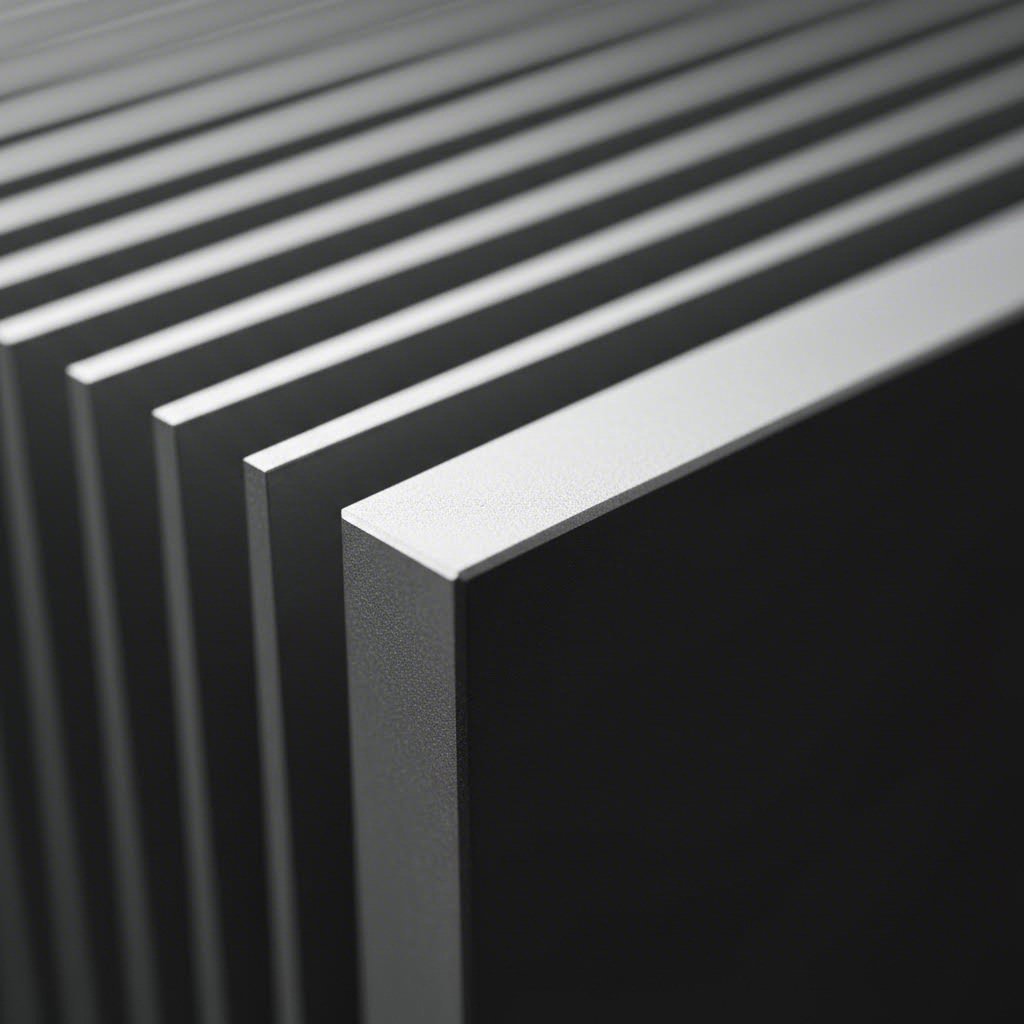
Imagine trying to cool a high-powered LED array or a motor drive without an efficient heat dissipator. The component overheats, performance degrades, and failure becomes inevitable. This is precisely why aluminum heatsink extrusion has become the backbone of modern thermal management across countless industries.
At its core, aluminum heatsink extrusion is a manufacturing process where heated aluminum billets are forced through precision-engineered dies to create continuous profiles with integrated cooling fins. Think of it like pushing soft clay through a shaped opening—except here, the "clay" is aluminum heated to around 900°F (482°C), and the "opening" is a meticulously designed die that determines every fin, groove, and contour of your heat sink.
Why does this process work so well for thermal solutions? The answer lies in aluminum's remarkable combination of properties. With a thermal conductivity of approximately 237 W/mK, aluminum efficiently draws heat away from critical components. But thermal conductivity alone doesn't tell the whole story.
Aluminum's specific heat capacity of 0.91 J/g·K means it can absorb more heat energy per unit mass before its temperature rises—making extruded aluminum heatsinks particularly effective at managing thermal spikes in demanding applications.
The extrusion process itself enhances these natural advantages. When aluminum flows through the die under hydraulic pressure, it creates a uniform grain structure throughout the profile. This consistency ensures predictable thermal performance across every unit you produce—whether you're manufacturing ten heatsinks or ten thousand.
Here's what most competitors won't tell you about the actual transformation process. It begins with billet preparation—cylindrical aluminum logs that must be uniform and free of inclusions to ensure smooth material flow. These billets undergo heating until they reach that optimal 900°F temperature where the aluminum becomes pliable but maintains its structural integrity.
The heated billet then meets the die. This is where engineering precision becomes critical. The die imparts the exact cross-sectional shape—including fin count, fin height, spacing, and base thickness—in a single continuous operation. As the extruded aluminum heatsink profile exits the die, it's rapidly quenched with water or air to lock in the desired mechanical properties.
What makes aluminium heatsink extrusion dominant over alternatives like die casting or CNC machining? Consider these advantages:
The result? Extruded heatsinks that deliver excellent thermal performance while keeping production costs manageable—exactly why this method powers everything from consumer electronics to industrial power systems.
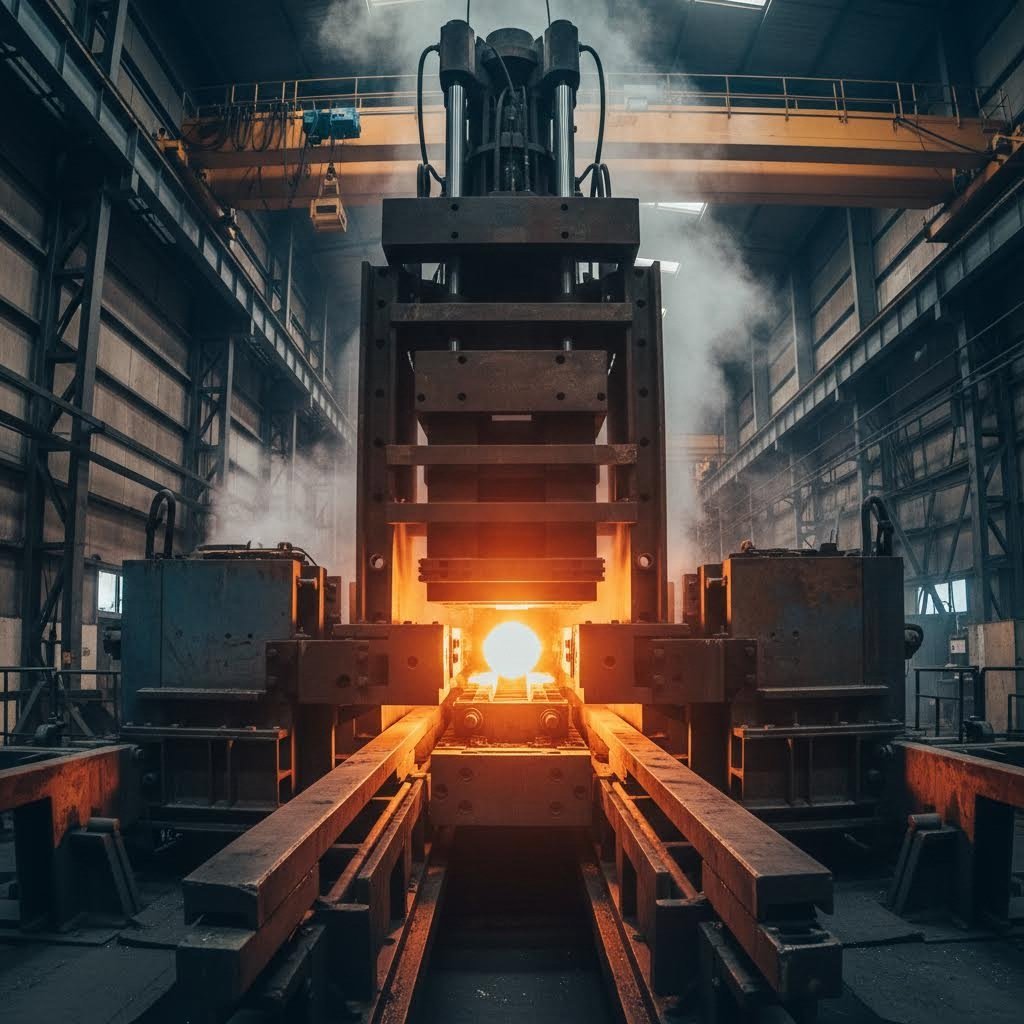
So you understand what aluminum heatsink extrusion is and why it dominates thermal solutions. But what actually happens inside the factory? How does a solid aluminum cylinder transform into those precisely finned heatsink extrusion profiles you see in electronics and industrial equipment? Let's walk through the complete manufacturing workflow that most suppliers never explain.
Creating high-quality extruded aluminum heat sink material requires a carefully orchestrated sequence of operations. Each stage builds upon the previous one, and deviations at any point can compromise the final product's thermal performance. Here's the complete process:
Wondering why temperature precision matters so much? Here's the engineering reality: if billet temperature runs too high, the aluminum flows too freely and resists entering the tight spaces between heatsink fins. Your profile dimensions fall outside tolerance, and thermal performance suffers. Too low, and the material won't flow properly through complex die geometries at all.
The extrusion ratio—the relationship between billet cross-section and final profile area—directly influences required press tonnage. A higher ratio means the aluminum must undergo more dramatic deformation, demanding greater hydraulic force. For heatsink profiles with tall, closely-spaced fins, this ratio becomes especially significant.
Press capacity typically ranges from 500 tons for smaller, simpler profiles up to 15,000+ tons for large industrial heatsinks with complex geometries. Consider these general guidelines:
The interplay between press tonnage, billet temperature, and extrusion speed determines not just whether a profile can be manufactured—but whether it can be manufactured consistently at production volumes. This is why experienced manufacturers maintain tight control over all three variables throughout every production run.
With the manufacturing process understood, the next critical decision involves selecting the right aluminum alloy for your specific thermal requirements.
You've seen how the extrusion process transforms aluminum billets into precision cooling profiles. But here's a question that separates thermal management novices from experts: which aluminum alloy should you actually use? The answer isn't as simple as picking the one with the highest thermal conductivity—and understanding why will help you make smarter decisions for your next project.
So what are heat sinks made of, and why does aluminum dominate over alternatives like copper? While copper offers approximately 60% higher thermal conductivity than aluminum, the lighter metal wins on versatility, weight, and cost-effectiveness. Aluminum heat sinks deliver excellent thermal performance at a fraction of copper's price point, making them suitable for the vast majority of applications from consumer electronics to industrial power systems.
When selecting aluminum heat sink material, you'll encounter a fundamental engineering trade-off. The alloys with the highest thermal conductivity often lack the mechanical strength needed for demanding applications. Meanwhile, the strongest alloys sacrifice some thermal performance. Let's break down the three primary alloy families you'll encounter:
1xxx Series (1050, 1060, 1100): These commercially pure aluminum grades offer the best thermal performance among all aluminum alloys, with 1050 reaching 229 W/m·K thermal conductivity. They extrude beautifully into complex fin shapes. However, their mechanical softness creates significant limitations—these alloys bend easily under stress and rarely survive high-vibration environments like automotive applications.
6063-T5: This is the go-to alloy for extruded aluminum heat sinks, and for good reason. With a thermal conductivity of approximately 201 W/m·K, it delivers excellent thermal transfer while maintaining the structural integrity needed for real-world applications. You'll find 6063-T5 powering CPU coolers, LED lighting systems, and countless electronic enclosures.
6061-T6: When your application demands higher mechanical strength, 6061-T6 steps in with enhanced durability at a modest thermal penalty. Its thermal conductivity ranges from 152-166 W/m·K depending on temper—roughly 10-20% lower than 6063. This alloy excels in power converters, motorbike engine components, and automotive parts where thermal management meets mechanical stress.
Choosing the right aluminium heatsink material requires balancing multiple factors beyond raw thermal numbers. Consider this: the difference in thermal conductivity between 6000 series alloys is relatively minimal in practical terms. Maximizing your heatsink's surface area and optimizing airflow often matters more than squeezing out a few extra W/m·K from your alloy choice.
Here's a comprehensive comparison to guide your aluminum heat sinks selection:
| Property | 1050/1100 Series | 6063-T5 | 6061-T6 |
|---|---|---|---|
| Thermal Conductivity | 229 W/m·K | 201 W/m·K | 152-166 W/m·K |
| Extrudability Rating | Excellent | Excellent | Good |
| Mechanical Strength | Low (soft, bendable) | Moderate | High |
| Surface Finish Quality | Good | Excellent | Good |
| Typical Applications | Low-stress electronics, laboratory equipment | CPU coolers, LED lighting, telecom equipment | Power converters, automotive, industrial machinery |
| Cost Consideration | Moderate | Low to Moderate | Moderate to High |
| Vibration Resistance | Poor | Good | Excellent |
What about other alloy series? The 5xxx series (5052, 5083) offers excellent corrosion resistance for outdoor or marine electronics but sacrifices approximately 40% thermal conductivity compared to 6063. High-strength aerospace alloys like 2024 and 7075 should generally be avoided for metal heat sink applications—their thermal conductivity drops to roughly half of 6063, and they're far more expensive than necessary for most cooling applications.
For the majority of aluminium heat sink projects, 6063-T5 represents the sweet spot. It delivers outstanding extrudability for complex fin geometries, excellent surface finish for anodizing, and thermal performance that satisfies all but the most demanding requirements. Reserve 6061-T6 for situations where mechanical loading, vibration, or impact resistance becomes a primary concern—and consider 1050/1100 only when thermal performance trumps all structural considerations.
With your alloy selected, the next critical factor in heatsink performance lies in the geometry itself—how fin spacing, base thickness, and aspect ratios work together to maximize heat dissipation.
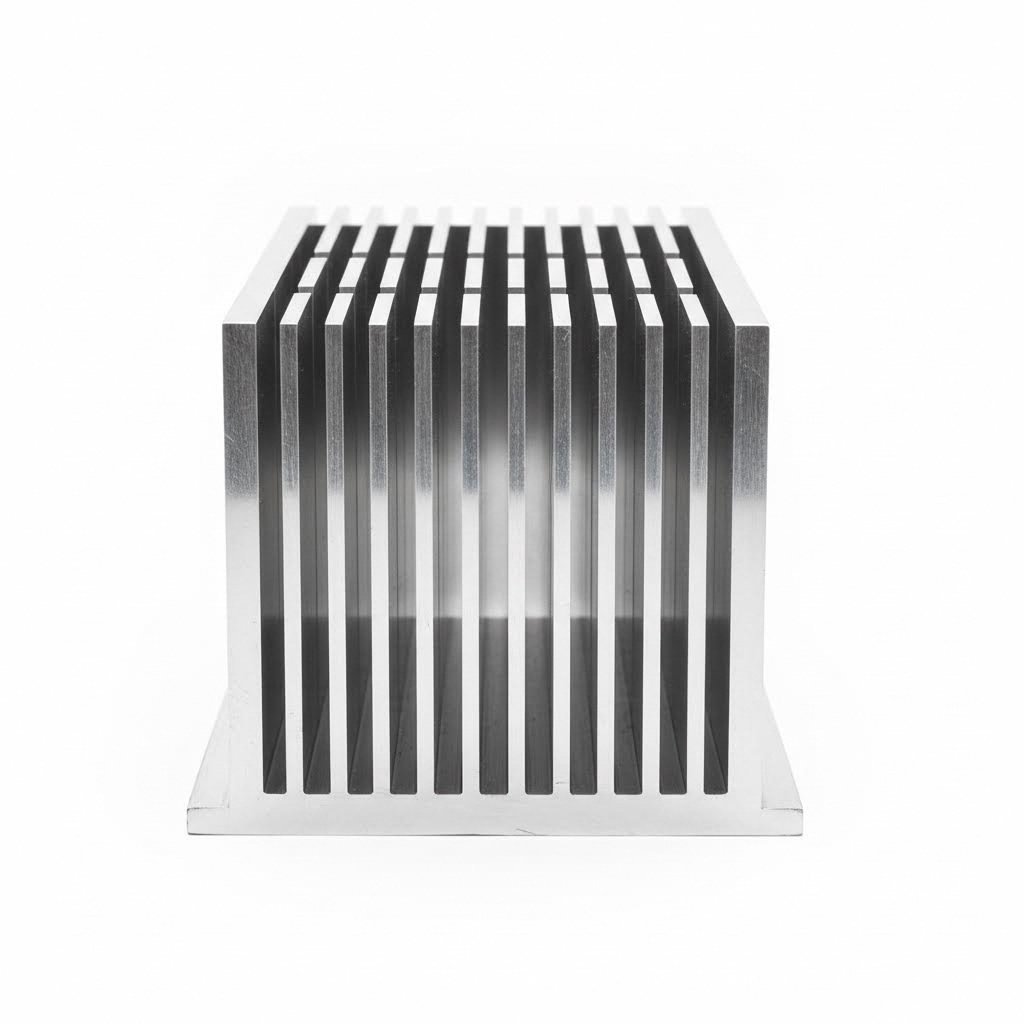
You've selected the right aluminum alloy for your project. But here's where many engineers hit a wall: translating material properties into an actual heatsink profile that performs. The geometry of your heat sink fins—their height, thickness, spacing, and relationship to the base—determines whether your design achieves optimal cooling or leaves performance on the table.
Sounds complex? It doesn't have to be. Let's break down the critical design parameters that separate mediocre finned heatsinks from truly effective thermal solutions.
When you look at a finned heat sink, you're seeing a carefully engineered balance between competing requirements. More fins mean more surface area for heat transfer—but pack them too tightly, and airflow resistance skyrockets. Taller fins extend into cooler air streams—but exceed practical limits, and manufacturability suffers.
The relationship between fin height, fin thickness, and fin spacing follows predictable engineering principles. According to thermal management research, fin efficiency depends on length, thickness, thermal conductivity, and heat transfer coefficient. Understanding these interdependencies helps you optimize each parameter without inadvertently compromising another.
Fin Spacing Optimization: Imagine airflow through your aluminum heat sink fins like water through a narrow channel. If the channels (spaces between fins) are too narrow, air struggles to penetrate, creating a stagnant boundary layer that insulates rather than cools. Too wide, and you sacrifice valuable surface area. For natural convection applications, fin spacing typically ranges from 6-12mm. Forced convection with fans allows tighter spacing—sometimes as close as 2-3mm—because the moving air overcomes flow resistance.
Fin Aspect Ratio Constraints: The aspect ratio—fin height divided by fin thickness—determines what's actually manufacturable through extrusion. Common heatsinks have a fin aspect ratio between 3:1 and 5:1, though advanced extrusion capabilities can push this higher. On smaller circle sizes, ratios up to 16:1 become achievable for profiles under 12 inches. However, pushing aspect ratios to extremes increases die costs and can create manufacturing challenges that impact unit pricing.
Fin Thickness Considerations: Thinner fins allow more fins per inch, boosting surface area. But fins that are too thin conduct heat poorly along their length—the heat never reaches the fin tips where it can dissipate. For most extruded heat sink profiles, fin thickness between 1-3mm provides an effective balance. Below 1mm, structural integrity and thermal conduction both suffer.
Here's something many heatsink profile specifications overlook: the base isn't just a mounting surface—it's a critical heat-spreading component. When your heat source (a CPU, LED array, or power transistor) contacts only a portion of the base, heat must spread laterally before reaching the fins. An undersized base creates a thermal bottleneck that no amount of fin optimization can overcome.
Thermal resistance calculations must account for this spreading resistance that is non-zero when the heat sink base is larger than the component. The heat originates from the source, spreads out over the base, and dissipates through the fins. If your base is too thin relative to the heat source size, spreading resistance dominates your thermal budget.
As a practical guideline, base thickness should generally equal or exceed 20-30% of the distance heat must spread laterally. For a component centered on a heatsink profile where heat must travel 25mm to reach the outermost fins, a base thickness of 5-8mm provides reasonable spreading performance.
Engineers designing aluminum heat sink fins should follow these key guidelines:
One often-overlooked enhancement: consider fin serrations for extra surface area. These small interruptions along fin edges disrupt boundary layers and increase turbulence, boosting convective heat transfer without changing the overall heatsink profiles dimensions.
With your fin geometry optimized for thermal performance and manufacturability, the next consideration becomes where these extruded heat sink profiles actually get deployed—and how application requirements shape design priorities.
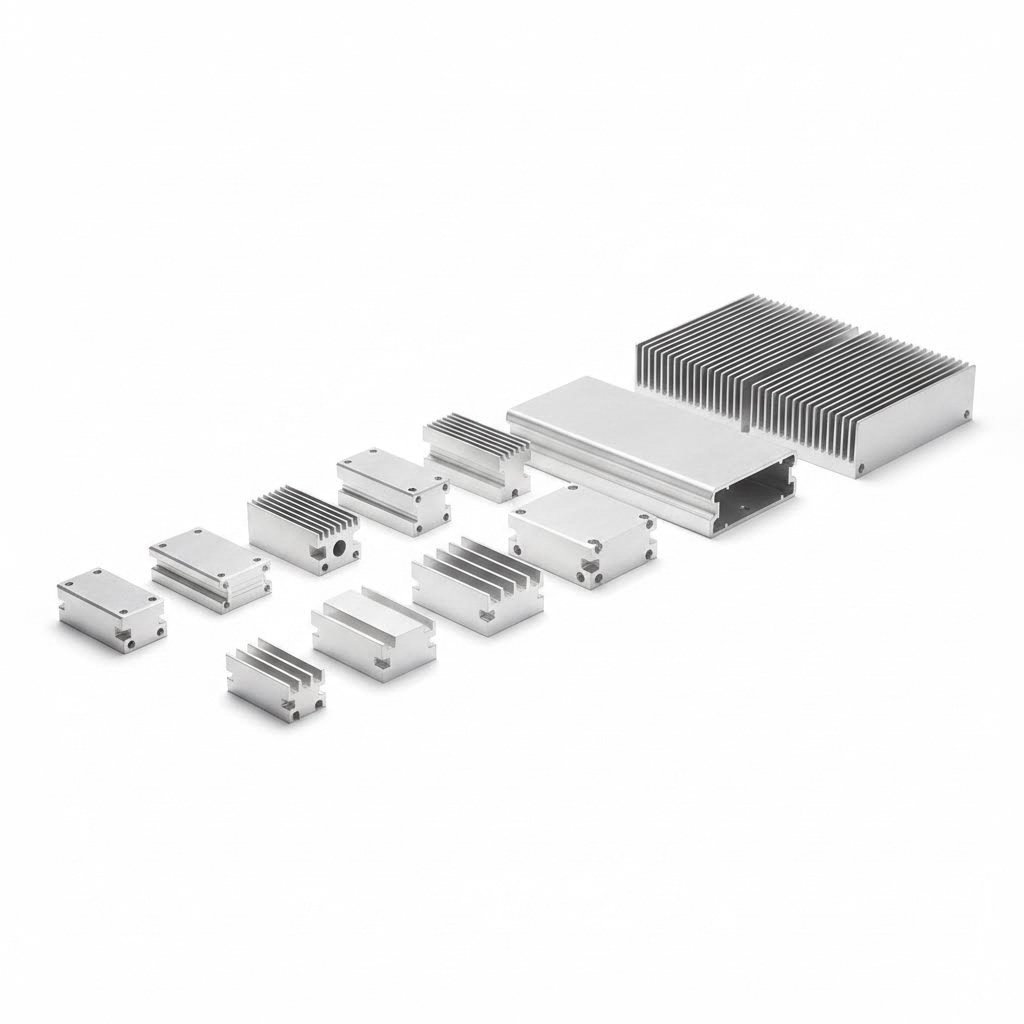
You've mastered alloy selection and fin geometry optimization. But here's the practical question: where do all these extruded aluminum heatsinks actually end up? The answer spans nearly every industry that relies on electronics—from the smartphone in your pocket to the industrial motor drives powering manufacturing plants. Understanding these applications helps you connect design parameters to real-world thermal challenges.
Every application presents unique thermal demands. A compact LED downlight faces different constraints than a railway power converter. Yet the fundamental physics remain consistent—heat must transfer from the source, spread through the base, and dissipate through the fins into surrounding air. Let's explore how extruded heatsinks solve thermal challenges across major industries.
LED Lighting Systems: Modern LEDs convert roughly 30-40% of electrical energy into light—the rest becomes heat concentrated in a tiny junction area. Without effective thermal management, junction temperatures rise, light output drops, and LED lifespan plummets. Extruded aluminum heatsinks provide the ideal solution, combining lightweight profiles with sufficient thermal mass to keep junction temperatures below critical thresholds. You'll find circular, linear, and custom-shaped profiles powering everything from architectural lighting to high-bay industrial fixtures.
Power Electronics and Motor Drives: IGBTs, MOSFETs, and other power semiconductors in motor drives and inverters generate substantial heat during switching operations. These components often dissipate 50-500+ watts in industrial applications. The fin geometry principles covered earlier become critical here—adequate base thickness for heat spreading from concentrated sources, and optimized fin spacing for the available cooling airflow.
Telecommunications Equipment: Base stations, network switches, and data center equipment operate continuously, generating consistent thermal loads that demand reliable dissipation. Aluminum heatsinks in telecom applications often feature anodized surfaces for improved emissivity and corrosion resistance in outdoor enclosures. Profile designs balance thermal performance with the tight space constraints typical of rack-mounted equipment.
Computer Components: From CPU coolers to graphics card heatsinks, personal computing drove much of the innovation in extruded thermal solutions. These applications demand high fin density for maximum surface area within compact footprints—exactly where the 6063-T5 alloy's excellent extrudability pays dividends.
Automotive Electronics: Electric vehicles have dramatically increased automotive thermal management requirements. Battery management systems, onboard chargers, and DC-DC converters all require robust cooling solutions that withstand vibration, temperature cycling, and harsh operating environments—situations where 6061-T6's higher mechanical strength becomes advantageous.
Profile sizing follows a logical progression based on power dissipation requirements. A small consumer electronics heatsink might measure 25mm wide with 10mm fins, while a large heat sink for industrial power electronics could span 300mm or more with fins exceeding 50mm in height. Here's how applications typically categorize by thermal load:
Notice how the design parameters from earlier sections connect directly to these application categories? Low-power consumer electronics can accept lower aspect ratios and simpler base designs. But as thermal loads increase, every optimization discussed—fin spacing for your cooling method, base thickness for heat spreading, aspect ratios that balance surface area with manufacturability—becomes increasingly critical to achieving target temperatures.
Industrial applications also demand considerations beyond pure thermal performance. Large heat sinks for power electronics often require precise flatness specifications for thermal interface contact, tapped mounting holes for secure component attachment, and surface treatments that enhance both thermal performance and environmental durability. These secondary processing requirements influence both supplier selection and project costs—topics we'll address in upcoming sections.
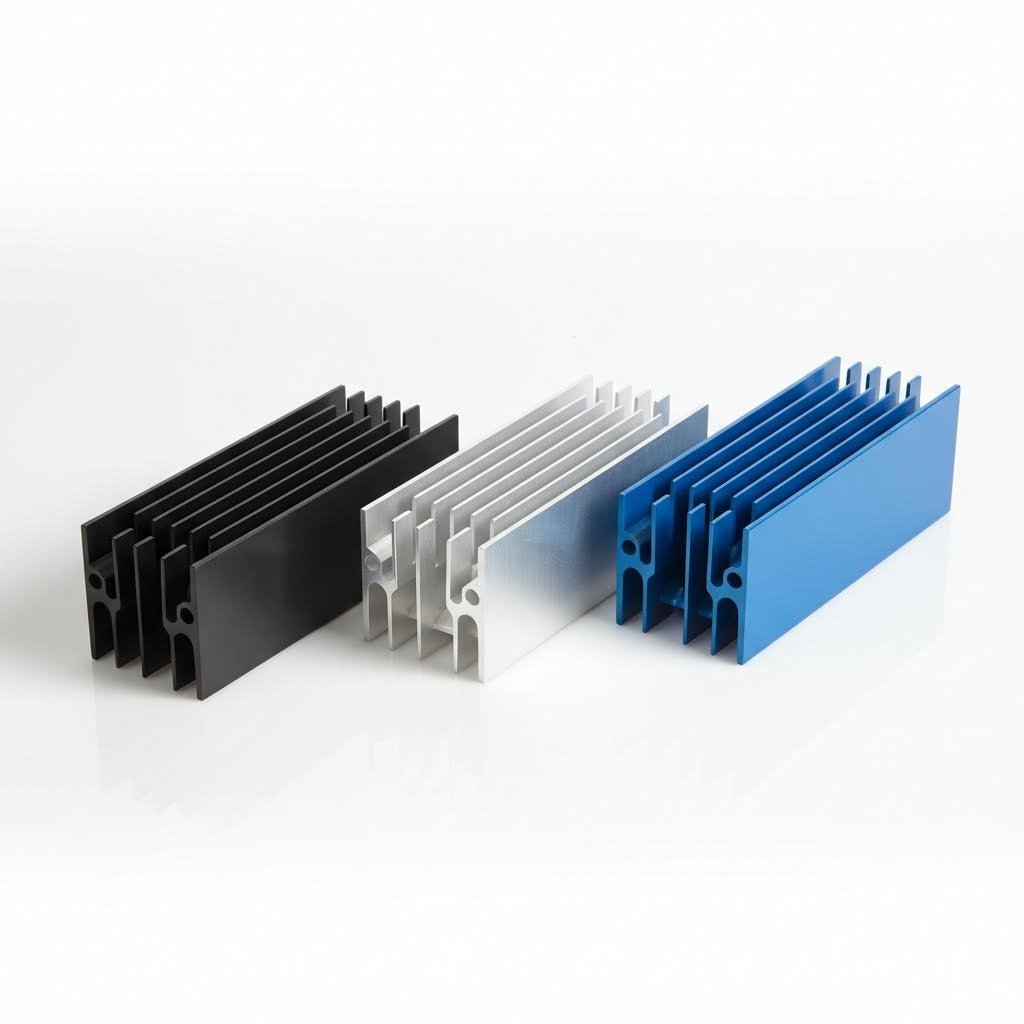
Your extruded heatsink profile has perfect fin geometry and optimal alloy selection. But there's one more factor that can significantly impact thermal performance—and it happens after the extrusion leaves the press. Surface treatments don't just make aluminium heatsinks look better; they fundamentally change how heat transfers from the surface to the surrounding environment.
Surprised? Most engineers focus exclusively on conduction through the aluminum itself, overlooking radiation's substantial contribution to overall cooling. Let's explore how the right surface treatment can boost your heatsink's effectiveness—or inadvertently compromise it.
Here's a fact that changes how you think about aluminium heat sink material finishing: anodized aluminum surfaces achieve emissivity coefficients of 0.83 to 0.86, compared to just 0.04 to 0.06 for bare aluminum. That's roughly a 15-20x improvement in radiation heat transfer capability.
Why does this matter? Radiation heat transfer becomes particularly significant in natural convection and low-airflow applications. When fans aren't available or space constraints limit airflow, that enhanced emissivity can mean the difference between meeting thermal targets and experiencing premature component failure.
The anodizing process creates a controlled oxide layer on the aluminum surface through an electrochemical reaction. This oxide coating ranges from 0.5 to 115 microns thick, depending on the anodizing method and application requirements. The microscopic pores created during this process—typically 10-150 nanometers in diameter—contribute to both the enhanced emissivity and the surface's ability to accept dyes for custom coloring.
One common misconception deserves correction: the color of anodization has no impact on radiation heat transfer. A clear anodized surface performs identically to a black anodized surface from a thermal perspective. Choose your color for aesthetics and branding—the emissivity benefits come from the oxide layer itself, not the dye.
Not every surface treatment benefits thermal performance equally. Some coatings add insulating layers that can slightly reduce heat dissipation, creating trade-offs between protection, appearance, and cooling effectiveness. Understanding these trade-offs helps you select the right finish for your specific application.
Consider powder coating: it delivers excellent durability and virtually unlimited color options, making it popular for consumer-facing products. However, the polymer layer adds thermal resistance at the surface. For high-power applications where every degree matters, this trade-off may be unacceptable. For lower-power consumer electronics where aesthetics drive purchasing decisions, the slight thermal penalty becomes acceptable.
Specialized treatments like micro-arc oxidation (MAO) create exceptionally hard ceramic-like surfaces that withstand extreme wear and corrosion. These treatments excel in demanding environments—outdoor telecommunications equipment, industrial machinery, or marine applications—where long-term durability justifies higher processing costs.
Here's a comprehensive comparison of surface treatment options for your extruded heatsink projects:
| Surface Treatment | Thermal Impact | Durability | Color Options | Typical Applications |
|---|---|---|---|---|
| Clear Anodizing | Excellent (emissivity ~0.83-0.86) | Good corrosion resistance | Natural silver/gray | Industrial electronics, LED lighting, telecom equipment |
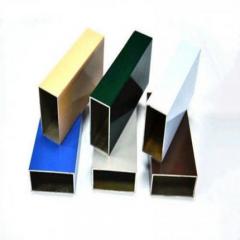
| Dyed Anodizing | Excellent (same as clear) | Good; sealed for protection | Wide range (black, blue, red, gold, custom) | Consumer electronics, architectural lighting, branded products |
| Hard Anodizing | Excellent | Superior wear resistance (>25 microns thick) | Limited (dark gray to black) | High-wear industrial applications, military equipment |
| Powder Coating | Moderate (adds thermal resistance) | Excellent scratch/impact resistance | Unlimited RAL colors | Consumer products, outdoor enclosures, aesthetic-priority applications |
| PVDF Coating | Moderate | Outstanding weathering resistance | Wide range with excellent color retention | Outdoor installations, architectural applications, harsh environments |
| Micro-arc Oxidation | Good | Exceptional (ceramic-like hardness) | Limited (white, gray tones) | Extreme environments, aerospace, marine applications |
For heatsink aluminium applications where thermal performance takes priority, anodizing remains the gold standard. It simultaneously enhances radiation cooling, provides corrosion protection, and offers electrical isolation—all without significantly impeding conductive heat transfer through the base material.
Manufacturers with comprehensive finishing capabilities can streamline your supply chain by handling both extrusion and surface treatment in-house. For example, Shengxin Aluminium offers extensive surface treatment options including anodizing in custom colors, powder coating, PVDF, and micro-arc oxidation—enabling end-to-end solutions from die development through finished heatsink delivery. This integrated approach eliminates coordination between multiple vendors and ensures consistent quality from raw billet to final product.
When specifying surface treatments for your heat sink material aluminium, consider the complete operating environment. Will the heatsink face outdoor exposure? Specify PVDF or hard anodizing for superior weathering resistance. Is the application purely internal with stable conditions? Standard anodizing delivers optimal thermal performance at lower cost. Does your product require specific brand colors? Dyed anodizing or powder coating provides the aesthetic flexibility you need—just account for any thermal trade-offs in your design margins.
With surface treatment selected, the next consideration becomes equally practical: understanding the cost factors that influence your heatsink extrusion project's total investment.
You've optimized your fin geometry, selected the right alloy, and specified the perfect surface treatment. But here's the question that ultimately determines project viability: what will this extruded heat sink actually cost? Surprisingly, most suppliers don't explain how pricing works—leaving procurement teams to navigate murky waters without a compass.
Understanding the cost structure behind aluminum extrusion heat sink projects empowers you to make smarter sourcing decisions, negotiate effectively, and choose between standard profiles and custom solutions with confidence.
Every custom extruded aluminum heat sink begins with a die—and that die represents your first significant investment. Think of it as a one-time gateway cost that unlocks your specific profile geometry.
How much should you expect to pay? According to industry data from Gabrian International, tool costs for extrusion dies in normal architectural and industrial applications range from $400 to $1,000. For larger profiles requiring 2,000-4,000 ton presses—typical for substantial industrial heatsinks—tooling costs can reach $2,000 or higher.
Here's good news many buyers overlook: some manufacturers refund tooling costs if you purchase a stipulated volume within two years. Additionally, most suppliers don't charge for replacement dies after the original wears out—as long as you continue ordering. Normal die turnaround runs 3-4 weeks, with production following within a week of sample approval.
The economic reality becomes clear: that $800 die cost gets amortized very differently across 100 units versus 10,000 units. At small volumes, tooling dominates your per-unit cost. At production volumes, it becomes negligible.
Wondering why heat sink manufacturers quote different prices for different quantities? The math is straightforward: fixed costs (tooling, setup, machine changeover) spread across more units mean lower cost per piece.
For custom extruded heatsink profiles, minimum order quantities (MOQs) can run as high as 1,000 kg—roughly 1.1 US tons. This threshold exists because manufacturers must cover billet costs, production scheduling, and scrap handling regardless of order size. When only a handful of units are ordered, waste and handling costs per part become disproportionately high.
Standard catalog profiles tell a different story. Because tooling already exists and stock is available, MOQs drop dramatically—sometimes to single units. This is precisely why choosing an existing profile makes economic sense for prototype quantities or low-volume applications.
When evaluating aluminum heat sink suppliers, consider these key cost drivers:
So when does custom make sense versus catalog profiles? If your thermal requirements align with an existing heat sink supplier's standard offerings, you'll save tooling costs, reduce lead times, and potentially access lower MOQs. But when standard profiles can't deliver your required thermal performance—or when production volumes justify tooling investment—custom extrusion unlocks optimized designs that precisely match your application.
A practical approach for new projects: start with prototype quantities using standard profiles or accept higher per-unit costs for small custom runs. Once design validation confirms your requirements, negotiate volume pricing and commit to quantities that amortize tooling effectively. Some heat sink suppliers accept phased ordering—100 units initially as a pilot, with commitment to larger volumes over 6-12 months—reducing upfront risk while securing favorable pricing.
With cost factors understood, your final consideration becomes equally critical: selecting a manufacturing partner with the capabilities, quality systems, and technical support to execute your heatsink project successfully.
You've navigated alloy selection, optimized your fin geometry, specified surface treatments, and understood the cost structure. Now comes the decision that ties everything together: which heatsink manufacturer will actually bring your design to life? The wrong choice leads to missed deadlines, quality issues, and thermal performance that falls short of specifications. The right partner delivers precision profiles that meet your requirements consistently, order after order.
Whether you're sourcing a heatsink online or building a long-term manufacturing relationship, these evaluation criteria will help you identify suppliers capable of executing your project successfully.
Not all custom heat sink manufacturers offer the same capabilities—and those differences directly impact what you can achieve. A supplier's press tonnage range determines the profile sizes and complexities they can produce. Their secondary processing equipment determines whether you receive finished, ready-to-install heatsinks or semi-finished extrusions requiring additional work elsewhere.
When evaluating potential partners, consider these essential criteria:
For buyers in North America searching for a heatsink USA supplier, evaluating both domestic manufacturers and established international partners with proven logistics capabilities makes sense. Many successful procurement strategies combine competitive overseas manufacturing with reliable shipping arrangements, achieving cost advantages without sacrificing delivery reliability.
The best supplier relationships evolve from initial prototype orders into long-term production partnerships. A quality heat sink manufacturer should offer flexible customization options—including customized fin profiles, materials, and surface treatments—to address your unique thermal management challenges as products evolve.
Here's a practical roadmap for your next heatsink extrusion project:
Ready to move forward? Explore Shengxin Aluminium's factory-direct custom extrusion services to see how their comprehensive capabilities—from 600T to 5500T press capacity, integrated CNC machining, and extensive surface treatment options—can support your heatsink project from initial concept through volume production.
The thermal management decisions you make today directly impact product reliability, customer satisfaction, and long-term operational costs. By selecting a manufacturing partner with proven expertise, comprehensive capabilities, and genuine technical support, you position your project for success—delivering heatsink solutions that perform exactly as designed, production run after production run.
6063-T5 is the most popular alloy for extruded heatsinks, offering excellent thermal conductivity at 201 W/m·K combined with superior extrudability for complex fin geometries. For applications requiring higher mechanical strength, 6061-T6 provides enhanced durability at 152-166 W/m·K. The 1050/1100 series offers the highest thermal conductivity (229 W/m·K) but lacks structural strength for demanding environments.
The manufacturing process involves six key stages: die design and preparation, billet heating to 400-500°C, extrusion press operation where hydraulic rams force aluminum through precision dies, quenching for rapid cooling, stretching for dimensional accuracy, and aging treatment by precision cutting. This continuous process creates profiles with integrated fins in a single operation.
Die tooling for custom heatsink extrusions typically ranges from $400 to $1,000 for standard profiles, while larger profiles requiring 2,000-4,000 ton presses can cost $2,000 or more. Many manufacturers refund tooling costs when volume commitments are met within two years. Secondary processing like CNC machining adds $200-$300+ per metric ton, and surface treatments run $1,200-$1,400 per metric ton.
Yes, anodizing significantly enhances thermal performance by increasing surface emissivity from 0.04-0.06 (bare aluminum) to 0.83-0.86—roughly a 15-20x improvement in radiation heat transfer. This benefit is especially valuable in natural convection applications. Importantly, the color of anodization has no impact on thermal performance; the enhancement comes from the oxide layer itself.
For natural convection applications, fin spacing of 6-12mm is recommended, while forced air cooling allows tighter 2-4mm spacing. Standard extrusions typically achieve fin aspect ratios of 3:1 to 5:1 (height to thickness), though advanced manufacturing can push higher ratios. Base thickness should equal at least 20-30% of the lateral heat spreading distance for optimal thermal performance.



 Интернет Сервис
 0086 136 3563 2360
 sales@sxalu.com
 +86 136 3563 2360
 русский
 English
 français
 Deutsch
 español
 português
 العربية
 ไทย
ไทย Việt
Việt Українська