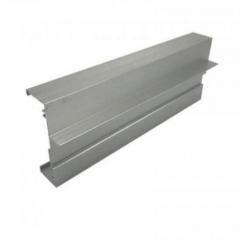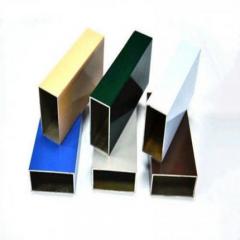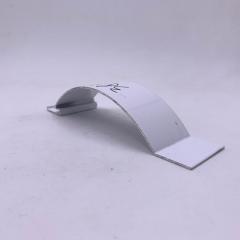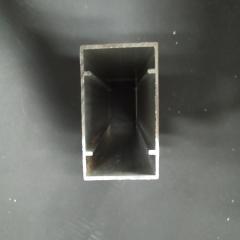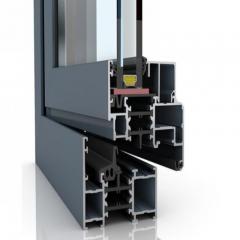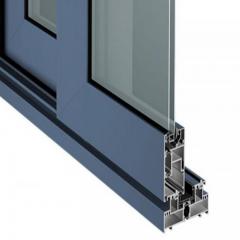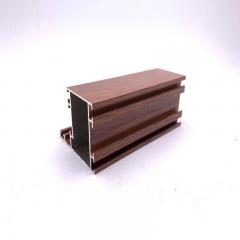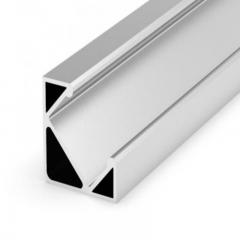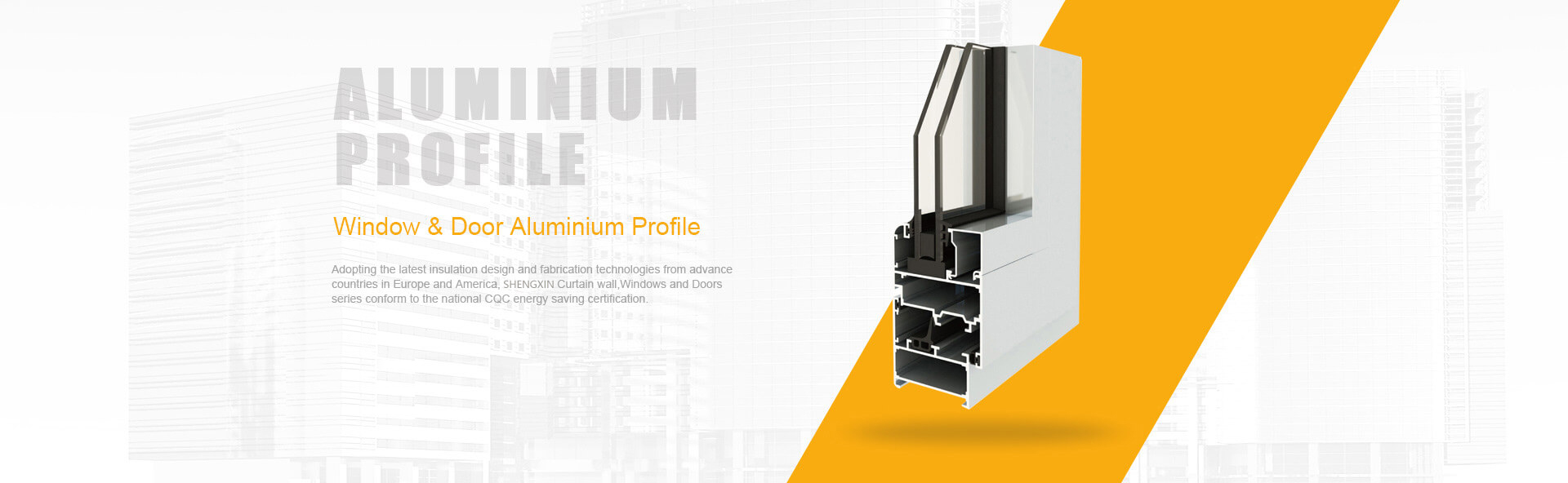
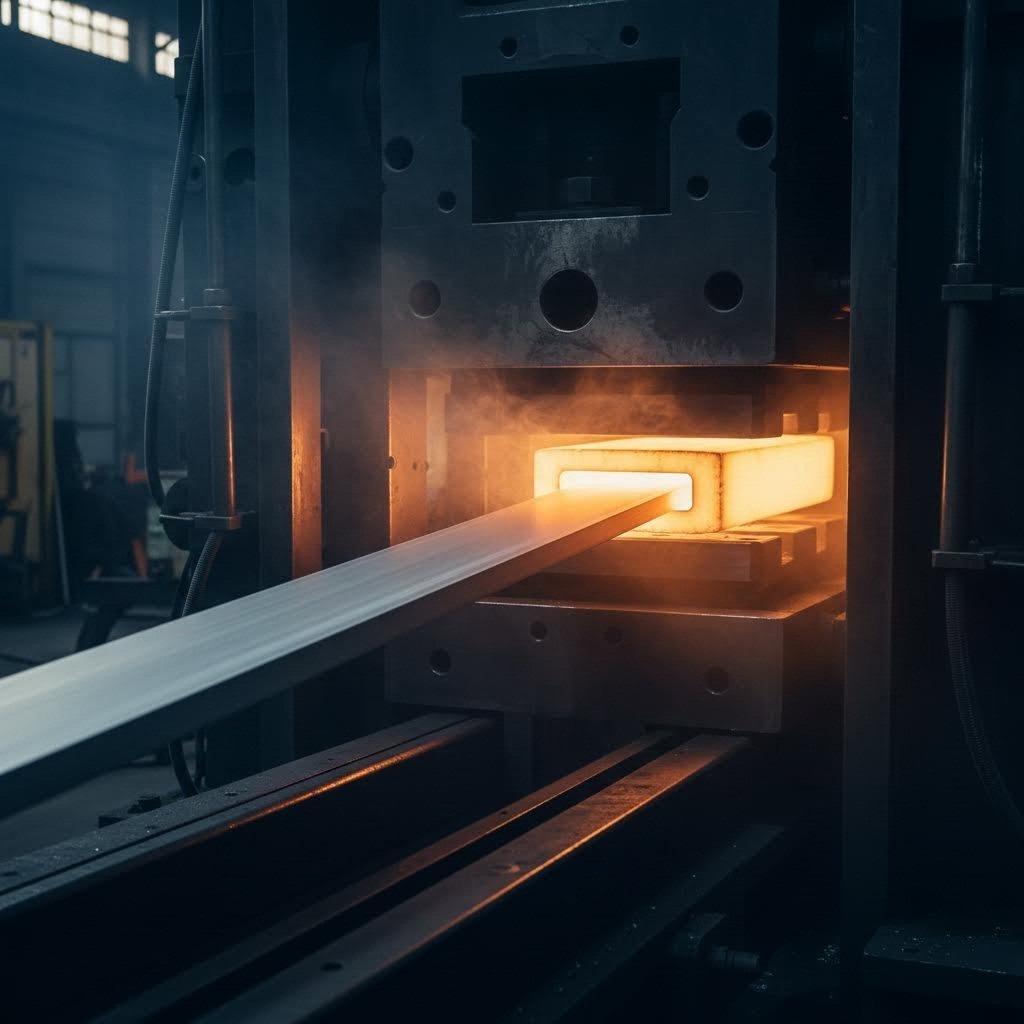
Ever wondered how the sleek window frames in your home or the intricate heat sinks in your computer get their precise shapes? The answer lies in a remarkable manufacturing technique that transforms raw aluminum into virtually any cross-sectional profile imaginable.
Aluminum extrusion is a manufacturing technique that forces heated aluminum alloy material through a shaped die to create profiles with consistent cross-sectional shapes. Think of it like squeezing toothpaste through a tube—the material emerges in the exact form of the opening.
So, what is aluminum extrusion at its core? The process relies on a simple yet powerful principle. You heat a cylindrical aluminum billet until it becomes malleable, then apply tremendous pressure to push it through a precision-engineered die. The result? Extruded aluminum profiles that maintain perfect dimensional consistency along their entire length.
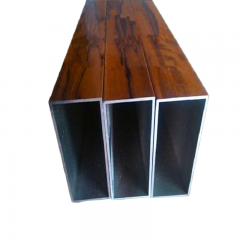
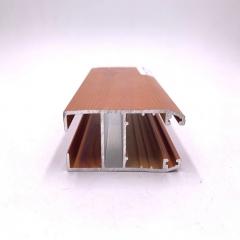
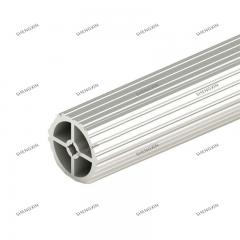
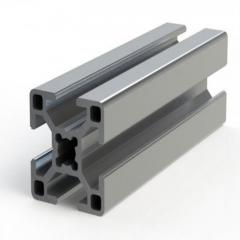
To define extrude in manufacturing terms: it means forcing material through a shaped opening under pressure. When you apply this to aluminum, you unlock incredible design flexibility. The shapes can be solid, hollow, or semi-hollow—from simple rectangular bars to complex architectural profiles with multiple chambers.
What is extruded aluminum used for? Look around you. The aluminium extrusion process produces components found everywhere—from the chassis of the car you drive to the frames supporting solar panels on rooftops. This manufacturing method dominates because it delivers:
The technology has evolved dramatically since its earliest beginnings over a century ago. What started as a manual process for producing lead pipes has transformed into a sophisticated manufacturing system capable of creating intricate aluminum profiles with tolerances measured in fractions of a millimeter.
In the sections ahead, you'll discover exactly how this transformation happens—from preparing the raw billet to the final quality-checked profile ready for your application.
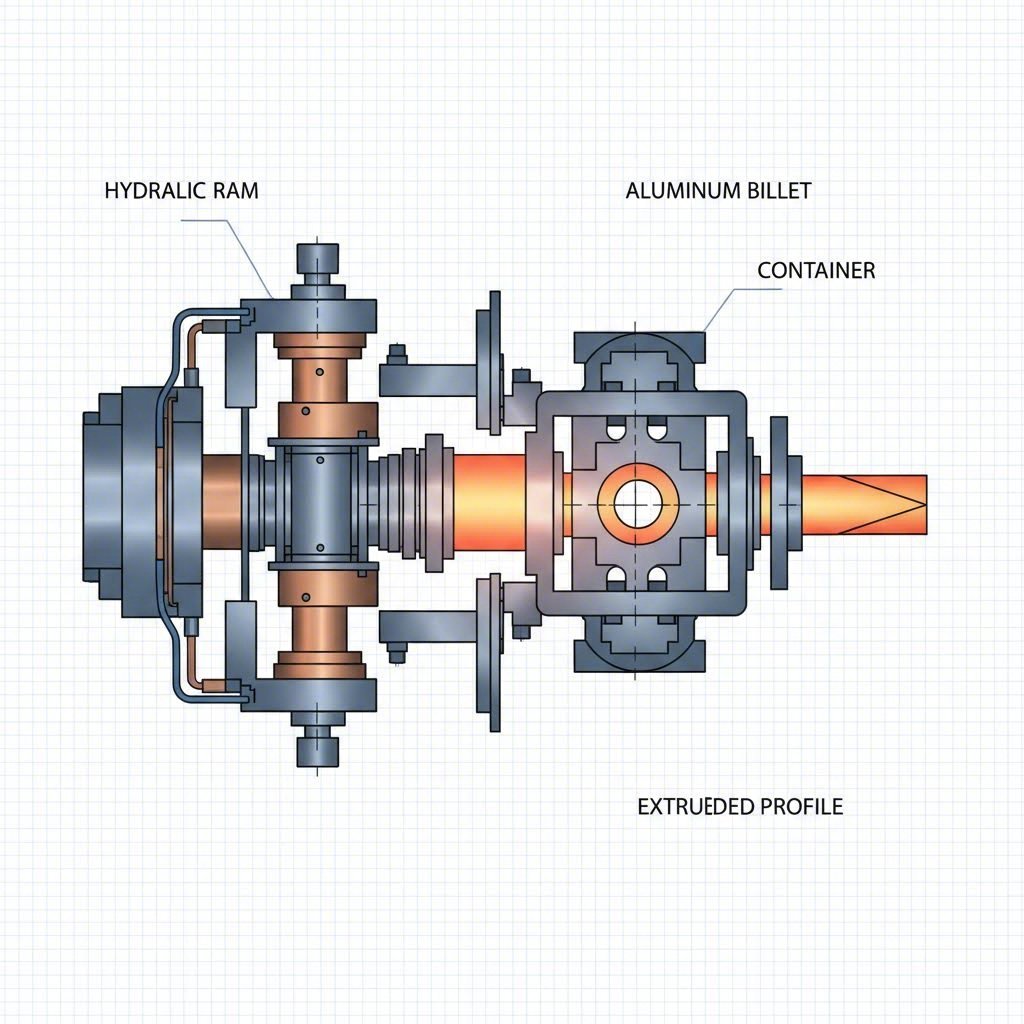
Now that you understand what aluminum extrusion is, let's walk through exactly how aluminum extrusion is made. The aluminum extrusion process follows a precise sequence of stages, each one critical to achieving the dimensional accuracy and mechanical properties your application demands.
Imagine transforming a solid cylinder of aluminum into a complex architectural profile in just minutes. That's the power of extrusion manufacturing. The journey from raw material to finished product follows these essential steps:
Understanding the relationship between process parameters and product quality helps you appreciate why precision matters at every stage. Modern extrusion lines operate within carefully controlled ranges:
| Parameter | Typical Range | Impact on Quality |
|---|---|---|
| Billet Temperature | 750-930°F (400-500°C) | Affects metal flow, surface finish, and dimensional tolerances |
| Die Temperature | 842-932°F (450-500°C) | Ensures uniform metal flow and extends die life |
| Ram Pressure | 1,000-15,000 tons | Determines extrusion speed and profile complexity capability |
| Extrusion Speed | Variable by alloy/shape | Balances production rate with surface quality |
The extrusion process demands constant monitoring and adjustment. Temperature deviations of just a few degrees can mean the difference between a perfect profile and one with surface defects or dimensional issues. Similarly, press speed must balance production efficiency against quality—faster speeds increase output but may compromise fine details in complex shapes.
With this understanding of how the manufacturing sequence transforms raw billets into precision profiles, you're ready to explore how different aluminum alloys affect both the extrusion process and final product performance.
Choosing the right aluminum alloy for your aluminum extrusions isn't just a technical detail—it fundamentally shapes what your finished profiles can achieve. The alloy you specify determines everything from how smoothly the metal flows through the die to how your components perform years down the road.
So how do you navigate the options? Start by asking yourself three key questions: What strength does my application demand? Will the profiles face corrosive environments? And how important is surface finish quality?
The 6000 series aluminum alloys dominate the extrusion industry for good reason. These alloys combine magnesium and silicon as their primary alloying elements, creating materials that balance extrudability, strength, and corrosion resistance exceptionally well. Both extruded aluminum profiles in 6061 and 6063 grades are heat-treatable, meaning you can enhance their mechanical properties through controlled aging processes after extrusion.
Here's a comparison of the most commonly specified aluminum extrusion profiles and their key characteristics:
| Alloy | Extrudability | Strength | Corrosion Resistance | Typical Applications |
|---|---|---|---|---|
| 6063 | Excellent | Medium | Very Good | Window frames, door frames, architectural trim, furniture, signage, irrigation tubing |
| 6061 | Good | High | Good | Structural components, aerospace parts, truck beds, bicycle frames, machinery components |
| 6005/6005A | Very Good | Medium-High | Good | Rail profiles, tubing for furniture, ladder frames, applications needing more strength than 6063 |
| 7075 | Fair | Very High | Moderate | Highly stressed structural parts, aerospace applications, military equipment |
Why does 6063 dominate architectural applications while 6061 serves structural needs? The answer lies in their distinct compositions and resulting properties.
Aluminum 6063 contains approximately 98.9% aluminum with 0.7% magnesium and 0.4% silicon, plus trace amounts of other elements. This simpler composition makes it exceptionally easy to extrude—even through complex dies with thin walls and intricate details. The aluminium extrusion profile made from 6063 produces superior surface finishes and responds beautifully to anodizing, which is why manufacturers often call it "architectural aluminum." When you need extruded aluminium for windows, doors, or decorative trim, 6063 is typically your first choice.
However, 6063's moderate strength (Brinell hardness of 73) means it's not ideal when structural demands increase. That's where aluminum 6061 steps in. With higher amounts of copper, silicon, chromium, and iron in its composition, 6061 delivers significantly greater strength and hardness (Brinell hardness of 95). This aluminum extruded alloy excels in applications like aerospace components, truck beds, bicycle frames, and machinery parts where load-bearing capacity matters most.
Consider these trade-offs when specifying your aluminum extrusion profile:
Alloy selection also directly impacts your extrusion process parameters. Alloys like 6063 with excellent extrudability allow faster press speeds and enable more complex profile geometries. Harder alloys like 6061 or 7075 require slower extrusion rates and may limit achievable wall thicknesses. Your extrusion partner should guide you through these considerations, balancing design requirements against manufacturing capabilities.
For applications falling between 6063 and 6061 in strength requirements, consider 6005 or 6005A alloys. These offer better mechanical properties than 6063 while maintaining good extrudability—perfect for structural tubing, rail profiles, and ladder components where moderate strength enhancement matters.
With your alloy selected based on application requirements, the next critical factor determining your profile's success is die design—the precision-engineered tool that shapes every characteristic of your finished extrusion.
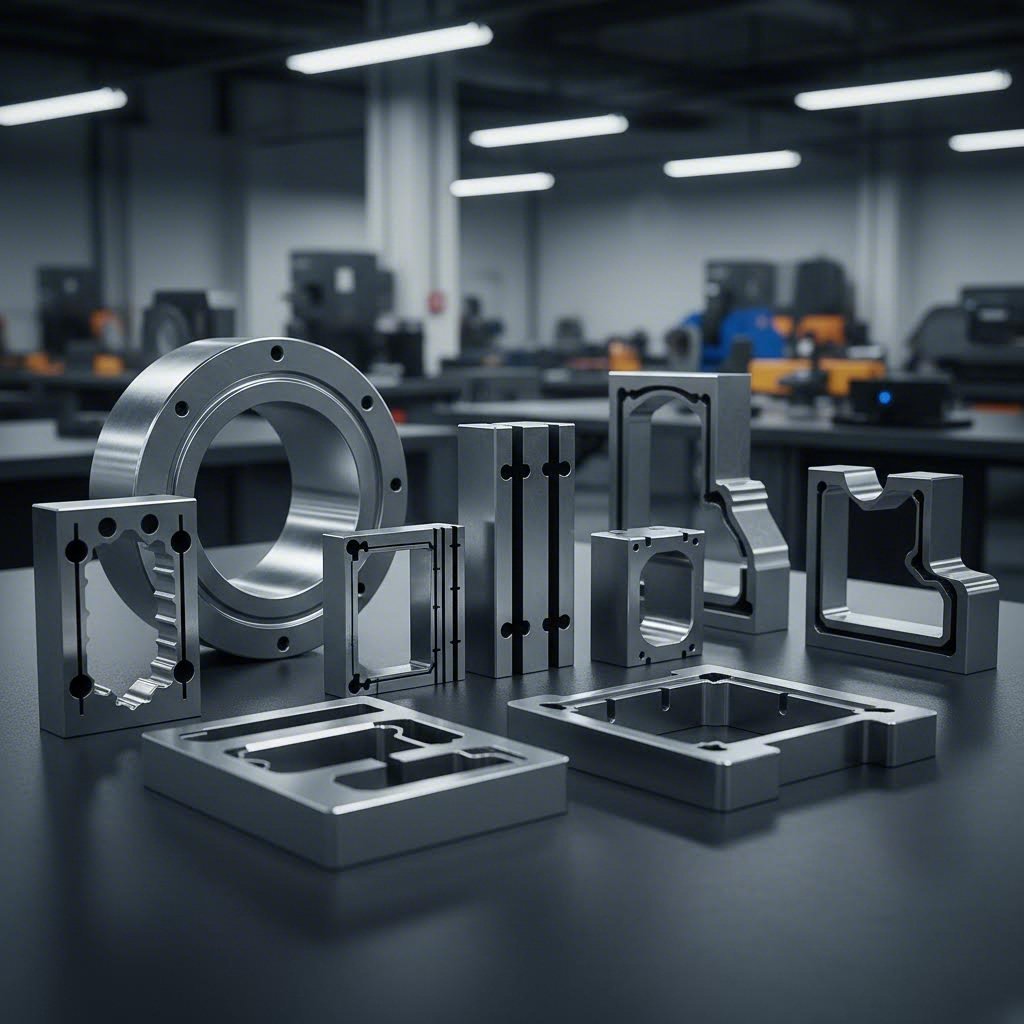
You've selected your alloy and understand the manufacturing sequence—but here's the truth: none of that matters without the right extrusion die. This precision-engineered steel tool determines whether your aluminum emerges as a flawless profile or a defective reject. Think of it as the DNA of your extrusion; every dimension, tolerance, and surface characteristic traces back to die design decisions.
An aluminum extrusion die is essentially a thick H13 steel disk with carefully machined openings that match your desired cross-sectional profile. During the extrusion process, heated aluminum billet material passes through these openings under tremendous pressure—up to 15,000 tons—emerging in the exact shape of the die cavity.
Sounds simple? It's anything but. The relationship between die complexity and achievable extrusion shapes involves balancing multiple factors simultaneously. Engineers must account for how molten aluminum flows, where stress concentrations develop, and how the die will wear over thousands of extrusion cycles.
Here are the critical die design considerations that affect your profile quality:
Modern aluminium extrusion die development increasingly relies on CAD, FEM, and CFD simulation tools. These technologies predict metal flow rates through die openings, temperature gradients across the billet, and stress concentrations that might cause die failure—allowing engineers to optimize designs before cutting any steel.
Not all extrusion dies are created equal. The type of die required depends entirely on your profile geometry. Understanding these distinctions helps you communicate effectively with your extrusion partner and anticipate cost implications.
Solid dies produce shapes without any enclosed voids—think angles, channels, and solid bars. These aluminium extrusion dies generally fall into three categories:
Hollow dies (also called porthole dies) create profiles with one or more enclosed voids—rectangular tubes, multi-void t-slots, or complex architectural sections. These consist of two interlocking pieces: the mandrel forms internal features while the cap creates external geometry. Hot aluminum enters through the mandrel's portholes and exits from the cap.
Semi-hollow dies represent a hybrid category for profiles with partially enclosed voids. Engineers use the "tongue ratio" formula (Area/Gap²) to determine whether a shape qualifies as semi-hollow. The higher this ratio, the more challenging the extrusion becomes—and the greater the risk of die breakage.
Beyond die type, the extrusion method itself affects what's achievable with your aluminum profiles. Two primary approaches dominate the industry:
Direct extrusion pushes material through the die using a ram moving in the same direction as the extruded profile. This method offers:
However, direct extrusion creates higher friction as material moves through the die, potentially affecting profile quality and accelerating die wear.
Indirect extrusion fixes the die while the ram moves opposite to material flow. This approach delivers:
The trade-off? Indirect extrusion requires more complex machinery, operates slower, and suits smaller, intricate profiles better than bulky sections. Industries like aerospace and electronics often favor indirect extrusion for high-precision, complex components.
Every unique extrusion shape requires its own die and appropriate support tooling—backers and bolsters that withstand extreme pressures and extend die life. Early collaboration between designers, die manufacturers, and extrusion plants prevents costly rework and achieves shorter lead times.
With die engineering fundamentals understood, the next step in transforming your raw profile into a finished component involves post-extrusion processing—the operations that enhance appearance, durability, and functional performance.
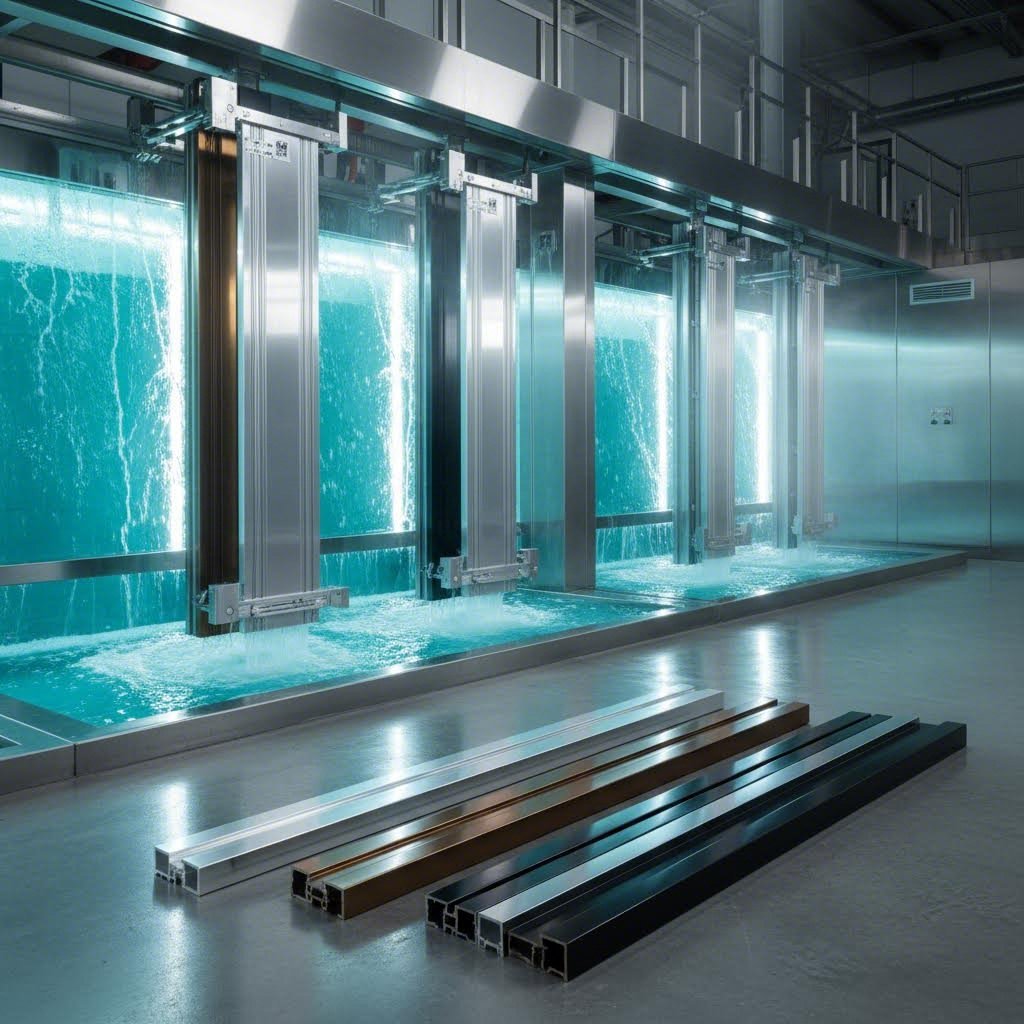
Your aluminum profile has emerged from the die, been quenched, and cut to length—but it's far from finished. The aluminium extrusion process continues with critical post-extrusion operations that determine whether your profile meets application demands or falls short. These secondary steps transform raw extrusions into precision components ready for assembly.
Remember how we mentioned aging ovens earlier? This heat treatment stage deserves closer attention because it fundamentally changes your profile's mechanical properties. After extrusion, aluminum profiles undergo controlled thermal processing to achieve specific temper designations—most commonly T5 or T6.
T5 temper involves cooling directly from the extrusion press by artificial aging. This treatment suits applications requiring moderate strength with good formability. T6 temper adds a solution heat treatment step before aging, producing higher strength characteristics ideal for structural applications.
The aging process works by precipitating alloying elements within the aluminum matrix. For 6000 series alloys, magnesium and silicon form Mg₂Si precipitates that strengthen the material significantly. Temperature precision matters—variations of just a few degrees can affect final hardness and tensile strength properties.
What happens after heat treatment depends entirely on your application requirements. Surface treatment methods strengthen aluminum's natural advantages while adding aesthetic appeal to your finished product.
Here are the primary surface treatment options available for extruded aluminum parts:
Choosing the right finish connects directly to your application context. Architectural projects prioritizing aesthetics typically specify anodizing or PVDF for their appearance and weather resistance. Industrial components facing harsh operating environments often benefit from powder coating's impact resistance. Electronics enclosures might require specific anodizing processes to achieve electrical insulation properties.
Raw aluminum extrusion shapes rarely arrive at your facility ready for direct installation. Secondary fabrication operations—aluminium extrusion machining, cutting, drilling, and bending—transform profiles into application-ready components.
Understanding how to cut aluminum extrusion properly matters for dimensional accuracy. Common secondary operations include:
Quality control checkpoints occur throughout post-processing. Inspectors verify dimensional accuracy after cutting, surface finish quality after treatment, and feature precision after machining. These verification steps ensure your extruded aluminum parts meet specifications before shipping.
With profiles now transformed into finished components through heat treatment, surface finishing, and secondary fabrication, you're ready to explore where these versatile aluminum shapes find their greatest applications across industries.

Where do all these precision-crafted profiles actually end up? The aluminum extrusion applications span virtually every industry you can imagine—from the window frames surrounding you right now to the heat sinks keeping your smartphone cool. Understanding these diverse uses helps you appreciate why the alloy selection and die design decisions we discussed earlier matter so much in practice.
Walk into any modern building and you're surrounded by types of extruded aluminum. The architectural sector consumes a significant portion of global extrusion production, and for good reason. Aluminum's combination of lightweight strength, corrosion resistance, and design flexibility makes it ideal for building envelopes.
Window and door systems represent the most visible architectural application. Here, 6063 alloy dominates because of its excellent extrudability and superior anodizing response—exactly the properties we highlighted earlier. These profiles must accommodate glass panels, weather sealing, and hardware integration while maintaining slim sightlines that maximize natural light.
Curtain walls take aluminum's architectural role even further. These non-load-bearing facades attach to building floor slabs, functioning like decorative curtains that span multiple stories. According to industry specifications, curtain walls typically measure six to ten inches deep and come in stick-built or panelized configurations. The 6000 series alloys excel here, offering the strength needed for larger spans while enabling the complex profiles required for thermal breaks and drainage channels.
Window walls offer a cost-effective alternative, installing between floor slabs rather than hanging from them. These systems don't require fire-stopping since they sit within the slab structure, reducing both installation complexity and noise transmission concerns.
Beyond architecture, the types of aluminum extrusion serving industrial applications showcase the material's engineering versatility. Let's explore the major sectors:
Notice how application requirements connect back to earlier decisions? Architectural profiles prioritize 6063's surface finish and corrosion resistance. Structural transportation components demand 6061's higher strength. Electronics heat sinks exploit aluminum's thermal conductivity through complex fin geometries only achievable via extrusion. Each application leverages specific material properties and profile capabilities that trace directly to alloy selection and die engineering choices.
With applications spanning from skyscraper facades to smartphone internals, maintaining consistent quality across this diversity presents significant challenges—challenges that quality-focused manufacturers address through rigorous process controls and inspection protocols.
You've learned how aluminum extrusions are manufactured, which alloys to specify, and where these profiles find applications. But here's the question that separates successful projects from costly failures: how do you ensure the profiles you receive actually meet your specifications? Understanding quality considerations helps you evaluate suppliers confidently and catch issues before they become expensive problems.
Defects in extruded profiles can arise at multiple stages—from billet preparation through final packaging. Knowing what to look for empowers you to establish meaningful quality expectations with your extrusion partner.
Common quality concerns fall into three categories:
What causes these typical defects? Surface scratches often stem from poor handling or worn tooling, while die lines indicate tool wear or uneven extrusion pressure. Warping results from uneven cooling or mishandling after the aluminum extrude phase completes. Alloy mismatch—using the wrong billet or contaminated material—creates reduced strength and corrosion risk that may not appear until the extruded metal is in service.
Proper process control prevents most defects before they occur. When evaluating extrusion profiles from potential suppliers, understanding their quality protocols reveals much about what you'll actually receive.
A comprehensive quality control plan typically includes:
What documentation should you expect? Standard QC packages include inspection reports with measurement data, mechanical property certificates verifying tensile strength and hardness, coating thickness records for finished profiles, and photographs of inspected parts. For critical applications, request alloy verification through spectrometer analysis—this confirms the material matches specifications rather than relying solely on supplier labels.
European standards like EN 755-9 and EN 12020-2 establish tolerance frameworks that many manufacturers follow. Profile design, wall thickness, and alloy directly affect achievable tolerances—tighter specifications impact productivity and price, so discuss realistic targets during the design stage.
When evaluating suppliers, ask these questions: What inspection methods do you use for dimensional verification? How do you verify alloy composition? What's your process for handling non-conforming material? Can you provide mechanical test certificates? Suppliers with robust extrusion technology and quality systems answer these confidently with documented procedures.
With quality fundamentals understood, the final step involves selecting an extrusion partner capable of delivering consistent results from initial die development through production and beyond.
You've mastered the technical fundamentals—from alloy selection to quality control protocols. Now comes the decision that determines whether your project succeeds: selecting the right metal extrusion partner. This choice impacts everything from initial tooling costs to long-term supply chain reliability. Let's walk through the evaluation criteria that separate exceptional suppliers from mediocre ones.
Finding a qualified aluminum extrusion machine facility requires more than comparing price quotes. The best suppliers function as technical partners, supporting your project from concept through production. Here are the critical factors to evaluate:
The transition from concept to volume production reveals a supplier's true capabilities. End-to-end support matters because issues arising at any stage—die design, first-article extrusion, finishing, or fabrication—affect your timeline and costs.
Here's what comprehensive partnership support looks like:
When evaluating potential partners, consider requesting a virtual or on-site facility tour. Observing machinery condition, cleanliness, workflow organization, and quality control stations provides insights that sales presentations cannot. A well-organized facility with modern equipment and documented procedures typically delivers consistent results.
Ultimately, selecting an extrusion partner involves balancing technical capabilities, service quality, and long-term reliability. The ideal supplier operates as an extension of your engineering team—offering expertise that enhances your designs while delivering precision profiles that meet your exact specifications. With the right partner, the aluminum extrusions process transforms from a procurement challenge into a competitive advantage.
The aluminum extrusion process involves heating a cylindrical aluminum billet to 750-930°F until malleable, then forcing it through a precision-engineered steel die using hydraulic pressure up to 15,000 tons. The aluminum emerges in the exact cross-sectional shape of the die opening. Following extrusion, profiles undergo quenching for rapid cooling, stretching for straightness correction, cutting to length, and aging heat treatment to achieve desired mechanical properties like T5 or T6 temper.
The five essential steps of aluminum extrusion are: 1) Design and preparation—preheating the die and billet to optimal temperatures; 2) Extrusion—pressing heated aluminum through the die under high pressure; 3) Quenching and cooling—rapidly cooling profiles to lock in mechanical properties; 4) Stretching and cutting—straightening profiles and cutting them to specified lengths; 5) Aging, finishing, and inspection—heat treating for strength, applying surface treatments like anodizing or powder coating, and performing quality checks before packaging.
The 6000 series alloys dominate extrusion applications due to their excellent balance of extrudability, strength, and corrosion resistance. Alloy 6063 is ideal for architectural applications like window frames because of its superior surface finish and anodizing response. Alloy 6061 offers higher strength for structural components in aerospace, automotive, and machinery applications. For projects requiring strength between these two, 6005A provides a middle-ground option suitable for rail profiles and ladder frames.
Extrusion dies directly determine every dimension, tolerance, and surface characteristic of finished profiles. Die design considerations include maintaining wall thickness variations below 2:1 ratios, incorporating minimum corner radii of 0.4mm for proper metal flow, and ensuring profile symmetry to reduce die fracture risk. Solid dies create shapes without enclosed voids, while hollow (porthole) dies produce tubes and multi-void sections. Modern manufacturers use CAD and FEM simulation to optimize die designs before production.
Extruded aluminum profiles can receive various surface treatments based on application requirements. Anodizing creates a corrosion-resistant oxide layer ideal for architectural applications with excellent aesthetics. Powder coating offers unlimited color options with superior chip and scratch resistance. PVDF coating provides exceptional weathering resistance for building facades exposed to harsh conditions. Additional options include mechanical finishing like polishing and embossing, plus specialized treatments like micro-arc oxidation for enhanced durability.



 Интернет Сервис
 0086 136 3563 2360
 sales@sxalu.com
 +86 136 3563 2360
 русский
 English
 français
 Deutsch
 español
 português
 العربية
 ไทย
ไทย Việt
Việt Українська