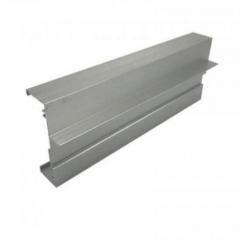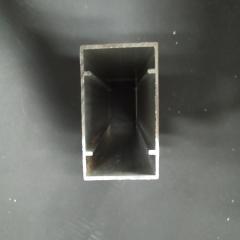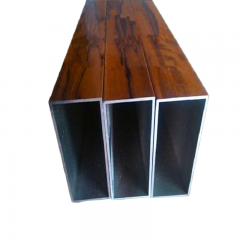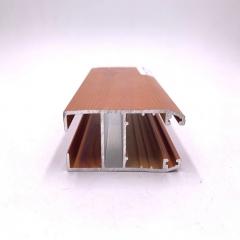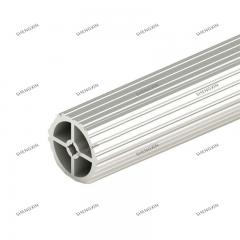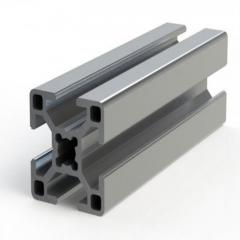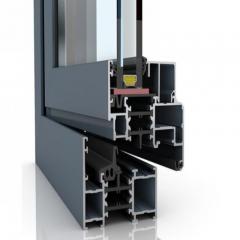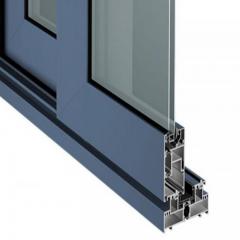
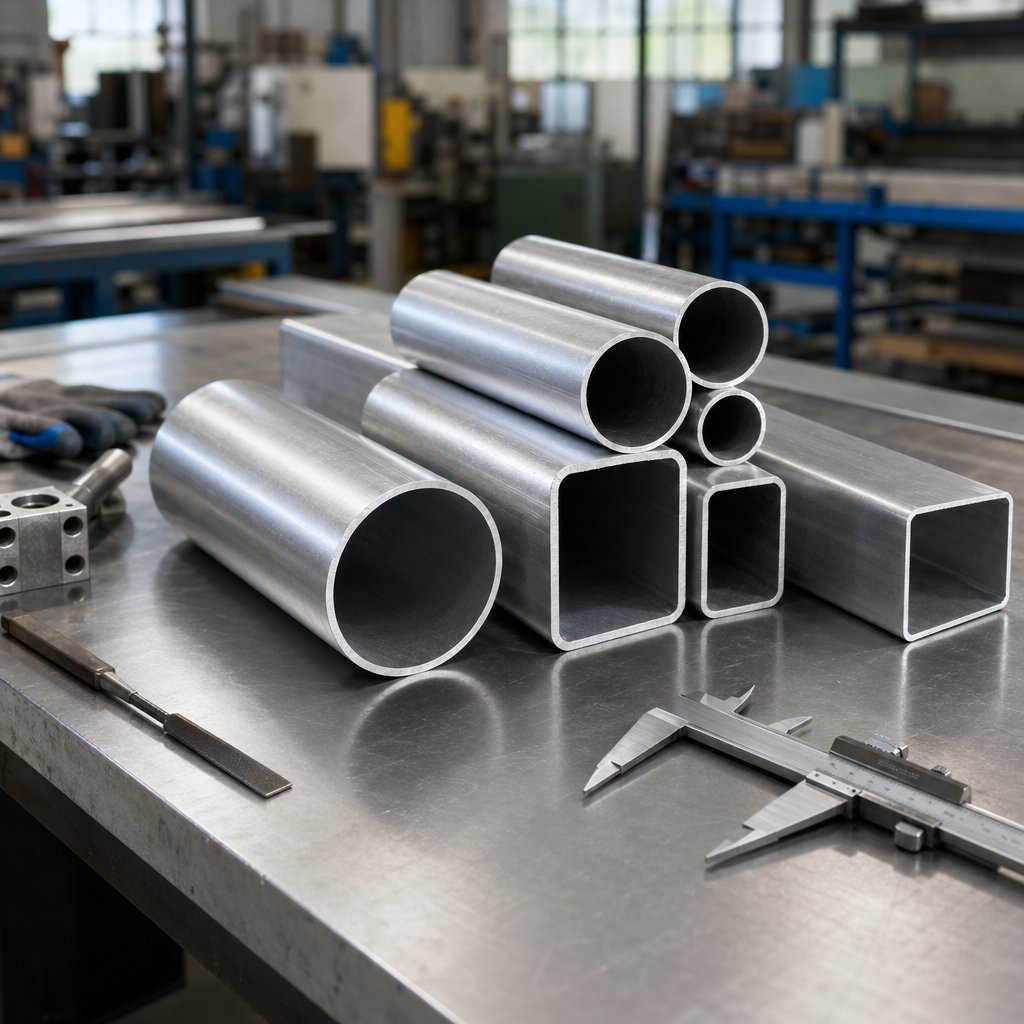
Type 'aluminum pipe' into a search bar and the results can look inconsistent fast. Some pages show products meant to carry water, air, or gas. Others show hollow metal stock for frames, fabrication, or general workshop use. In simple terms, an aluminium pipe is a hollow aluminum-alloy product, usually round, chosen because it is lightweight, corrosion resistant, and practical across many industries. This article is designed to bridge that gap between everyday search intent and the language supplier catalogs use. Buyers also search with loose terms like alu pipes or alum pipe when they simply want the right hollow section.
In industrial use, 'pipe' usually points to a product associated with moving fluids or gases through a system. The Chalco guide describes pipe as something used in pipelines and piping systems, while Dhanlaxmi Steel notes common use across transportation, construction, HVAC, irrigation, and equipment. When people say aluminium piping, they often mean the connected system, not just one length.
The spelling difference is mostly regional, not technical. ANSI explains that 'aluminum' is standard in American English, while 'aluminium' is preferred in British English and many other markets. So aluminum pipe and aluminium pipe usually describe the same material. The same applies when you see aluminum piping or aluminium piping in search results and product titles.
This is where confusion starts. Many sellers use 'pipe' for flow applications and 'aluminium tubing' for structural or fabricated uses. In real catalogs, though, the wording is not always strict. A page labeled aluminum pipe may still guide you toward tubing because buyers search both terms, including alum pipe. That sounds minor, but it changes how you read dimensions, schedules, and alloy options.
Plain-English takeaway: the name on the page does not always tell you whether the product is meant for flow service or structural use.
That small wording gap is exactly why buyers get tripped up later by size charts and alloy labels.
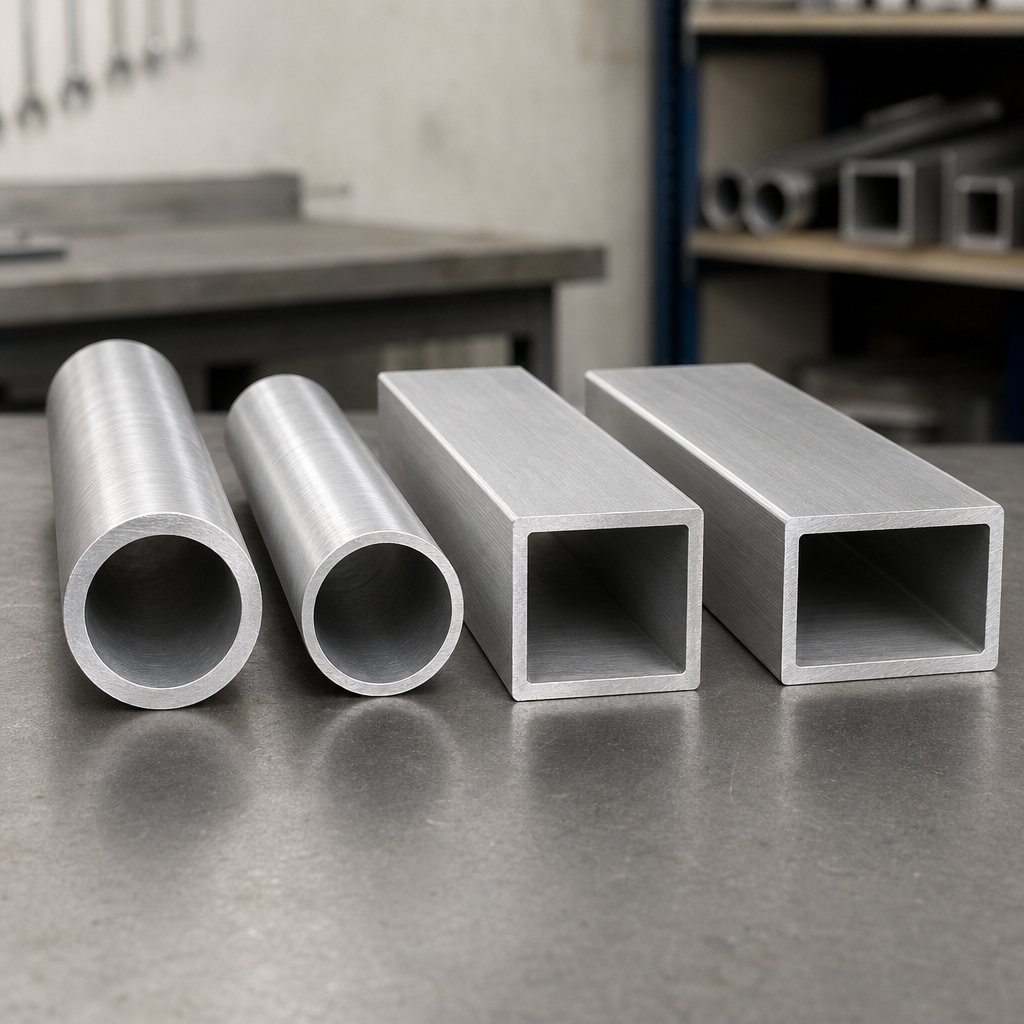
Search results blur these labels all the time. A page for aluminum pipes may be built for flow service, while another leads straight into aluminium tubes sized by exact outside diameter. The material can be similar, but the naming system is not. A practical Morgan Industrial Technology guide draws the line clearly: tube is commonly measured by actual outside diameter and wall thickness, while pipe is identified through nominal pipe sizing and schedule conventions. That is why this table focuses on plain-language decoding, not an exhaustive stock grid.
| Aspect | Pipe | Tube | What buyers should notice |
|---|---|---|---|
| Dimension method | Usually listed by nominal size and schedule | Usually listed by exact OD and wall thickness | If the size name is not the real outside measurement, you are likely in pipe territory. |
| Tolerance language | Looser tolerances, especially at larger OD sizes | Tighter dimensional control | Tube is often chosen when fit-up matters more. |
| Common shapes | Round | Round, square, or rectangular | Non-round hollow sections are generally tube, not pipe. |
| Typical applications | Oil and gas, wastewater, and other piping systems | Aerospace, food, dairy, pharmaceutical, semiconductor, and structural uses | Flow service leans pipe. Fabrication and precision often lean tube. |
| Finish expectations | Service-ready and system-focused | Often expected to support cleaner fit-up and, in some sectors, sanitary welding | Surface and end preparation can matter more with tube. |
| How listings are read | Buyers look for NPS-style sizing and schedule | Buyers compare actual OD and wall directly | A headline may say aluminum pipes, but the spec line reveals the real system. |
Catalog language gets messy because suppliers write for search behavior, not just engineering precision. So aluminium pipes may open a page full of round extrusions or drawn stock that is really aluminum metal tubing. If the listing leads with OD and wall, it is using tube logic even when the title says pipe aluminum or pipe aluminium. That is common with general industrial stock and fabricated material pages.
For piping systems, pipe wording usually fits better because it matches schedule-based selection. For frames, supports, guards, and fabricated parts, aluminium tubes are often easier to buy because the outside size is stated directly. A short note on sanitary welding also shows why tube is favored in clean-process industries where fit-up is critical. In other words, phrases like pipe aluminum and pipe aluminium can point to different buying paths even when the alloy family is similar. Supplier pages often assume you already know which path applies. Misread that label, and every size chart that follows starts to feel backwards.
That backwards feeling usually starts with the size line, not the metal. An aluminium pipe listing can look simple at first glance, yet the chart may be using pipe rules, tube rules, or a mix of both. The goal is to separate three things fast: the true outside size, the internal opening, and the naming label that may not match a tape measure.
OD means outside diameter, or the distance from one outer edge to the other. ID means inside diameter, or the width of the opening. Wall thickness is the metal between those two measurements. Merit Brass defines OD and ID this way for pipe, while Wagner explains that tubing is typically specified by true OD and wall thickness. That is why aluminum tubing sizes, alum tube sizes, and many international listings for aluminium tube sizes or aluminium tubing sizes usually read like exact dimensions rather than pipe names.
| Term | Plain-English meaning | Where you usually see it | Why it matters |
|---|---|---|---|
| OD | The full width across the outside | Pipe and tube | Affects fit, clearance, clamps, and mating parts |
| ID | The width of the opening | Mostly pipe charts, sometimes tube specs | Affects flow area and internal space |
| Wall thickness | How thick the metal wall is | Pipe and tube | Changes strength, weight, and ID |
| Nominal size or NPS | A pipe naming designation, not an exact measured diameter | Pipe listings | Prevents misreading the size label |
| Schedule | A dimensionless pipe wall designation | Pipe listings | Helps compare lighter and heavier wall pipe |
Pipe adds two terms that confuse new buyers. Nominal Pipe Size, or NPS, is a size name, not a literal OD. Merit Brass shows, for example, that NPS 2 pipe has a 2.375 in. OD. Schedule works the same way as a system label rather than a direct inch value. In general, a higher schedule means a thicker wall and a smaller ID at the same OD. So a thin aluminum pipe and a thick wall aluminum pipe can share the same nominal size while offering different internal capacity. Tube listings follow a different logic. A thick wall aluminum tubing option usually keeps the stated OD and changes the bore by increasing wall thickness.
Size decoding removes one layer of confusion, but not the whole buying risk. Two products can share a workable dimension and still behave very differently once alloy and temper enter the picture.
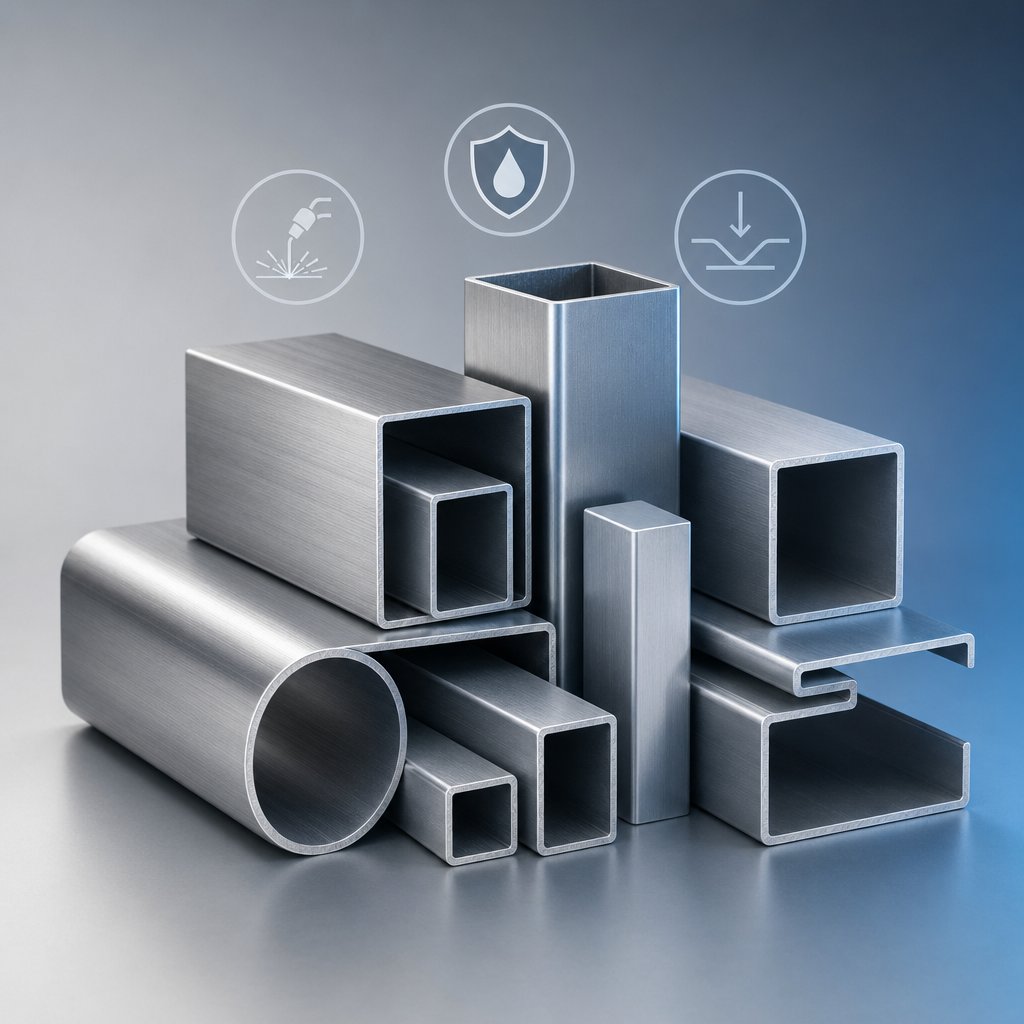
A size can be correct and still lead to the wrong part. The reason is simple: alloy choice changes corrosion behavior, welding response, forming limits, and how well a section suits the real job. For aluminium pipe buyers, the clearest selection patterns in the cited sources come from the United Aluminum guide and this marine-grade guide. Together, they show why an aluminium alloy tube, alloy pipes listing, or alloy tubing catalog entry should never be chosen by grade number alone. Temper matters too.
| Alloy or family | Strength tendency | Corrosion behavior | Weldability | Finish and fabrication note | Typical fit |
|---|---|---|---|---|---|
| 5052 H32 | Balanced, not a strength-first choice | Rated A for general corrosion and A for stress-corrosion cracking | Rated A for gas and arc welding | Useful as a corrosion-focused example. Appearance is not directly rated in the source. | When corrosion resistance and weldability lead the decision |
| 5083 | Strong marine-oriented option | Described as thriving in the harshest environments | Highlighted for staying strong after welding | Better thought of as a service-severity choice than a cosmetic one | Boat hulls, structures, harsh marine exposure |
| 5454 | Strength with better shaping flexibility | Described as having superior corrosion resistance | Used for welded structures | Superior formability makes it worth considering when shaping matters | Pressure vessels, welded structures, offshore masts |
| 5456 | Strength-first within the listed marine grades | Used in saltwater-oriented structural service | Applied in demanding structural work | Choose it when raw strength matters more than easy forming | Saltwater storage tanks, pressure vessels |
| 6061 in O, T4, or T6 | Good mechanical properties and broad general-purpose value | Rated B for general corrosion in the cited tempers | Rated A for arc welding in O, T4, and T6 | Temper changes formability. The bend guidance in the source shows O and T4 are more forgiving than T6. | Marine fittings, hardware, fabricated components, many 6061 aluminium pipe uses |
One practical lesson stands out here: the alloy number tells you the family, but the temper often tells you how friendly the material will be during bending, fitting, and welding.
Buyers often compare 6061 aluminium pipe with 6063 aluminum pipe because both appear in 6xxx-family catalog discussions. The cited technical data here gives detailed selection guidance for 6061, but not for 6063. That gap is useful. It means 6063 should be checked on its own data sheet rather than treated as an automatic substitute. The documented case for 6061 is straightforward: it offers excellent weldability and solid mechanical properties, making it a dependable benchmark when a supplier lists round stock, an aluminium alloy tube, or even an aluminum alloy seamless pipe.
Marine or coastal service changes the buying logic fast. The marine guide points to 5xxx and 6xxx families as key choices for harsh environments, with 5083, 5454, 5456, and 6061 each serving different priorities. Finish, though, is where many buyers over-assume. The sources do not assign direct cosmetic finish ratings across these alloys, so visible-surface work should be confirmed through supplier finish data, not guessed from the alloy number. That matters even when catalog language sounds impressive, such as high precision aluminum alloy pipes. In other words, terms like aluminum alloy seamless pipe or high precision aluminum alloy pipes describe form or manufacturing quality, but they do not replace alloy-and-temper selection. Two sections can share the same grade and size, yet behave differently once production method and surface condition enter the picture.
Alloy and temper set the baseline, but the production route is what buyers actually notice in the shop. Two round sections can share a similar size and grade yet behave differently in machining, fit-up, and visible use. That difference usually comes from how the hollow section was made and what kind of surface finish it carries.
A practical breakdown from Profile Precision Extrusions helps sort out three terms that are often mixed together in listings.
| Form | Plain-language process | What buyers usually expect | Why it matters |
|---|---|---|---|
| Aluminum extrusion tube or extruded aluminum tube | Heated aluminum billet is pushed through a die | Shape flexibility, good structural integrity, and a solid surface finish | Useful for general fabrication and profiles with more complex cross-sections or varying wall thicknesses |
| Seamless aluminum tubing | Starts as an extruded seamless tube with no welded seam | Continuous wall structure and a form that can be used as extruded or further processed | Often considered where pressure service or internal continuity matters |
| Drawn aluminum tubing | A seamless tube is cold worked through multiple dies | Tighter tolerances, smoother finish, and improved mechanical properties | Better suited to precision machining and higher-pressure environments |
That is why one listing may feel more fabrication-friendly than another, even when both look similar in a catalog. Drawn products are commonly chosen when dimensional control is a bigger concern. Standard extrusions often make more sense when profile freedom and cost efficiency matter more.
Finish quality is not just cosmetic. It can influence polishing time, anodizing results, and how cleanly a part presents in final assembly. Guidance from Sino Extrud notes that anodizing builds a hard oxide layer that becomes part of the aluminum rather than sitting on top like paint. That helps with corrosion resistance, wear, and fade resistance. The same source also makes an important buying point: the polish level before anodizing helps determine whether the final look is mirror, satin, or matte.
Custom aluminum tubing starts to make more sense when standard stock cannot meet the profile shape, finish level, or dimensional consistency a project needs. That could mean a multi-void extrusion, a cleaner cosmetic surface, or a tighter fit for downstream machining and assembly. Similar dimensions alone do not tell the full story. The better choice depends on what the part must do once it leaves the catalog and enters the real application.
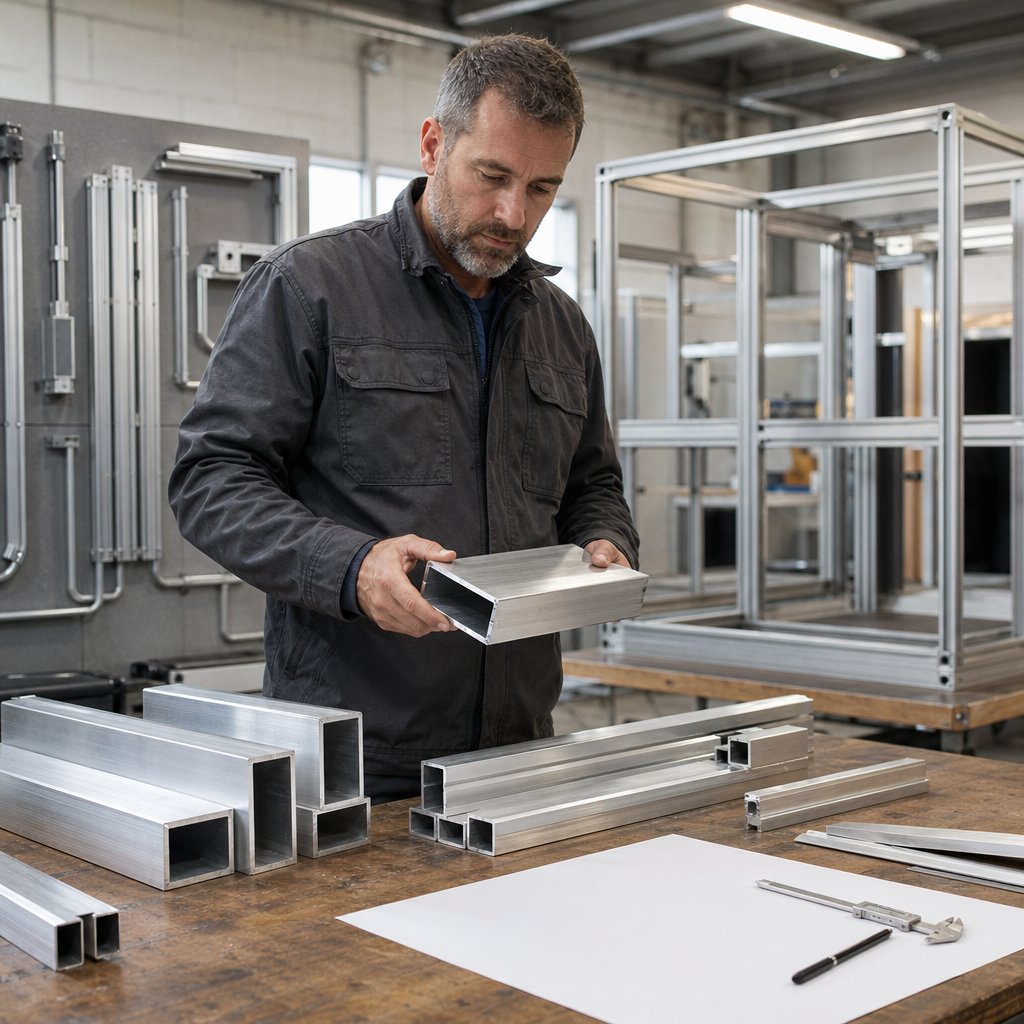
The fastest way to cut through a messy catalog is to start with the job, not the label. Wiley Metal frames pipe as flow-focused and tube as fabrication-focused, while Endura Steel places pipes in plumbing, HVAC, and industrial transport and tubes in frames, railings, and equipment. That rule is not absolute, but it is a very practical filter. It keeps buyers from comparing hollow sections that look similar on paper yet serve very different purposes in use.
Most projects fall into a few broad buckets. If you are building aluminum tube framing systems or an aluminum tube frame, outside size, stiffness, and fabrication ease usually matter more than nominal pipe naming. If the part belongs in aluminum pipe systems, internal flow, joining integrity, and service conditions move to the front. An aluminum conduit pipe sits somewhere in the middle. As Wiley Metal notes, larger and thicker-wall conduit is often treated more like pipe, while thinner indoor conduit is often treated more like tube. The same application-first thinking helps decode search phrases such as aluminum exhaust pipe, aluminium water pipes, or even aluminum irrigation pipe for sale.
A short written spec saves time and reduces wrong-quote problems. List the application, sizing method, alloy or acceptable alternatives, required finish, joining method, and whether the part should be stock or custom. This matters most when search intent is broad. Someone looking for aluminium water pipes may really need a corrosion-resistant flow product with specific connection requirements. Someone browsing aluminum irrigation pipe for sale may care more about system compatibility and length than cosmetic finish. Someone sourcing aluminum tube framing systems may care most about OD consistency and easy fabrication.
The best choice depends on service environment, joining method, finish expectations, and the way a supplier lists dimensions.
That last detail tends to decide whether a quote is clear or confusing. Two listings can seem interchangeable until terms like temper, tolerance, seamless, extruded, or nominal size show up in the fine print. Those small catalog words are often where ordering mistakes begin.
Catalog details start to matter the moment a part moves from looking right to needing to match the drawing. For seamless pressure-oriented products, ASTM B241/B241M-22 covers aluminum and aluminum-alloy seamless pipe and seamless extruded round tube intended for pressure applications. That standard also points buyers to ANSI H35.1 for alloy and temper designations and ANSI H35.2 for standard seamless pipe sizes. It further references B557 for tensile testing and G47 for stress-corrosion testing of extruded tube. In plain English, standards give you a shared rulebook for what the material is, how it is named, and what testing sits behind the listing.
This matters because product titles are often loose. A page for aluminum pipe and fittings or aluminium pipes and fittings may look straightforward until one seller lists nominal size, another lists OD, and a third mixes both. Standards and mill paperwork reduce that ambiguity. They help you verify consistency, traceability, and whether the product fits the intended service. They matter just as much when fittings enter the picture, because size system, pressure rating, connection method, and corrosion exposure all need to line up. A search for an aluminum pipe tee fitting or even flange aluminum pipe hardware should lead to more than a shape match.
Those small checks make quotes far easier to compare. Clean spec language turns supplier evaluation into a capability review instead of a guessing game.
A clean spec sheet changes the supplier search. Instead of asking who sells hollow aluminum, you can ask who can actually meet your size system, alloy, finish, and paperwork needs. That is the smarter way to compare an aluminum pipe supplier and avoid getting quotes for the wrong product form.
If you are wondering where to buy aluminum pipe or where to buy aluminium tubing, split the market into stock-focused distributors and actual aluminum tube manufacturers. Many aluminum tube suppliers are best for fast availability. Some aluminium tube suppliers are set up for custom extrusion, broader finishing, and project-specific profiles. One manufacturer example is Shengxin Aluminum. Its published capabilities describe one-stop service for aluminum tubing and custom profiles, advanced extrusion for precisely sized tubes with uniform wall thickness, and 23 press machines ranging from 600 to 5500 tons, plus 60,000 tons of annual production capacity. That kind of detail helps you judge what an aluminum tubing supplier can really produce.
Send the same RFQ to each seller. Include product form, sizing method, alloy and temper, wall thickness, finish, cut length, quantity, and required documents. Then ask one more plain question: is the quoted item actually pipe or actually tube? The best aluminum pipe suppliers make that answer easy. When they do, price comparisons start to mean something, because you are finally comparing like with like.
Yes. The material is the same, and the difference is mainly regional spelling. US listings usually say aluminum pipe, while many international and UK-focused catalogs use aluminium pipe, so buyers should compare size, alloy, and form rather than the spelling.
They are often related products, but they are not named the same way. Pipe is commonly associated with flow service and may be sold by nominal size and schedule, while tubing is more often sold by actual outside diameter and wall thickness for structural or fabricated use. Because many product titles blend the terms, the spec line is usually more reliable than the page headline.
Start with the format of the dimensions. If the listing uses terms like nominal size or schedule, it is using pipe logic. If it shows OD and wall thickness directly, it is acting like a tube listing. A quick check of the real outside size also helps, because a pipe name does not always match the outside measurement.
6061 is a frequent starting point when buyers want a versatile option for fabrication, welding, and general industrial use. Other families may be better when corrosion exposure, shaping needs, or marine service become more important. The best choice should be based on alloy and temper together, not on the grade number alone.
Confirm the product form, sizing system, alloy, temper, finish, connection style, and any documentation required before you compare prices. It also helps to ask whether the quoted item is truly pipe or actually tube. For custom needs, published manufacturing depth matters too, and suppliers such as Shengxin Aluminum highlight capabilities like large extrusion press capacity, custom profiles, and controlled wall consistency, which can help buyers judge fit for more demanding projects.



 Интернет Сервис
 0086 136 3563 2360
 sales@sxalu.com
 +86 136 3563 2360
 русский
 English
 français
 Deutsch
 español
 português
 العربية
 ไทย
ไทย Việt
Việt Українська